
India’s Sanitation Journey: Progress, Challenges, and the Significance of World Toilet Day
Context
World Toilet Day was recently observed globally, highlighting the urgent need to address sanitation challenges and ensure universal access to safe, hygienic, and sustainable toilets. The observance also draws attention to India’s progress in improving sanitation through national missions and community-led initiatives.
What is World Toilet Day?
- Observed on: November 19 every year
- UN Recognition: Officially designated by the UN in 2013
- Significance: Emphasizes toilets as essential for health, dignity, equality, and sustainability
- Alignment with Global Goals: Directly contributes to SDG 6 – Clean Water and Sanitation
Importance of Proper Sanitation
- Basic Human Need: Essential for public health, dignity, and environmental protection
- Reduces Disease: Helps prevent waterborne illnesses and improves overall well-being
- Promotes Equality: Ensures privacy and safety, particularly benefiting women and children
- Ensures Dignity: Critical for communities facing climate challenges, urbanization, and socio-economic disparities
Schemes and Initiatives Promoting Sanitation in India
1. Swachh Bharat Mission (SBM)
A transformative nationwide programme launched to eliminate open defecation and improve sanitation infrastructure in both rural and urban India.
Key Details
- Launch Date: 2 October 2014
- Components:
- SBM-Gramin (rural areas)
- SBM-Urban (urban areas)
- Major Achievement:
- By October 2019, all villages, districts, and states were officially declared Open Defecation Free (ODF)
Outcomes of SBM Phase I
- Health Gains: WHO estimates 300,000 fewer diarrhoeal deaths (2014–2019) due to improved sanitation
- Economic Benefits: Households in ODF areas saved nearly ₹50,000 annually in health costs
- Environmental Protection: Significant reduction in groundwater contamination
- Women’s Dignity & Safety: 93% of women reported feeling safer with household toilets
2. SBM–Gramin Phase II (2020 onwards)
Focused on sustaining the gains of Phase I and advancing solid and liquid waste management to achieve Sampoorn Swachhata (complete cleanliness).
Objectives
- Sustain ODF status
- Strengthen waste management infrastructure
- Transform villages into ODF Plus Model Villages
Types of ODF Plus Villages
- ODF Plus Aspiring: ODF + either solid or liquid waste management
- ODF Plus Rising: ODF + both solid and liquid waste management
- ODF Plus Model: Complete waste management + visual cleanliness + IEC awareness
Rural Sanitation Progress
- 95%+ of villages declared ODF Plus
- ODF Plus villages increased by 467% (from 1 lakh in Dec 2022 to 5.67 lakh)
- 4,85,818 villages achieved ODF Plus Model status
3. Urban Sanitation under SBM-Urban
- 4,692 cities – ODF
- 4,314 cities – ODF+
- 1,973 cities – ODF++
Toilet Construction Achievements
Individual Household Toilets:
- Achievement: 108.62%
- Constructed: 63,74,355
Community/Public Toilets:
- Achievement: 125.46%
- Constructed: 6,38,826
International organizations, including UNICEF, regard SBM as one of the world’s largest and most impactful sanitation campaigns.
4. AMRUT & AMRUT 2.0
- AMRUT (2015): Aimed at improving water supply, sewerage, and septage systems in urban areas
- AMRUT 2.0 (2021): Focuses on universal sewerage and septage coverage across 500 AMRUT cities
5. Jal Jeevan Mission (2019)
Provides safe drinking water to rural households while supporting sanitation and the maintenance of ODF villages.
ODF Plus Plus Areas
These are areas that:
- Sustain zero open defecation
- Have fully functional, well-maintained toilets
- Safely manage and treat all faecal sludge and sewage without polluting water bodies
Conclusion
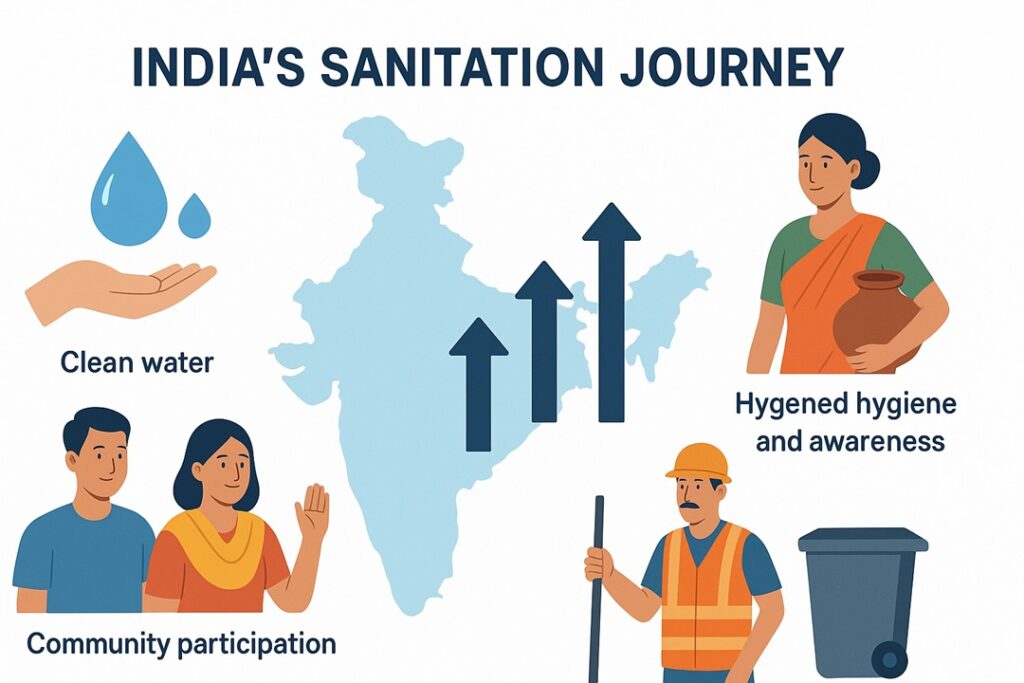
India’s sanitation journey highlights a significant shift from combating open defecation to building sustainable, community-driven systems for hygiene and waste management. Through programmes such as the Swachh Bharat Mission, AMRUT, and the Jal Jeevan Mission, the country has advanced from infrastructure development to long-term cleanliness, dignity, and inclusivity.
The observance of World Toilet Day reinforces India’s commitment to SDG 6, positioning the nation as a global leader in promoting safe sanitation and strengthening public health for all.
Source : PIB