
Bridging the Digital Divide in India: Insights from MOSPI Survey
Context:
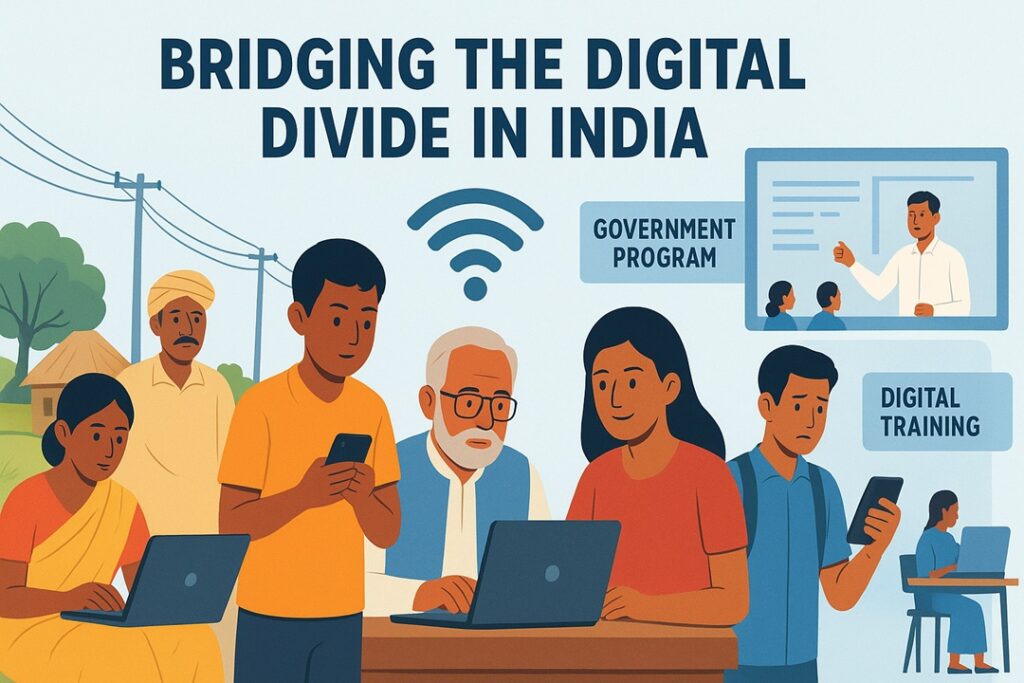
The 79th round of the Ministry of Statistics and Programme Implementation (MOSPI) survey highlights persistent digital disparities in India, spanning caste, economic status, gender, and urban-rural regions.
Digital Access Across Communities
Caste-Based Disparities:
ICT literacy remains low among marginalized groups: Scheduled Tribes (89.49%), Scheduled Castes (86.62%), OBCs (81.73%), and other communities (73.71%), reflecting enduring caste-linked disadvantages.
Gender Differences:
Nationally, men demonstrate higher digital proficiency (22.78%) compared to women (13.91%). In Uttar Pradesh, the gap is even wider: men (14.62%) versus women (6.93%).
Economic Inequality:
Access to computers with internet shows a stark wealth divide: the poorest 20% (6.8%) versus the richest 20% (66.3%), a tenfold difference.
Urban-Rural Divide:
Urban households have greater access to digital tools, while rural areas face limited devices, poor connectivity, and minimal digital exposure.
Schooling Gaps:
Private schools introduce coding from early grades (Class 3), whereas many government schools lack electricity or computer facilities even at Class 8.
Root Causes of the Digital Divide
- Social and Structural Exclusion: Marginalized communities face poor school infrastructure, delayed ICT exposure, and fewer learning devices.
- Income and Resource Constraints: Economic limitations restrict access to digital devices, internet, and conducive home learning environments.
- Rural Infrastructure Deficits: Unstable electricity, weak broadband, and underfunded schools limit technology adoption.
- Training Gaps: Low-quality formal training and dependence on informal apprenticeships hinder skill development.
- Educational Inequities: Urban private schools provide early digital exposure, while government schools struggle with limited labs and trained teachers.
- Household Literacy Deficits: First-generation learners often lack parental guidance for digital learning.
- Institutional Neglect: Dalit-majority regions often receive lower-quality schools, delayed ICT infrastructure, and inadequate investment.
Consequences of Unequal Digital Access
- Limited access to better-paying jobs; ICT skills are closely linked to salaried employment.
- Low participation in the digital economy despite smartphone ownership.
- Deepening caste and income inequalities as digitally skilled groups advance faster.
- Reduced productivity and competitiveness due to a shortage of digitally skilled workers in rural and low-income areas.
- Women’s exclusion from future-ready careers limits mobility, earnings, and professional opportunities.
- Intergenerational disadvantage persists, leaving children from marginalized communities behind in higher education.
Challenges to Bridging the Gap
- Persistent social discrimination affecting schooling quality and public ICT investment.
- Resource shortages in government schools: computers, trained teachers, and stable electricity.
- Limited hands-on digital learning opportunities despite device ownership.
- Fragmented skilling ecosystem with poor monitoring and low alignment to labor market needs.
- Unequal ICT project implementation; backward regions often underserved.
- Insufficient longitudinal data to track generational digital disadvantage.
Strategies for Inclusive Digital Growth
- Upgrade School Infrastructure: Ensure computer labs, trained teachers, and reliable electricity in government schools.
- Early Digital Education: Integrate ICT training from lower grades in rural and government schools.
- Targeted Support for Marginalized Groups: Scholarships, community digital hubs, and subsidized devices for SC/ST, OBC, and women.
- Strengthen Formal Training Systems: Industry-linked courses, rural training centers, and measurable outcomes.
- Build Digital Public Resources: Open-access learning platforms in regional languages with hands-on content.
- Long-Term Monitoring: Continuous surveys to track digital access across generations and measure policy effectiveness.
- Promote Household Digital Learning: Shared devices, affordable laptops, and community-based learning models.
Conclusion
India’s digital revolution holds immense potential, but without addressing structural barriers rooted in caste, income, gender, and geography, it risks leaving behind the most marginalized communities. Focused interventions—such as inclusive school infrastructure, early digital education, targeted support for disadvantaged groups, and robust public investment—are essential to ensure technology serves as a bridge for empowerment rather than a barrier to opportunity. Only through equitable access and skill development can India achieve a truly inclusive digital future.
Source : The Hindu