
International Day for the Elimination of Violence against Women
Context
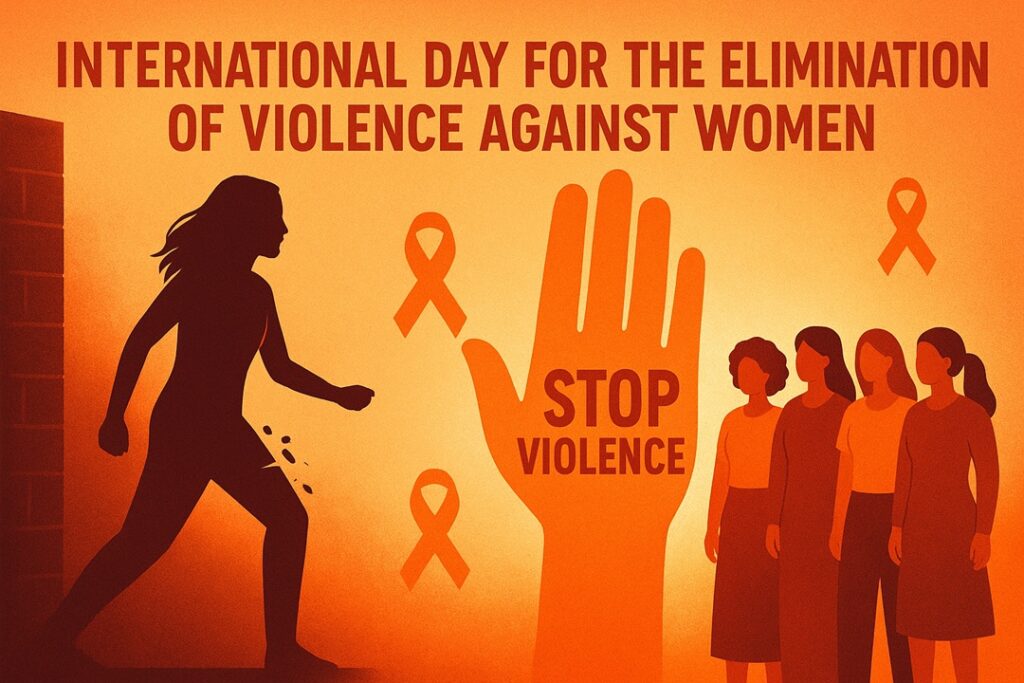
The International Day for the Elimination of Violence against Women was observed on November 25, marking the beginning of the global 16 Days of Activism against Gender-Based Violence from November 25 to December 10. The day draws attention to the increasing forms of violence faced by women, including emerging threats in the digital space.
Meaning of the Day
Established by, United Nations General Assembly in 2000, to raise global awareness and encourage coordinated action to eliminate all forms of violence against women.
Global Theme 2025
UNiTE to End Digital Violence against All Women and Girls, highlighting the growing challenge of technology-facilitated gender-based violence.
Digital Violence Concerns
Women face online harassment, cyberstalking, deepfakes, doxxing, impersonation, and coordinated online misogynistic attacks, reflecting emerging risks in digital spaces.
India’s Legal and Institutional Measures
National Commission for Women
Established in 1992 as a statutory body, responsible for monitoring legal safeguards, recommending reforms, and handling complaints regarding violation of women’s rights.
State Commissions for Women
Instituted in most states with responsibilities similar to the NCW, supporting grievance redressal at the regional level.
Helplines for Women
Includes NCW’s 24×7 helpline 7827170170, nationwide helpline 181, and IVR-based support under the Digital India initiative to assist women in distress.
Bharatiya Nyaya Sanhita 2023
Introduces stronger penalties for sexual crimes, includes life imprisonment for rape of minors, mandates audio-video recording of victim statements, and prioritises crimes against women and children.
Protection of Women from Domestic Violence Act 2005
Defines domestic violence to include physical, sexual, verbal-emotional, and economic abuse, recognises dowry-related harassment, and protects any woman in a domestic relationship.
Workplace Safety under POSH Act 2013
Mandates Internal Committees in workplaces with more than ten employees, establishes Local Committees for smaller organisations, ensures oversight by MWCD, and centralises reporting through the SHe-Box portal.
Mission Shakti
A mission-mode umbrella initiative aimed at enhancing women’s safety, empowerment, and access to institutional support, in alignment with the women-led development vision.
Swadhar Greh Scheme
Provides shelter, counselling, food, legal aid, and vocational training to women in distress due to violence, homelessness, social exclusion, or risk of trafficking.
One Stop Centres
Provide integrated services under one roof, including police facilitation, legal aid, medical support, counselling, and temporary shelter for women facing violence.
Stree Manoraksha Initiative
Offers mental health and trauma response training to staff at One Stop Centres, ensuring sensitive handling of survivors.
Digital Shakti Campaign
NCW-led initiative aimed at digitally empowering women and girls, enhancing cyber-safety awareness, and improving resilience against online abuse.
Nirbhaya Fund Mechanisms
Supports Emergency Response Support System 112 for integrated emergency services, and includes WhatsApp-based emergency support introduced during the COVID-19 lockdown.
Institutional Mechanisms
Fast Track Special Courts
Established under the Nirbhaya Fund to expedite rape and POCSO cases.
Women Help Desks
Set up in police stations nationwide to encourage sensitive reporting of gender-based violence.
SHe-Box Platform
A unified online platform for reporting workplace sexual harassment, enabling tracking of cases, maintaining records of Internal and Local Committees, and requiring nodal officers for regular updates.
Technology-Based Monitoring Tools
Investigation Tracking System for Sexual Offences
Monitors real-time progress of police investigations in sexual assault cases to ensure timely completion.
National Database on Sexual Offenders
Maintains records of convicted sexual offenders to help law-enforcement agencies track repeat offenders.
Crime Multi-Agency Centre
Facilitates rapid sharing of information on heinous and inter-state crimes, strengthening coordination among police stations and agencies.
Conclusion
India’s extensive legal frameworks, institutional mechanisms, and technology-driven monitoring systems demonstrate a strong commitment to preventing violence against women. Continued improvements in implementation, digital safety, and inter-agency coordination are essential for ensuring that every woman and girl can live with dignity and equal opportunity across physical and digital spaces.
Source : PIB