
India to Host the 2030 Commonwealth Games
Context
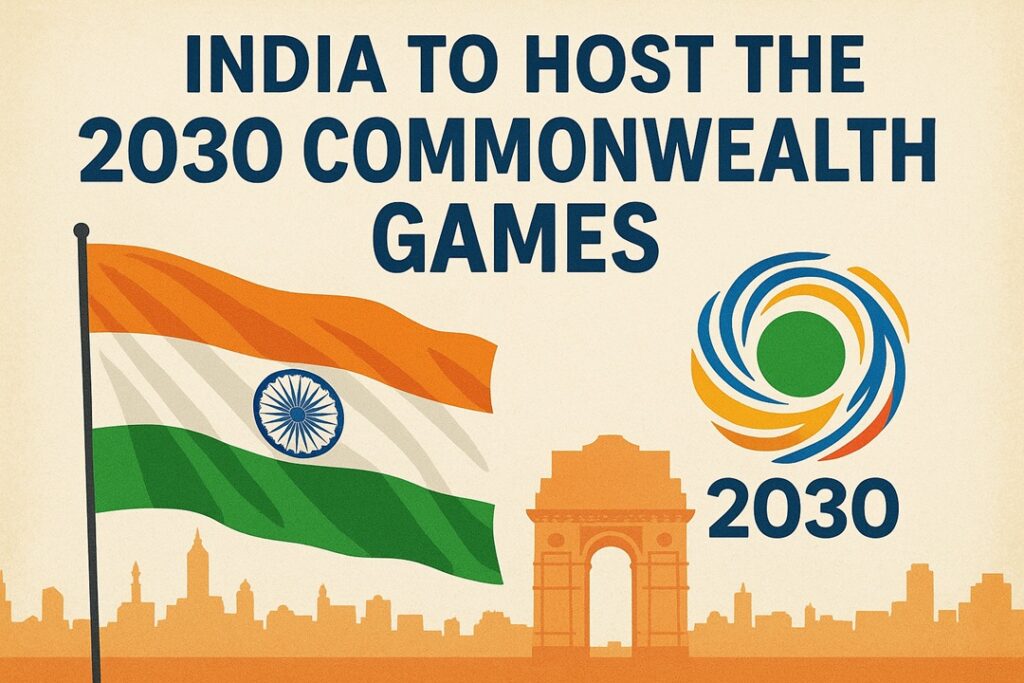
India has been officially confirmed as the host of the 2030 Commonwealth Games, with Ahmedabad in Gujarat selected as the venue. The 2030 edition marks the centenary of the Games, commemorating 100 years since the first British Empire Games held in Hamilton, Canada, in 1930.
About the Commonwealth Games
The Commonwealth Games are a quadrennial international multi-sport event featuring athletes from Commonwealth member nations. They combine Olympic-core sports with Commonwealth-specific disciplines such as netball, lawn bowls and squash.
Historical Evolution of the Games
The idea originated in the late nineteenth and early twentieth centuries as a Pan-Britannic sporting concept and first materialised as the Inter-Empire Championships in 1911.
The first British Empire Games were held in 1930 in Hamilton, Canada with 11 nations participating.
The event underwent several name transitions reflecting decolonisation, eventually adopting the name Commonwealth Games in 1978.
Host City: Ahmedabad for 2030
Ahmedabad was ratified as the host city during the Commonwealth Sport General Assembly in Glasgow in November 2025 following the support of 74 member states and territories.
The bid is based on major infrastructure such as the Sardar Vallabhbhai Patel Sports Enclave and the Narendra Modi Stadium.
India aims to align this hosting opportunity with its long-term goal of securing the 2036 Olympic Games.
India has been a participant since 1934 and previously hosted the Games in Delhi in 2010, where it achieved its best-ever medal tally.
About the Commonwealth of Nations
The Commonwealth is a voluntary association of independent and equal countries, many of which share historical linkages with the British Empire. Cooperation is based on shared values such as democracy, development and mutual benefit rather than political control.
Evolution of the Commonwealth
The early Commonwealth emerged from the 1926 Imperial Conference, which recognised Britain and its Dominions as equal in status under the British Commonwealth of Nations.
Decolonisation after World War II led to the independence of several territories.
India’s transition to a republic in 1947 while wishing to remain within the association led to the London Declaration of 1949, which allowed republics to remain members.
Membership later expanded to include countries without direct colonial ties to Britain.
Conclusion
India’s role as host of the 2030 Commonwealth Games enhances its global sporting standing and showcases its capability to organise major international events. This opportunity strengthens sports infrastructure, promotes international cooperation and supports India’s broader ambitions in global sports diplomacy.
Source : DD News