
Inclusive Growth and Disability Rights: India’s Roadmap to Social Justice
Context
The International Day of Persons with Disabilities highlighted the WHO’s call for inclusive and equitable health financing for Persons with Disabilities (PwDs), emphasising the need for rights-based development and universal accessibility.
Introduction
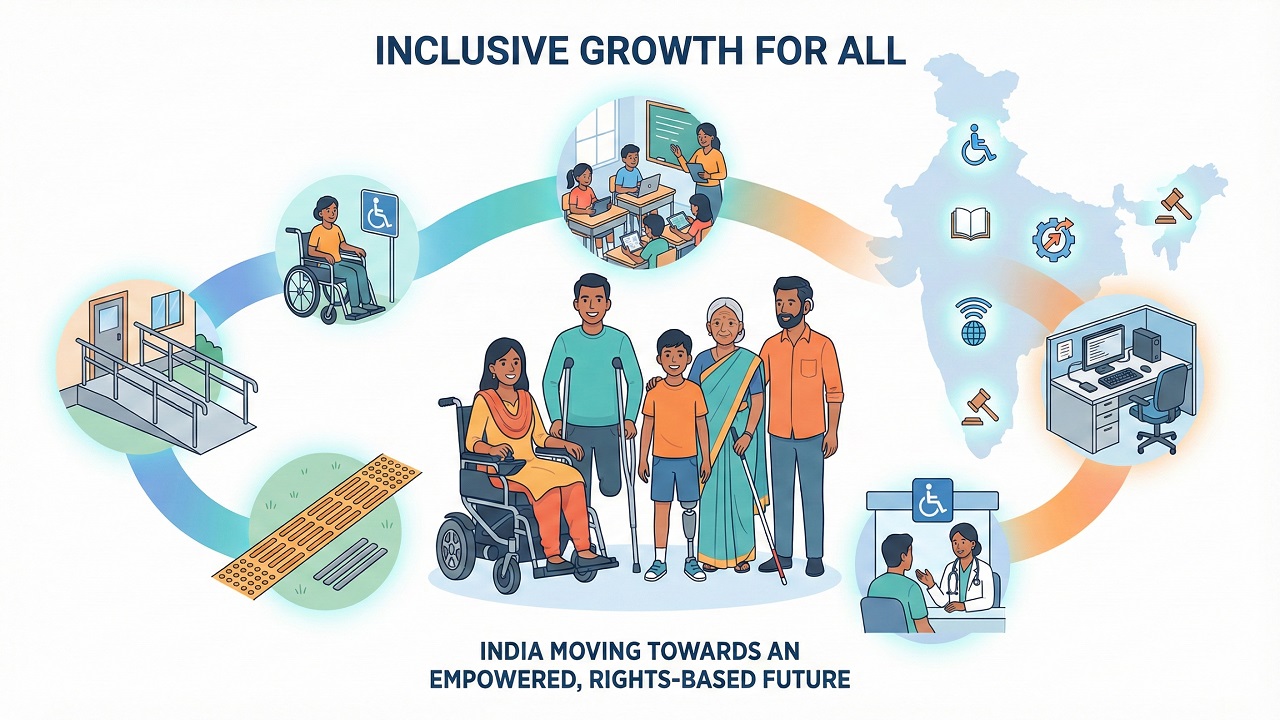
India’s disability inclusion framework is evolving through legal reforms, digital tools and welfare schemes. However, ensuring accessibility, social protection and equal participation for over 2.68 crore PwDs (2.21%) remains a central challenge to achieving inclusive growth.
Meaning of Inclusive Growth and Disability Rights
- Definition
Ensuring full participation of PwDs through accessible infrastructure, inclusive education, employment opportunities and strong legal safeguards. - Objective
Removing structural barriers and upholding dignity, autonomy and equality in line with constitutional values.
Current Status in India
- Population Size
India has 2.68 crore PwDs, requiring targeted rights-based interventions. - Legal Identity
The UDID programme standardises disability certification and improves access to benefits. - Expanded Coverage
The RPwD Act 2016 recognises 21 disabilities, expanding inclusion beyond earlier categories.
Need for Inclusive Growth
- Human Capital Utilisation
Accessible education, skills and mobility support can strengthen national productivity. - Equity and Constitutional Morality
Fulfils the mandate of equality, non-discrimination and dignity under the RPwD Act. - Breaking the Poverty–Disability Link
Inclusive systems reduce long-term socio-economic vulnerability. - Global Commitments
As a UNCRPD signatory, India is obligated to build an accessible, rights-based society.
Major Challenges for PwDs
- Accessibility Gaps
Public spaces, transport and digital systems remain partially inaccessible. - High Financial Burden
Assistive devices and therapies impose heavy out-of-pocket expenditure. - Low Awareness
Women, rural communities and marginalised groups often lack scheme awareness. - Employment Barriers
Limited training centres and inadequate workplace adaptation restrict job opportunities. - Justice System Hurdles
Legal processes remain slow, inaccessible and poorly equipped for disability needs.
Key Government Initiatives
- RPwD Act 2016
Mandates accessibility, 4 percent job reservation, inclusive education and anti-discrimination measures. - National Trust Act 1999
Supports persons with autism, cerebral palsy, intellectual and multiple disabilities. - Sugamya Bharat Abhiyan
Promotes accessibility across built environment, transport and ICT. - UDID Project
Enables transparent, unified delivery of disability benefits. - ADIP Scheme
Provides assistive devices, cochlear implants and rehabilitation support.
Way Forward
- Strengthen Last-Mile Delivery
Improve district-level outreach and multilingual accessibility. - Scale Financing and Insurance
Integrate disability needs in health financing frameworks. - Accelerate Universal Accessibility
Strictly enforce accessibility standards in public and private sectors. - Enhance Skills and Employment
Expand NAP-SDP training and promote inclusive workplace design. - Improve Justice Access
Ensure disability-friendly legal aid and grievance redressal.
Conclusion
India is progressing toward a comprehensive, rights-based disability ecosystem, but gaps in accessibility, awareness and financing persist. Strengthening institutional capacity and adopting a technology-driven, adequately funded model is essential for ensuring dignity, equality and full participation for every person with a disability.
Source : PIB