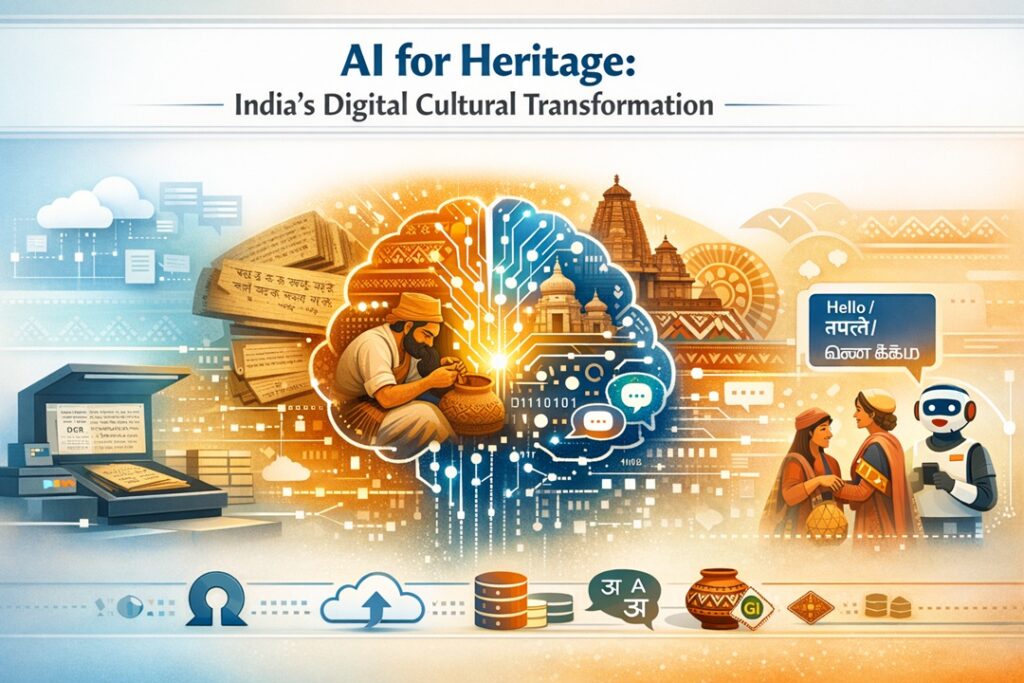
AI for Heritage: India’s Digital Cultural Transformation
Context
The Press Information Bureau (PIB) recently outlined India’s expanding efforts to embed Artificial Intelligence within its cultural and linguistic governance framework. The initiative signals a move from archival preservation toward technology-enabled public engagement with heritage.
Conceptual Framework
From Conservation to Cultural Empowerment:
India’s approach now focuses on transforming heritage from static repositories into interactive knowledge ecosystems. AI tools are being used to widen citizen access to manuscripts, monuments, folk traditions, and indigenous knowledge systems.
Human-Centric Technology Vision:
The strategy reflects the idea of AI as a public good — ensuring inclusivity, accessibility, and linguistic justice while promoting equitable development.
Applications of AI in Heritage Ecosystems
Digital Archiving of Manuscript Wealth:
Machine-learning tools assist in rapid digitisation, classification, and intelligent indexing of ancient texts vulnerable to deterioration.
Illustration: Under the Gyan Bharatam programme, lakhs of manuscripts have been digitally recorded using AI-based metadata tagging.
Breaking Language Barriers:
Real-time translation engines and speech recognition systems enable multilingual access to governance and cultural discourse.
Illustration: At national cultural gatherings, AI-powered platforms facilitated live translations of speeches into regional languages.
Revitalising Indigenous and Oral Traditions:
AI transcription and voice-model systems help document oral folklore and community narratives, especially for scriptless languages.
Empowering Artisans through Digital Platforms:
AI-supported discovery engines allow craft producers to present GI-certified products in multilingual e-catalogues, reducing information asymmetry.
Smart Support at Mega Cultural Events:
AI chatbots and language interfaces assist visitors during large-scale pilgrimages and heritage festivals, ensuring seamless communication.
Flagship Programmes and Platforms
National Language AI Grid (BHASHINI):
A language-focused Digital Public Infrastructure offering AI-based translation and speech services across Scheduled Languages.
Anuvadini Knowledge Portal:
An AICTE initiative translating higher education textbooks into Indian languages to democratize technical learning.
National Manuscript Digitisation Drive (2024–31):
A centrally funded mission dedicated to cataloguing and disseminating India’s manuscript legacy.
Adi Vaani Interface:
A specialised AI framework supporting tribal languages through automated subtitles and community-level communication tools.
TDIL Programme:
A long-standing initiative developing OCR, machine translation, and handwriting recognition systems for Indian scripts.
Structural Bottlenecks
Digital Capability Gap:
Limited digital literacy among traditional knowledge holders restricts the full utilisation of AI-enabled platforms.
Dispersed Heritage Holdings:
A substantial share of manuscripts remains in private or temple custody, complicating coordinated digitisation efforts.
Insufficient Data for Low-Resource Languages:
Many tribal languages lack adequate digital text corpora to train robust AI language models.
Verification and Authenticity Challenges:
The digital representation of GI-tagged crafts requires reliable AI-based traceability systems to prevent imitation and misuse.
Connectivity Deficit:
Rural and tribal regions often lack the computational infrastructure necessary for advanced AI deployment.
Strategic Roadmap
Strengthening the Language Layer:
Expanding language-based APIs and datasets to enable startups and institutions to build inclusive digital solutions.
Digital Skill Certification for Cultural Workers:
AI-enabled credentialing systems to enhance employability and market recognition of artisans.
District Innovation Clusters:
Setting up local digital hubs to encourage vernacular content creation and technological skilling.
Collaborative Governance Model:
Bringing together academia, technology firms, and community stakeholders for inclusive AI design.
Promotion of Open AI Frameworks:
Encouraging open-source language models to ensure accessibility and prevent monopolisation of cultural technologies.
Conclusion
India’s AI-for-culture initiative represents a strategic blend of technological innovation and civilizational stewardship. By embedding Artificial Intelligence within language preservation and heritage governance, the country is ensuring that its diverse cultural legacy remains vibrant, accessible, and future-ready in the digital age.
Source : PIB