
India’s Digital Revolution: Connecting Villages, Empowering Citizens
Context
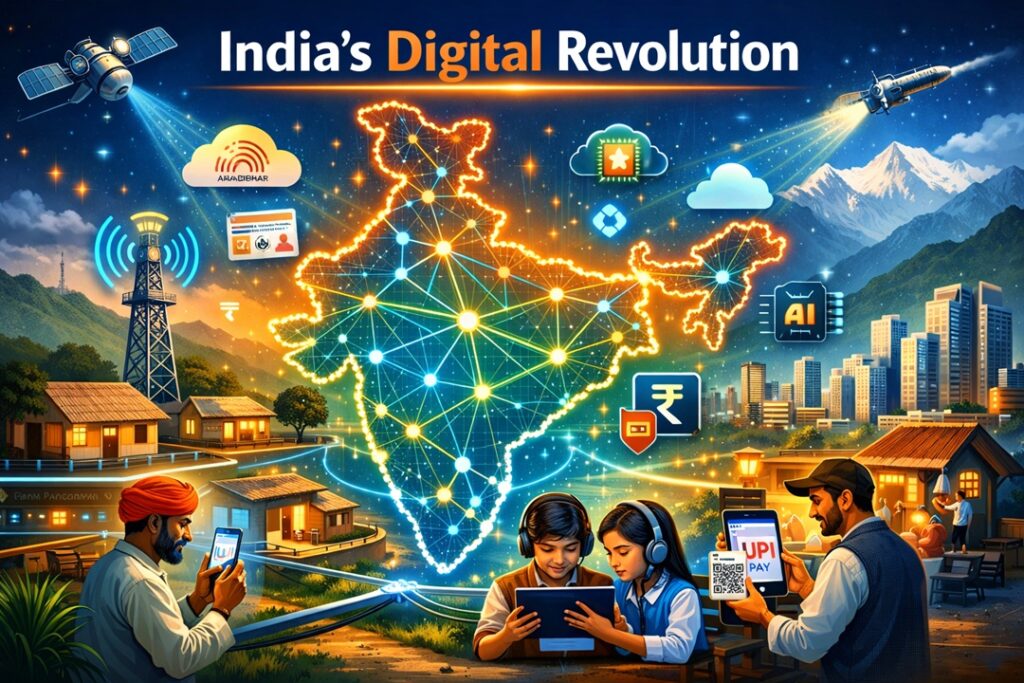
India’s digital transformation is accelerating as the BharatNet programme has connected more than 2.15 lakh Gram Panchayats, while broadband users have surpassed 1 billion by early 2026, highlighting rapid expansion in digital connectivity.
Understanding the Digital Connectivity Gap
Meaning: – The Digital Divide refers to the disparity between individuals or regions that have access to information and communication technologies (ICT) and those that remain digitally excluded. In India, bridging this gap requires strengthening nationwide connectivity infrastructure, expanding Digital Public Infrastructure (DPI) such as Aadhaar and UPI, and promoting digital awareness and skills to ensure inclusive socio-economic development.
Key Indicators of Digital Expansion in India
Growth in Internet Subscribers: India crossed 100 crore broadband connections in November 2025, compared with just 13.15 crore connections a decade earlier, indicating rapid digital adoption.
Decline in Data Prices: Mobile internet costs have fallen drastically by over 96%, declining from nearly ₹269 per GB in 2014 to around ₹8–10 per GB in 2026, making internet access highly affordable.
Expansion of Fibre Infrastructure: Optical fibre deployment has expanded significantly, reaching nearly 42.36 lakh route kilometres by 2025, strengthening digital backbone infrastructure.
Rural Digital Skill Development: Through PMGDISHA, the government has trained over 6.39 crore rural citizens in basic digital literacy by 2024.
Importance of Reducing the Digital Gap
Improving Welfare Delivery: Digital platforms enhance transparency and ensure benefits reach intended beneficiaries efficiently.
Example: Aadhaar-based Direct Benefit Transfer (DBT) systems facilitate the direct transfer of subsidies to over 143 crore beneficiaries, reducing leakages.
Strengthening Financial Inclusion: Digital connectivity enables rural citizens to access banking services and digital payments.
Example: The UPI payment system processes around ₹28.33 lakh crore transactions monthly, enabling small traders and vendors to accept digital payments.
Ensuring Equal Educational Opportunities: Online learning platforms allow students in remote regions to access quality education resources.
Example: Platforms such as DIKSHA and SWAYAM provide over 18,000 digital courses developed by leading academic institutions.
Enhancing Agricultural Market Access: Digital platforms enable farmers to access transparent markets and better price discovery.
Example: e-NAM integrates over 1,522 agricultural mandis, benefiting nearly 1.79 crore farmers across the country.
Government Measures to Expand Digital Access
BharatNet Programme: A flagship initiative aimed at connecting 2.5 lakh Gram Panchayats with high-speed optical fibre to strengthen rural internet infrastructure.
PM-WANI Initiative: Establishment of public Wi-Fi access points through local shops, providing affordable internet connectivity in underserved areas.
Common Service Centres (CSCs): A network of nearly 6.5 lakh Village Level Entrepreneurs (VLEs) delivering digital services to rural citizens.
Drone Technology for Rural Women: Through Namo Drone Didi, women Self-Help Groups are trained to use drones for agricultural applications, improving productivity and livelihoods.
IndiaAI Mission: A ₹10,300 crore national programme aimed at strengthening AI infrastructure, computing resources and datasets for startups and researchers.
Persistent Challenges
Gender-Based Digital Gap: Women in rural areas still face lower access to smartphones and internet services, limiting their digital participation.
Language Accessibility Issues: Much of the internet’s valuable content remains in English, creating barriers for non-English speakers despite initiatives like Bhashini.
Last-Mile Connectivity Limitations: While fibre networks reach many Gram Panchayats, stable household-level connectivity remains inconsistent in difficult terrains.
Cybersecurity and Online Fraud: Limited awareness about digital safety increases vulnerability to phishing attacks and financial scams, particularly among first-time internet users.
Future Priorities
Satellite-Based Connectivity: Leveraging Low Earth Orbit satellite networks and future 6G technologies to provide internet access in geographically challenging regions.
Local Language Digital Ecosystem: Expanding AI-based translation systems like Bhashini to ensure inclusive access to digital services.
Next-Generation Digital Skills: Integrating advanced digital training such as AI, coding and cybersecurity education in schools and innovation labs.
Affordable Device Ecosystem: Promoting the production and distribution of low-cost smartphones and tablets to bridge the device affordability gap.
Strengthening Regional Innovation Hubs: Establishing more technology incubators in Tier-II and Tier-III cities to support local entrepreneurship and innovation.
Conclusion
India’s digital journey demonstrates how technology-driven infrastructure, affordable internet, and digital literacy can transform governance, education and economic opportunities. By strengthening inclusive digital access, India is ensuring that the benefits of the digital revolution extend beyond cities and reach every village and citizen.
Source : PIB