
Sujal Gaon ID: Digital Mapping of Rural Water Supply Infrastructure
Context
The Union Ministry of Jal Shakti has rolled out Sujal Gaon ID, a unique digital code designed to digitally map and monitor rural piped drinking water schemes across India.
About Sujal Gaon ID
Concept:
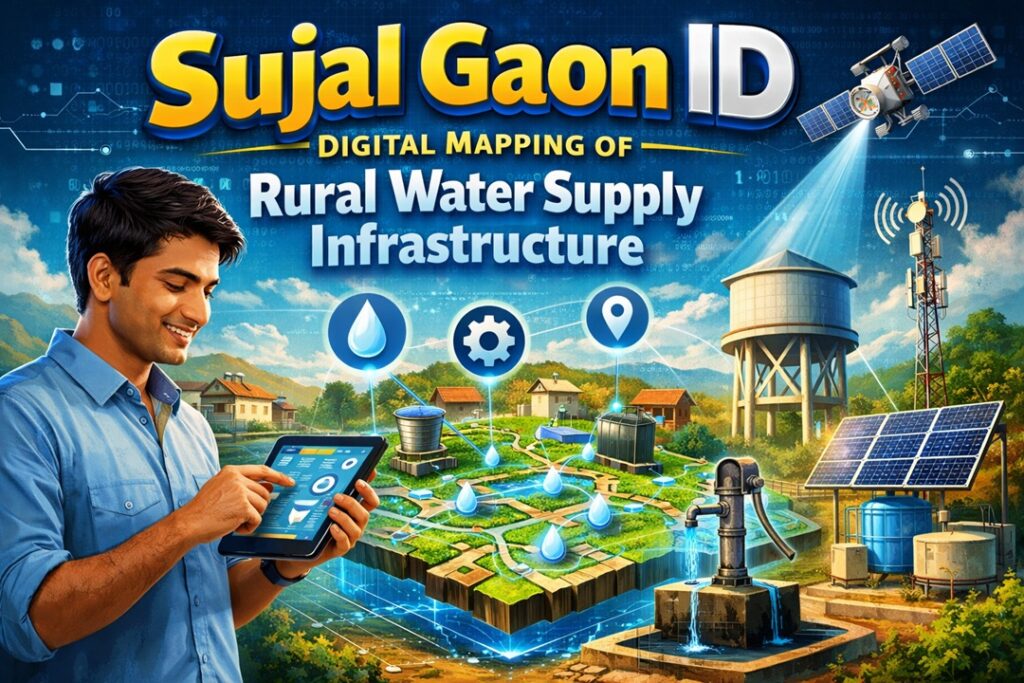
Sujal Gaon ID is a unique digital code assigned to each rural piped drinking water scheme in India. It allows systematic digital mapping of water supply infrastructure and service areas, integrating them into a national water governance database.
Institutional Framework:
The initiative has been introduced under Jal Jeevan Mission (JJM) 2.0, which seeks to ensure Functional Household Tap Connections (FHTCs) for every rural household.
Core Objective:
To build a comprehensive digital registry of rural drinking water systems and enhance transparency, accountability, and evidence-based planning in water supply management.
Operational Mechanism
- Unique Scheme Identifier: Each rural piped water supply scheme receives a distinct Sujal Gaon digital code, enabling precise tracking of infrastructure and service delivery.
- Linkage with Sujalam Bharat System: The identifier is integrated with Sujalam Bharat IDs, combining infrastructure-level and service-area mapping within a unified platform.
- Digital Water Governance Architecture: Establishes a source-to-household monitoring framework for rural water supply networks across India.
- Data-driven Monitoring: Facilitates real-time tracking of scheme performance, infrastructure status, and service outcomes by government agencies.
- Expanding Coverage: Around 1.64 lakh Sujal Gaon IDs have been created across 31 States and Union Territories, linked with nearly 67,000 Sujalam Bharat IDs.
Importance
- Improved Infrastructure Oversight: Digital mapping enhances monitoring and reduces inefficiencies in rural water systems.
- Evidence-based Policy Planning: Reliable data helps authorities design better maintenance, expansion, and water security strategies.
- Efficient Service Delivery: Supports effective operation and maintenance of piped drinking water schemes in rural areas.
Source : PIB