
Coconut Sector Push: India’s Leadership and New Promotion Scheme
Context
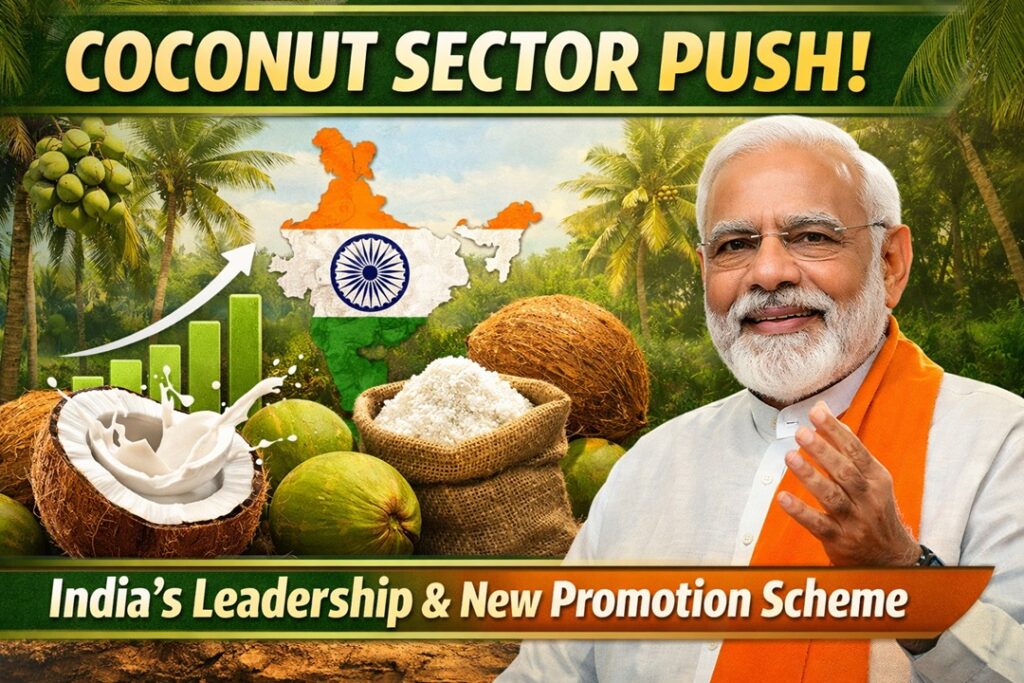
The Government of India has highlighted that India remains the largest coconut producer globally, contributing over 30% of total world output. In line with this, the Coconut Promotion Scheme, announced in the Union Budget 2026–27, is being formulated to enhance productivity, farmer income, and export competitiveness.
Proposed Coconut Development Programme
Nature of Initiative:
A Central Sector Scheme focused on improving coconut cultivation efficiency, enhancing quality output, and promoting downstream industries in major producing regions.
Budgetary Backing:
Introduced in Union Budget 2026–27 as part of a ₹350 crore package for high-value plantation crops such as coconut, cocoa, and cashew.
Core Objectives
- Output Enhancement: Raise per-hectare yield through scientific interventions.
- Income Augmentation: Improve farmers’ earnings via diversification and market linkages.
- Global Positioning: Strengthen India’s competitiveness in coconut-based exports.
Key Intervention Areas
- Tree Renewal Strategy: Systematic replacement of aged and unproductive palms with high-yielding hybrids.
- Climate-Ready Cultivation: Promotion of pest-resistant and drought-tolerant varieties.
- Scientific Farming: Emphasis on irrigation efficiency, soil health, and modern agronomic practices.
- Processing & Branding: Support for coconut-based industries (oil, coir, food products) and export promotion.
- Farmer-Centric Measures: Capacity building, financial assistance, and institutional support.
Implementation Status
- Scheme is under formulation stage.
- Detailed guidelines and fund distribution across States/UTs are yet to be finalized.
India’s Coconut Economy: Key Facts
- Global Standing: 1st in coconut production
- Share in World Output: ~30.37%
- Area Under Cultivation: ~21.65 lakh hectares
- Annual Production: ~21.37 billion nuts
- Productivity Level: ~9871 nuts per hectare
- Livelihood Impact: Supports around 30 million people, including nearly 10 million farmers
Source : PIB