
EVM–VVPAT Randomization Strengthens Electoral Transparency
Context
The Election Commission of India has successfully carried out the initial phase of EVM-VVPAT allocation through randomization in Assam, Kerala, and Puducherry ahead of the April 2026 Assembly elections.
EVM-VVPAT Allocation Mechanism
Concept:
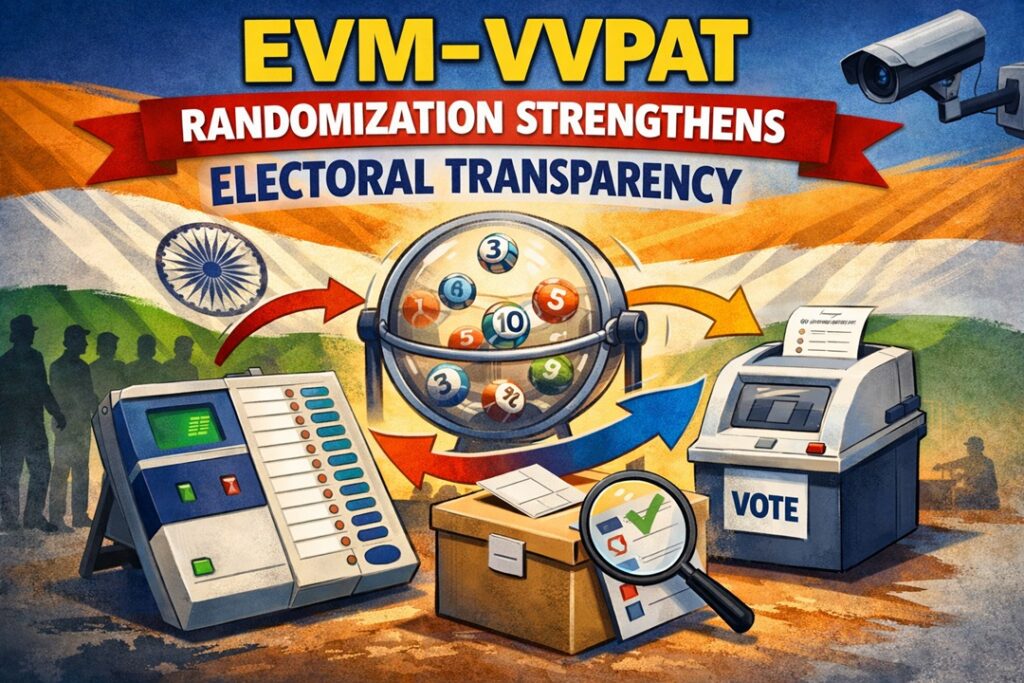
It is a structured, technology-based process that distributes electronic voting machines across constituencies and polling booths in a non-predictable manner, ensuring anonymity in deployment.
Evolution of the System
Background:
Although Electronic Voting Machines were introduced in the 1990s, a standardized digital randomization framework through the EVM Management System (EMS) became compulsory during the mid-2000s to strengthen transparency.
Core Objective
Purpose:
To remove discretion in machine distribution, prevent manipulation, and reinforce trust in the electoral framework.
Operational Workflow
Stepwise Process:
- Phase 1 (District → Constituency):
Verified machines post First Level Checking (FLC) are randomly allotted from district storage to Assembly Constituencies. - Phase 2 (Constituency → Booth):
After finalization of candidates, machines are re-randomized and assigned to specific polling stations.
Salient Attributes
- Digital Randomization Tool:
The EMS software ensures algorithm-based allocation, minimizing predictability. - Inclusive Oversight:
Conducted under the supervision of District Election Officers with participation from political party representatives. - Secure Storage Protocol:
Post first allocation, machines are stored in sealed strong rooms under continuous surveillance. - Transparency Measures:
Details such as machine serial numbers are shared with stakeholders at each stage.
Democratic Importance
- Trust Enhancement:
Presence of party representatives reduces doubts about manipulation. - Tamper Prevention:
Since final deployment is unknown in advance, targeted interference becomes impractical. - Institutional Credibility:
Strengthens fairness and integrity of the electoral process.
Source : PIB