
Israeli Airstrikes on Iran’s Nuclear Infrastructure: Strategic Escalation
Context
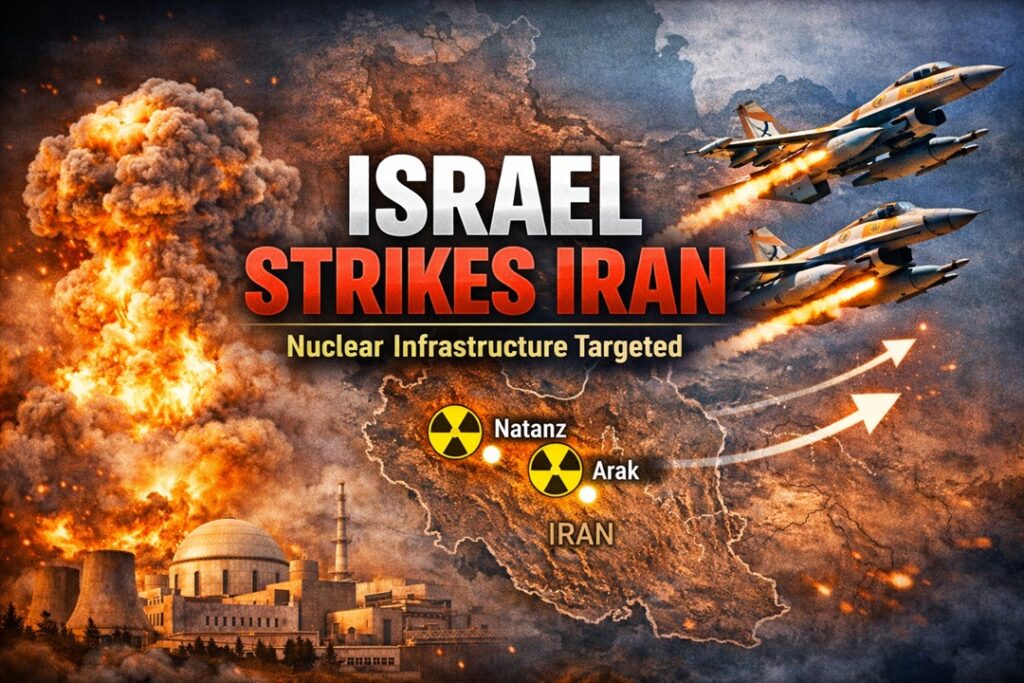
The Israel has heightened regional tensions by carrying out direct airstrikes on crucial nuclear-linked facilities in Iran, signalling a shift from covert operations to overt military action.
Nature of the Operation
- Strategic Objective: The strikes aimed to impair upstream components of Iran’s nuclear fuel cycle.
- Operational Evolution: Marks a transition from cyber/sabotage tactics to precision kinetic airstrikes.
- Capability Impact: Focused on constraining Iran’s ability to develop plutonium routes and enriched uranium inputs.
Key Installations Targeted
1. Khondab (Arak) Heavy Water Facility
- Location: Central Iran, near Arak.
- Core Function: Produces heavy water used in reactors capable of generating plutonium.
- Strategic Concern: Israel claims ongoing reconstruction could restore plutonium-producing capability, bypassing prior commitments.
2. Ardakan Uranium Processing Unit
- Location: Yazd province.
- Core Function: Converts uranium ore into yellowcake (U₃O₈), essential for enrichment.
- Status Update: Iranian authorities confirmed the strike but reported no radiation leakage or casualties.
Strategic Consequences
- Fuel Cycle Disruption: Attacks on early-stage inputs like heavy water and yellowcake may delay Iran’s nuclear programme.
- Escalation Risk: Moves beyond the “shadow conflict,” raising chances of direct retaliation or proxy involvement (e.g., Hezbollah, Houthis).
- Safety Concerns: While no immediate leak was reported, Rafael Grossi has highlighted risks associated with targeting nuclear-related sites.
Broader Geopolitical Signal
- Policy Shift: Reflects Israel’s readiness for pre-emptive military action against nuclear threats.
- Regional Stability: Increases the probability of a wider West Asian conflict with global repercussions.
Source : DD News