
Climate Change as a Public Health Emergency in India
Context
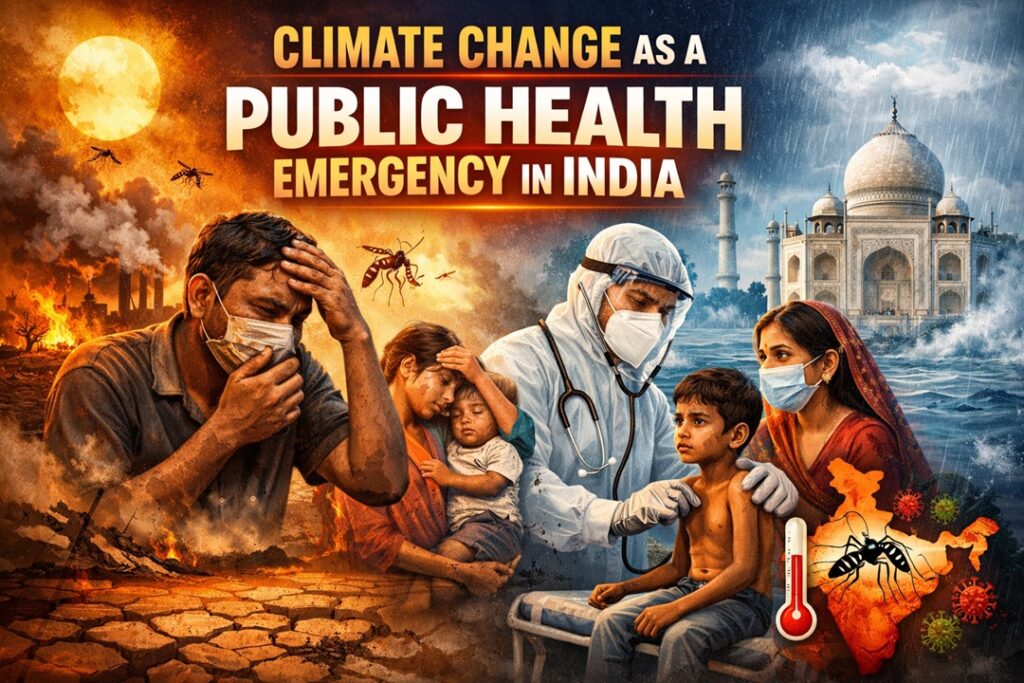
Health specialists have cautioned that Climate Change in India has evolved beyond an ecological issue into a critical public health emergency.
Understanding the Phenomenon
Definition: Climate change denotes persistent alterations in temperature and precipitation patterns, largely caused by anthropogenic emissions of greenhouse gases from fossil fuel use.
Emerging Epidemiological Trends
- Shift in Disease Seasonality: In Delhi-NCR, dengue outbreaks now peak during October–November instead of early autumn.
- Spread to New Ecologies: Vector-borne diseases like malaria are appearing in hill regions such as Himachal Pradesh.
- Air Quality Burden: Rising cooling demand elevates PM2.5 concentration, harming respiratory and cardiovascular systems.
- Thermal Stress Mortality: Warmer nights in metros reduce physiological recovery, increasing heat-related fatalities.
Drivers Intensifying the Crisis
- Urban Heat Entrapment: Built-up areas retain heat, worsening nighttime temperatures.
- Breakdown of Urban Services: Flooding events overload sanitation systems, triggering water-borne diseases.
- Emission Feedback Cycle: Increased AC usage leads to higher emissions, further aggravating warming.
- Water Insecurity: Drought conditions push populations toward contaminated water sources.
- Agrarian Stress: Erratic rainfall and heat waves lower crop productivity and nutritional value.
Health System Impacts
- Expansion of Vector Zones: Mosquito habitats are widening, exposing immunologically naïve populations.
- Cardio-Metabolic Risks: Fine particulate matter accelerates vascular damage, increasing stroke and heart disease risk.
- Maternal-Neonatal Vulnerability: Heat exposure correlates with premature births and underweight infants.
- Occupational Health Risks: Outdoor workers face rising cases of chronic kidney disease due to dehydration.
- Nutrition Deficits: Heat stress reduces livestock productivity, affecting milk supply and child nutrition.
Strategic Response Framework
- Adaptive Health Infrastructure: Strengthen hospitals to manage climate-induced disease surges.
- Predictive Surveillance: Integrate climate data with health systems for early warnings.
- Sustainable Urban Design: Promote green spaces and reflective roofing to reduce heat intensity.
- Energy Transition: Shift towards renewable energy to reduce emission dependency.
- Food Security Measures: Encourage climate-resilient crops and support livestock sustainability.
Conclusion
Climate change is now a direct determinant of public health outcomes in India. Addressing it solely as an environmental issue underestimates its widespread human consequences. A health-centric approach is essential for building resilience against the growing climate-induced disease burden.
Source : The Hindu