
Dandami Maria Tribe of Bastar: Tradition, Dance, and Tribal Identity
Context
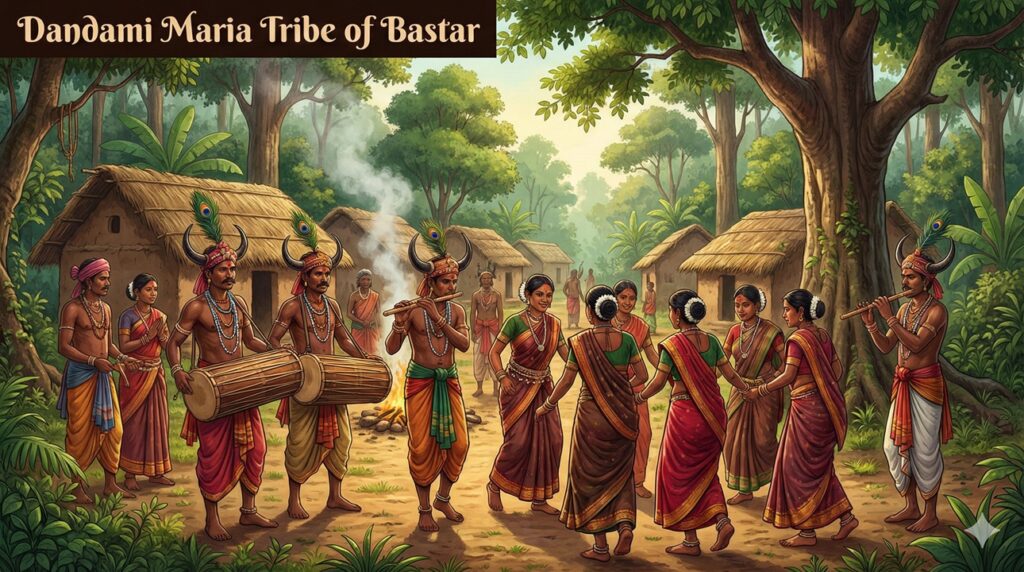
The Bison Horn Maria dance of the Dandami Maria tribe from Bastar, Chhattisgarh, exemplifies enduring tribal cultural traditions that continue to thrive despite modern influences.
Identity of the Tribe
The Dandami Maria, also known as Bison Horn Maria or Khalpati Maria, belong to the Gond (Koytorias) ethnic group. They are distinguished by their ceremonial dance and bison horn–shaped headgear, which symbolize their cultural identity.
Origin and Language
They trace their lineage to the ancient Gondwana region of central India and are part of the Gond tribal tradition, one of the oldest indigenous groups of the Deccan plateau. They speak Dandami Maria and many use Gondi dialects, an oral Dravidian language.
Habitat and Livelihood
The tribe predominantly resides in Bastar, southern Chhattisgarh, in areas such as Darbha, Tokapal, Lohandiguda, Dantewada, and nearby forests. Their forest-based settlements shape their subsistence agriculture, hunting, and fishing practices
Bison Horn Maria Dance
Performed by men and women during festivals, rituals, and community gatherings, the dance is marked by distinctive attire. Men wear bamboo headgear shaped like bison horns, adorned with horns, feathers, cowries, and cloth strips, along with bead necklaces and ankle bells. Women wear handwoven saris, silver and brass jewellery, coin ornaments, and ceremonial crowns.
Social and Cultural Practices
The ghotul (youth dormitory) plays a central role in socialisation and cultural transmission. Distinct hairstyles, ornaments, and ceremonial objects like tobacco boxes and combs hold cultural significance. The tribe allows divorce and widow remarriage, reflecting flexible social norms.
Cultural Significance
The traditions of the Dandami Maria represent a living tribal heritage, preserving Gond identity and pre-Aryan cultural practices. They maintain a nature-centric worldview, celebrating hunting traditions, seasonal cycles, and reverence for forest deities such as Budhadev and Danteshwari Mai.
Conclusion
The Bison Horn Maria dance and associated cultural practices of the Dandami Maria tribe highlight the resilience of tribal traditions in modern India. They provide insight into indigenous knowledge systems, social structures, and cultural identity, making them an important subject for UPSC studies on tribal affairs and cultural heritage.
Source : The Hindu