
Dopamine Overdose : The Neurochemical Cost of the Digital Age
Context
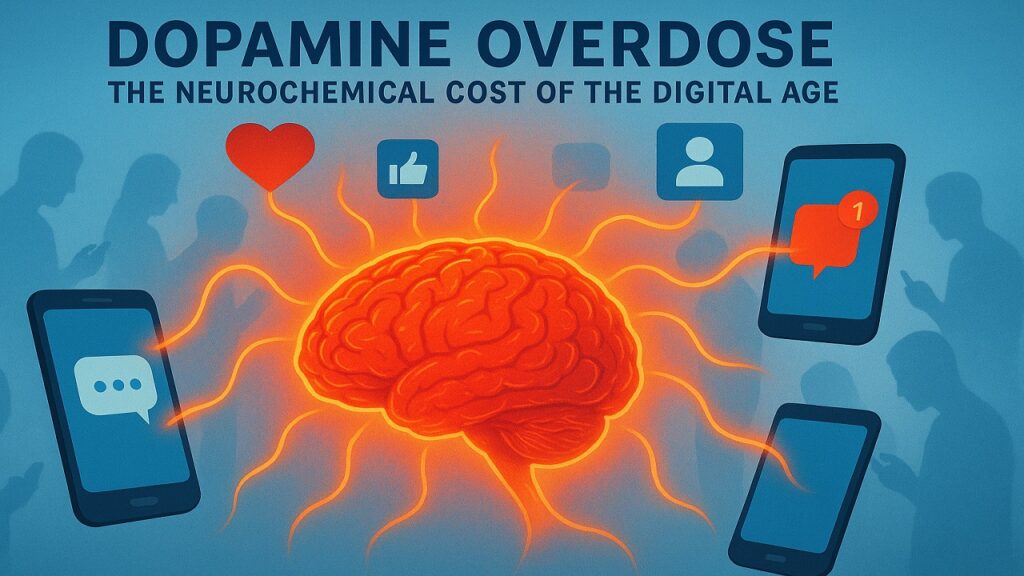
Neuroscientists and mental health experts are increasingly warning about a “dopamine overdose” epidemic in modern society. The rapid spread of digital lifestyles, driven by social media, instant gratification, and constant screen exposure, is reshaping the human brain’s reward system.
This overactivation of the brain’s pleasure pathways is leading to rising anxiety, depression, attention disorders, and a decline in real-world motivation—especially among the youth.
What is Dopamine?
- Dopamine is a neurotransmitter responsible for regulating pleasure, motivation, learning, and movement.
- It is released during rewarding experiences such as eating, achieving goals, or receiving appreciation.
- It activates the mesolimbic reward pathway, which runs from the ventral tegmental area (VTA) to the nucleus accumbens, reinforcing actions that bring joy or satisfaction.
Role of Dopamine in the Brain
- Pleasure and Reward: Dopamine reinforces behaviors that are pleasurable, encouraging repetition.
- Motivation and Learning: It drives goal-directed actions and helps in habit formation.
- Addiction and Imbalance: Artificial stimulation (through drugs or technology) leads to receptor desensitization, demanding stronger stimuli to achieve satisfaction.
- Chronic Elevation Impact: When dopamine levels remain high for long periods, natural satisfaction levels drop, causing boredom, emotional fatigue, and low motivation.
Technology as the New Dopamine Driver
- Digital Stimulation: Every like, notification, or scroll releases dopamine, creating dependency.
- Eg: MIT (2023) found that the average smartphone user checks their phone 150 times a day, indicating compulsive patterns.
- Algorithmic Manipulation: Social media platforms use intermittent reward systems, similar to casino designs, to maximize engagement.
- Eg: Tristan Harris, former Google ethicist, termed this “behavioral engineering for attention addiction.”
- Neural Overlap with Drug Use: fMRI studies show that social media use activates the same brain regions as drugs like cocaine—particularly the nucleus accumbens.
- Eg: Nature Communications (2022) found identical neural signatures between digital highs and substance highs.
- Digital Dependency: Constant online stimulation reduces impulse control and increases anxiety.
- Eg: Pew Research (2024) reported that 63% of adults feel anxious when separated from their phones—signs of digital withdrawal.
- Teenage Vulnerability: Adolescents are more affected due to neural plasticity and emotional immaturity, which can lead to long-term changes in attention and mood.
- Eg: American Psychological Association (2023) found that teens using social media for over 3 hours a day had 60% higher rates of depression.
Impact on Youth and Mental Health
- Neurochemical Desensitization: Continuous overstimulation dulls dopamine receptors, making real-life experiences less enjoyable.
- Eg: Stanford Medicine (2023) confirmed receptor downregulation in teens exposed to heavy screen time.
- Shorter Attention Spans: Constant digital multitasking fragments focus and mimics attention deficit symptoms.
- Eg: Microsoft (2023) reported an average attention span of 8.25 seconds, shorter than a goldfish’s.
- Emotional Instability: Overexposure to online stimuli triggers mood swings, envy, and emotional exhaustion.
- Eg: UNICEF (2024) found that 43% of adolescents reported emotional fluctuations linked to online comparison.
- Rising Anxiety and Depression: High dopamine cycles lead to withdrawal symptoms when offline, resembling addiction.
- Eg: WHO (2023) recorded a 28% rise in teenage depression due to digital overstimulation.
- Reduced Real-world Motivation: Dependence on artificial digital rewards makes study, sports, and relationships less engaging.
- Eg: Cambridge University (2024) survey showed 52% of youth struggle to stay motivated without digital input.
Path to Recovery – Rebalancing the Brain
- Dopamine Fasting: Periodic breaks from digital stimuli help reset the brain’s reward baseline.
- Eg: Silicon Valley professionals practice dopamine fasts by disconnecting from technology for 24–48 hours weekly.
- Mindful Practices: Activities like yoga, meditation, and journaling release dopamine in a steady and sustainable manner.
- Eg: Harvard Mind-Body Institute (2022) found a 27% reduction in stress among regular mindfulness practitioners.
- Physical Exercise: Regular movement increases natural dopamine and endorphin release, improving emotional balance.
- Eg: Lancet (2022) reported that 45 minutes of exercise daily lowers depression risk by 30%.
- Meaningful Human Connection: Real-life relationships and empathy release oxytocin and dopamine in balanced ways.
- Eg: Yale University (2024) found that face-to-face interactions enhance long-term well-being better than digital ones.
- Sleep and Nutrition: Adequate rest and nutrient-rich diets (especially foods high in tyrosine like bananas, almonds, and dairy) support healthy neurotransmitter balance.
- Eg: WHO guidelines recommend 7–9 hours of sleep for stable dopamine regulation.
Conclusion
The rise of a “dopamine economy”—fueled by algorithms, instant gratification, and digital excess—has transformed pleasure into dependency.
The human brain, once adapted for survival and gradual reward, is now hijacked by rapid digital stimuli.
To restore balance, individuals must practice mindful consumption, physical vitality, and real-world connection. True happiness lies not in chasing constant highs but in retraining the mind to find joy in depth, presence, and purpose.
Source : The Hindu