
Electric Vehicle Battery Safety Concerns in India
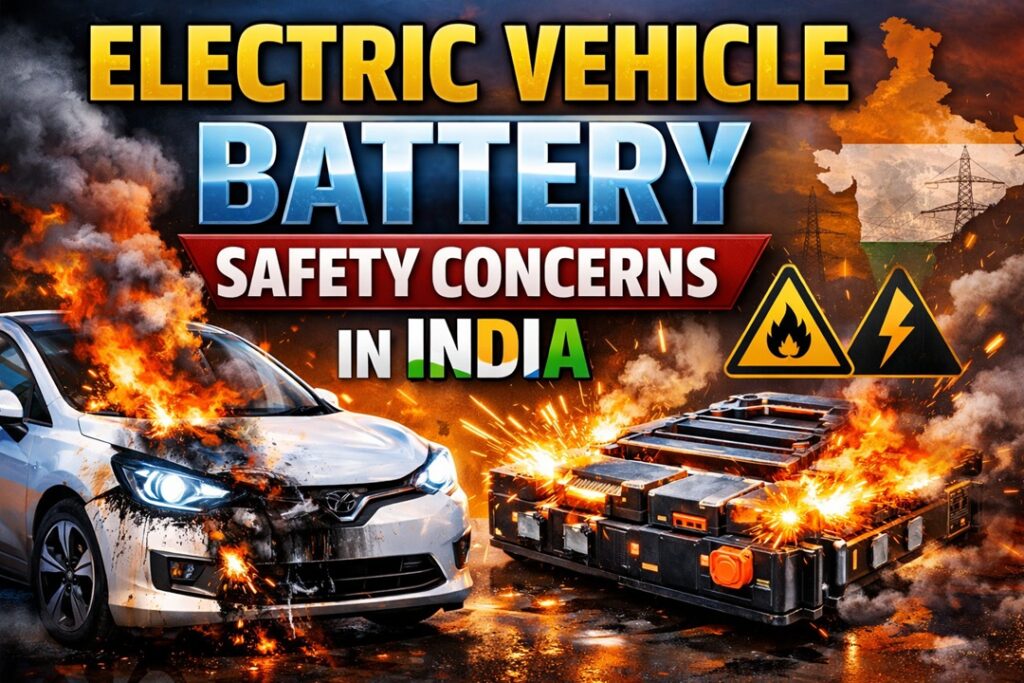
Context
A recent electric vehicle (EV) fire incident in Indore has raised fresh concerns regarding battery safety, emergency preparedness, and infrastructure gaps in India’s evolving EV ecosystem.
How Safe are EV Batteries?
Lithium-ion Backbone – Most EVs rely on lithium-ion batteries, similar to those used in consumer electronics.
Advantages – High energy density, longer operational life, and superior efficiency over lead-acid batteries.
Built-in Safeguards – Battery Management System (BMS) monitors temperature, voltage, and charging cycles to ensure safe functioning.
Risk Element – System failures or external stress can still trigger hazardous conditions.
Understanding Thermal Runaway
Definition – A chain reaction where overheating in one cell spreads rapidly across the battery pack.
Mechanism – Heat generated during charging/discharging accumulates, overwhelming cooling systems.
Consequences – Sharp temperature rise, emission of toxic gases (e.g., hydrogen fluoride), and intense fire.
Challenge – Fires spread quickly and are difficult to suppress.
Key Triggers Behind Battery Fires
Mechanical Stress – Accidents or impacts can deform battery cells, causing internal short circuits.
Charging Irregularities – Overcharging or use of substandard chargers destabilizes battery chemistry.
Production Flaws – Microscopic defects can create unintended electrode contact and overheating.
Climatic Pressures – High temperatures, direct sunlight, and post-drive charging increase thermal stress.
Water Exposure – Floodwater ingress can trigger delayed short circuits.
Ageing & Neglect – Degradation over time and lack of maintenance heightens vulnerability.
EV Fires vs Conventional Vehicle Fires
Not Uniquely Risky – Petrol and diesel vehicles also face frequent fire hazards.
Distinct Characteristics of EV Fires –
- Higher combustion temperatures
- Faster spread
- Greater difficulty in extinguishing
Technical Reason – Self-sustaining reactions due to internal oxygen release demand specialized firefighting methods.
Insights from the Indore Incident
Compounding Risks – Presence of LPG cylinders and nearby fuel-based vehicles intensified damage.
Infrastructure Gaps – Failure of electronic locks during power outage worsened evacuation challenges.
Key Lesson – Disasters often result from combined systemic failures, not just battery malfunction.
Technological & Policy Responses
Thermal Management Innovations – Liquid cooling and emerging phase-change cooling technologies.
Next-Gen Batteries – Solid-state batteries promise reduced fire risk and higher stability.
Safety Engineering – Internal fire barriers and improved insulation within battery packs.
Regulatory Strengthening –
- BIS safety norms updated (2023)
- AIS-156 standards mandate thermal propagation tests
- Minimum 5-minute escape window ensured
Role of Consumer Practices
Safe Charging – Use certified chargers and avoid prolonged unattended charging.
Electrical Readiness – Ensure home wiring supports EV load.
Thermal Care – Allow battery cooling before recharging after long drives.
Inspection Culture – Post-accident battery checks and routine maintenance are essential.
Fire Safety – Maintain ventilated, clutter-free charging spaces.
Future Outlook
Clean Mobility Imperative – EVs remain central to India’s sustainable transport transition.
Risk Perspective – Fires are rare but high-impact, requiring proactive mitigation.
Source : The Hindu