
Ensuring Ethical AI and Efficient Data Centres in India
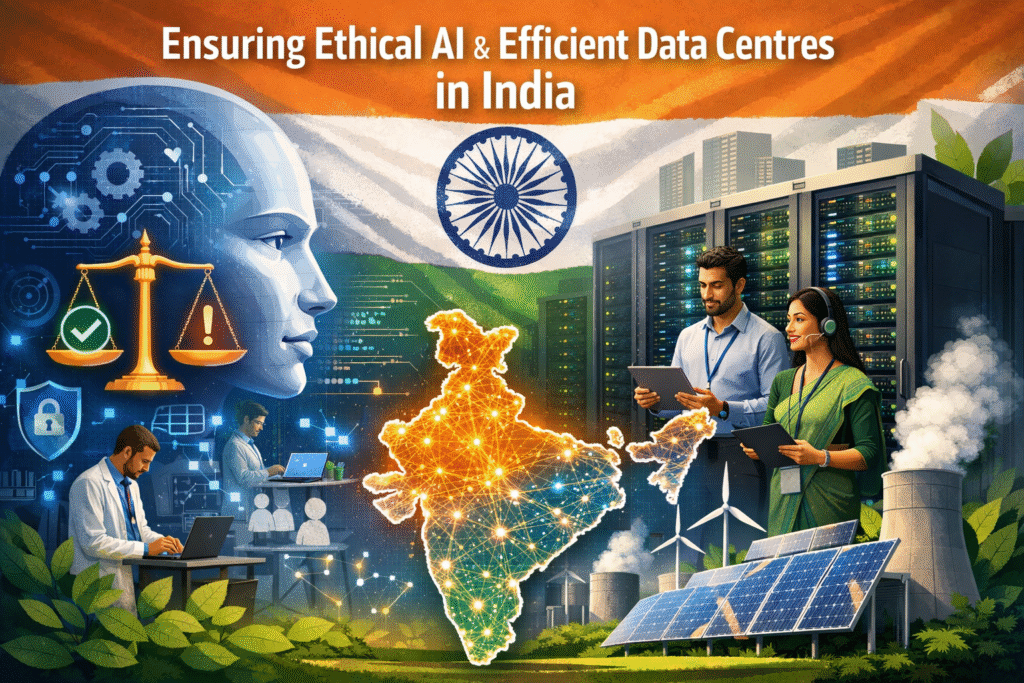
Context: The Government of India, through the Bureau of Indian Standards (BIS), recently notified India’s first standards for cloud computing, data centre performance, and ethical Artificial Intelligence (AI) under the BIS Rules, 2018. The initiative aims to strengthen India’s digital infrastructure and align it with global technology and ethical standards as the country expands its AI and data economy.
Introduction
India’s digital economy is rapidly expanding with increasing reliance on cloud computing, Artificial Intelligence, and large-scale data centres. In this context, the introduction of standardized norms for cloud systems, data centre efficiency, and ethical AI deployment is a significant step toward building a reliable, secure, and globally compatible digital ecosystem.
Standardized Digital Infrastructure Framework: The BIS notification establishes a formal but voluntary framework for regulating digital infrastructure in India. It provides clear operational norms for cloud computing systems, data centre efficiency, and ethical AI deployment, ensuring consistency across sectors.
International Alignment with Global Standards: The standards are aligned with frameworks of the International Organization for Standardization (ISO) and the International Electrotechnical Commission (IEC). This alignment ensures global interoperability and credibility of India’s digital infrastructure.
Uniform Cloud Terminology: The framework introduces standardized definitions and technical norms for cloud computing systems, enabling seamless integration across sectors such as finance, healthcare, governance, and digital public infrastructure.
Data Centre Cooling Efficiency Ratio: The standards introduce Cooling Efficiency Ratio (CER) to measure how efficiently data centres remove heat relative to electricity consumption. This helps improve energy efficiency and operational reliability of AI-driven data centres.
Adoption of Global Sustainability Metrics: The framework recognizes internationally used indicators such as Power Usage Effectiveness (PUE), Water Usage Effectiveness (WUE), and Carbon Usage Effectiveness (CUE) to evaluate the environmental performance of data centres.
Integration of Ethical AI Principles: Ethical considerations such as transparency, accountability, fairness, and bias mitigation are incorporated directly into the design and deployment stages of AI systems to promote responsible AI governance.
Voluntary Nature of Compliance: At present, compliance with these standards is voluntary. However, the government may make them mandatory through Quality Control Orders (QCOs) for critical sectors in the future.
Alignment with India’s Data Centre Expansion: The standards support the national vision of expanding India’s data centre capacity from about 1.5 GW in 2025 to nearly 8–10 GW by 2030, as projected by NITI Aayog.
Need for Standards in Cloud and Ethical AI
Ensuring Interoperability in Critical Sectors: Standardized cloud frameworks allow seamless data exchange across multiple platforms, which is essential for national digital platforms such as health, governance, and financial systems.
Managing Energy and Heat from AI Workloads: AI computing requires high processing power and generates significant heat, making efficient cooling standards necessary to reduce energy consumption and environmental impact.
Strengthening Public Trust in AI Systems: Ethical AI standards help prevent algorithmic bias and opaque decision making, thereby enhancing citizens’ trust in AI-driven governance systems.
Attracting Global Investment: Alignment with ISO-IEC standards increases confidence among global technology companies and investors, positioning India as a trusted destination for digital infrastructure and AI innovation.
Challenges Associated with the Standards
Rapid Technological Evolution: Artificial Intelligence and digital technologies evolve faster than regulatory standards, making it difficult for standard-setting institutions to keep frameworks continuously updated.
High Compliance Costs for Startups: Smaller technology firms and startups may face financial and technological challenges in meeting advanced infrastructure and ethical standards.
Cybersecurity Integration Gap: Current standards mainly address performance and ethical considerations, while deeper cybersecurity integration remains a critical requirement.
High Resource Consumption: The expansion of AI data centres may increase their share in India’s electricity consumption from about 0.8 percent to nearly 3 percent by 2030, raising concerns about power and water use.
Way Forward
Selective Mandatory Standards: The government can introduce Quality Control Orders in critical sectors such as finance, defence, and governance to ensure compliance.
Promotion of Green Data Centres: Incentives should be provided for renewable energy powered data centres, liquid cooling technologies, and efficient thermal management systems.
Dynamic Review Mechanism: BIS should establish a continuous review system to regularly update standards in response to emerging technologies such as generative AI and sovereign AI models.
Capacity Building and Certification: Nationwide training programs for IT auditors, regulators, and technology professionals will help ensure effective certification and implementation of the standards.
Strengthening Cybersecurity Integration: Future frameworks should incorporate strong cybersecurity protocols alongside ethical and performance standards to ensure secure digital infrastructure.
Conclusion
The introduction of standards for cloud computing, data centres, and ethical AI marks a major milestone in India’s digital governance framework. By aligning technological performance with ethical safeguards and global benchmarks, India is laying the foundation for a resilient, sustainable, and trusted digital ecosystem, supporting its ambition of becoming a global hub for AI and data-driven innovation.
Source : Mint