
Managing Obesity as a Chronic Disease: WHO’s Evidence-Based GLP-1 Guidelines
Context
The World Health Organization has released its first-ever global guideline on the long-term use of GLP-1 receptor agonist medicines for obesity treatment. This marks a major step in recognising obesity as a chronic, relapsing disease that requires sustained medical and behavioural management.
Introduction
The rising global burden of obesity and its linkage to cardiovascular, renal and metabolic disorders has prompted WHO to standardise clinical guidance on GLP-1 therapies. These guidelines aim to ensure evidence-based use, improve access, and address equity gaps, particularly for low- and middle-income countries like India.
1. Nature of the Guideline
A new WHO evidence-based policy framework that outlines the role of GLP-1 receptor agonists in treating obesity as a lifelong medical condition.
2. Recommendation for Adults
A conditional recommendation allowing the long-term use of semaglutide, tirzepatide and liraglutide for adult obesity management, excluding pregnant women.
3. Integration with Behavioural Therapy
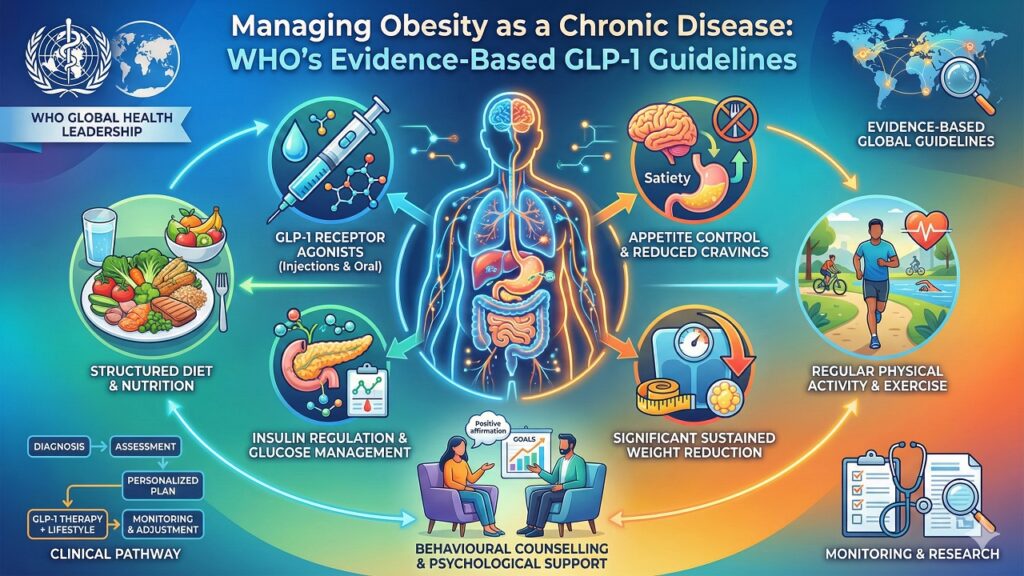
WHO stresses that GLP-1 treatment must be combined with structured diet plans, physical activity and behavioural counselling to ensure sustainable results.
4. Equity and Access Concerns
WHO warns that without affordability mechanisms, access will remain limited, with less than 10 percent of people needing GLP-1 medicines expected to receive them by 2030.
About GLP-1 Medicines
1. What They Are
A class of drugs originally designed for type-2 diabetes that mimic the hormone Glucagon-Like Peptide-1, which regulates appetite, satiety and insulin release.
2. Mechanism of Action
They reduce appetite, slow stomach emptying, improve insulin secretion, stabilise blood glucose, and enhance metabolic health, leading to sustained weight loss with long-term use.
3. Key Features
They deliver 10 to 20 percent body-weight reduction in many studies, improve obesity-related comorbidities, are administered as daily or weekly injections, and are included in the WHO Essential Medicines List for diabetes care.
Conclusion
WHO’s guideline underscores a shift towards recognising obesity as a chronic disease requiring integrated medical and behavioural strategies. For countries like India, ensuring equitable access, affordability and system preparedness will be crucial to effectively leveraging GLP-1 therapies for public health goals.