
Microplastics Pollution in Chennai’s Coastal Ecosystem
Context
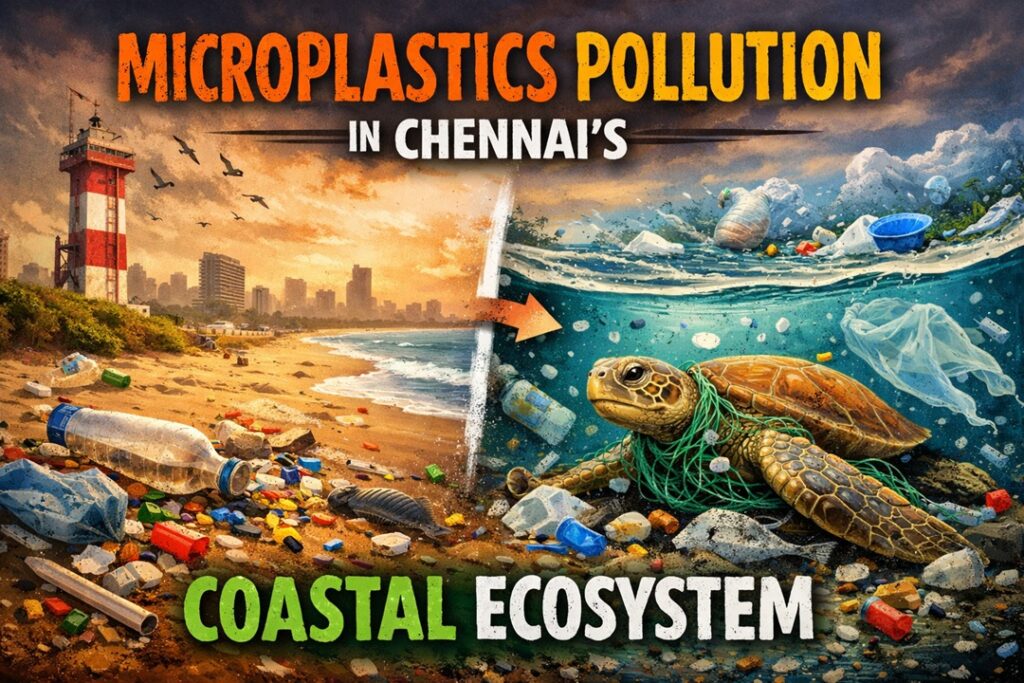
A recent study has highlighted that although microplastic levels on Chennai’s coastline remain below global averages, the dominance of nylon-based microfibers is emerging as a critical ecological concern.
Understanding Microplastic Pollution
Definition & Types: Microplastics are plastic fragments smaller than 5 mm, classified into primary (intentionally produced, e.g., microbeads) and secondary (formed by degradation of larger plastics).
Emerging Concern: Fiber-type microplastics (especially nylon) are more persistent and chemically active compared to conventional fragments.
Microplastics in India – Key Highlights
Airborne Presence: Microplastics constitute nearly 5% of PM2.5/PM10 in metro cities like Delhi and Kolkata, contributing to chronic inhalation exposure.
Aquatic Burden: India contributes ~3.9 lakh tonnes annually to aquatic microplastic pollution, placing it among major global polluters.
Food Contamination: Marine salt and seafood samples show widespread contamination, indicating entry into the human food chain.
Human Intake: Average urban consumption is estimated at 5–7 grams per year through food, water, and air.
Major Sources of Microplastics
Fishing Activities: Discarded nylon nets and ropes degrade into harmful fibers, especially along coastal regions like Chennai.
Synthetic Clothing: Polyester and nylon garments release microfibers during washing, entering sewage systems.
Plastic Waste Mismanagement: Improper disposal leads to fragmentation of plastics (PET, HDPE) into microplastics.
Personal Care Products: Microbeads in cosmetics escape filtration and enter riverine and marine ecosystems.
Policy Measures & Interventions
Ban on Single-Use Plastics (2022): Prohibited 19 high-litter items to reduce secondary microplastic generation.
Plastic Waste Rules (EPR): Strengthened Extended Producer Responsibility to ensure lifecycle management of plastic packaging.
Coastal Clean-up Campaigns: Initiatives like “Swachh Sagar, Surakshit Sagar” aim to prevent plastic fragmentation at source.
Marine Litter Framework: Draft policy seeks coordinated monitoring and mitigation of land-based marine pollution.
Key Challenges
Measurement Gaps: Current monitoring focuses on quantity, neglecting toxicity variations (e.g., nylon fibers vs beads).
Bioaccumulation: Microplastics accumulate across trophic levels, posing long-term health risks.
Transboundary Spread: Ocean currents transport plastic waste across regions, complicating accountability.
Limited Alternatives: Lack of cost-effective biodegradable substitutes for nylon-based industrial uses.
Strategic Way Forward
Filtration Technology: Mandate microfiber filters in washing machines to curb textile-based pollution.
Eco-friendly Fishing Gear: Promote affordable biodegradable nets through subsidies and innovation.
Risk-based Standards: Shift towards evaluating toxicity based on polymer type and morphology.
Advanced Wastewater Treatment: Upgrade sewage plants with tertiary filtration systems to capture microplastics.
Consumer Awareness: Introduce labeling systems indicating plastic shedding potential in textiles.
Conclusion
Microplastics, particularly fiber-based pollutants like nylon, represent a silent yet escalating environmental hazard. Even with relatively lower concentrations, their persistence and toxicity necessitate urgent regulatory, technological, and behavioral interventions to safeguard marine ecosystems and human health.
Source : The Hindu