
Nationwide HPV Vaccination Drive to Prevent Cervical Cancer
Context
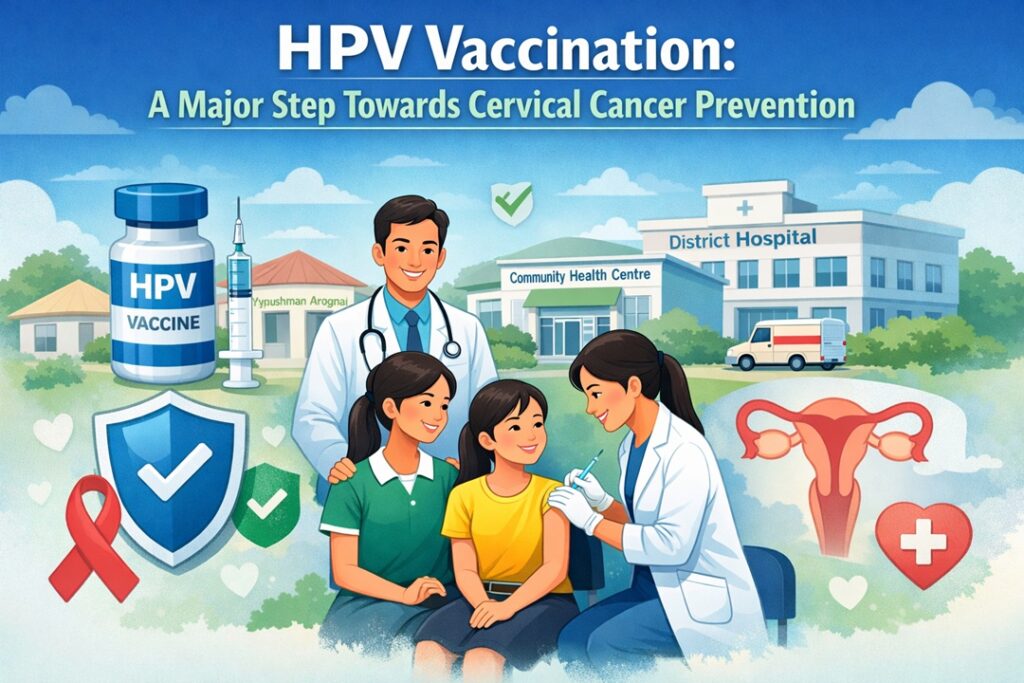
The Ministry of Health and Family Welfare is preparing to roll out a pan-India Human Papillomavirus (HPV) immunisation programme aimed at significantly reducing the incidence and mortality of cervical cancer among women.
About the HPV Immunisation
- Vaccine Profile: Gardasil, a non-live quadrivalent HPV vaccine, first approved in 2006
- Global Evidence: Over 500 million doses administered worldwide, establishing a strong safety record
- Effectiveness: Provides 93–100% protection against cervical cancer
- Public Health Impact: Substantial global decline in HPV infections, pre-cancerous cervical lesions, and cervical cancer rates
- Strain Coverage: Protects against HPV types 6, 11, 16, and 18
- Immunisation Schedule: Single-dose regimen offering long-lasting immunity
- International Adoption: More than 90 countries have implemented single-dose HPV vaccination
Beneficiary Population
- Age Group: Adolescent girls aged 14 years
- Scientific Rationale: Vaccination yields maximum benefit when administered before exposure to the virus
Programme Roll-out Framework
- Global Collaboration: Supported by Gavi, the Vaccine Alliance
- Cost to Beneficiaries: Voluntary and free of cost, ensuring inclusive coverage
- Service Delivery Institutions:
- Ayushman Arogya Mandirs
- Community Health Centres
- Sub-Divisional and District Hospitals
- Government Medical Colleges
- Medical Oversight: Administered by trained healthcare teams with emergency care facilities and post-vaccination follow-up
Cervical Cancer: Indian Scenario
- Nature of Disease: Malignancy affecting the cervix, the lower part of the uterus
- Etiology: Persistent infection with high-risk HPV strains, particularly types 16 and 18
- National Burden:
- India accounts for nearly 20% of global cases and 25% of global deaths
- Second most common cancer among women in India
- Around 80,000 new cases and over 42,000 deaths annually
- HPV 16 and 18 contribute to more than 80% of cases
Global Commitments and National Response
- WHO Cervical Cancer Elimination Targets (2030):
- Screen 70% of women using HPV-based testing
- Limit screening to two lifetime tests (at ages 35 and 45)
- Vaccinate 90% of girls by age 15
- Reduce incidence to below 4 cases per 1,00,000 women
- Indian Innovation: Indigenous HPV diagnostic kits developed by BIRAC under the Department of Biotechnology (DBT) through the Grand Challenges India (GCI) programme
Source : The Hindu