
NCBC’s Review Mechanism: A Case Study of West Bengal’s OBC Decisions
Context
The National Commission for Backward Classes (NCBC) has recommended excluding 35 communities, mostly Muslim, from the Central OBC List of West Bengal after reassessing the inclusions made in 2014. This is significant for reservation policy, constitutional authority, and Centre–State relations, making it important for UPSC.
Nature of the Body – Constitutional Status
• The NCBC is a constitutional body under Article 338B
• Responsible for protecting the rights and welfare of Socially and Educationally Backward Classes (SEBCs)
Establishment – Legal and Constitutional Background
• Originally created under the NCBC Act, 1993
• Received constitutional status via the 102nd Constitutional Amendment, 2018
• Amendment inserted Articles 338B and 342A
Objective – Mandate and Purpose
• To advise, monitor, investigate, and recommend on SEBC-related matters
• Ensures proper inclusion or exclusion in backward class categories
• Addresses socio-economic development and rights protection of SEBCs
Composition – Structure of Membership
• Consists of five members: Chairperson, Vice-Chairperson, and three Members
• All appointed by the President of India
• Hold rank and pay equivalent to Secretary, Government of India
Functions – Oversight and Advisory Role
• Monitors implementation of constitutional safeguards for SEBCs
• Inquires into complaints of misuse or denial of reservation benefits
• Advises Union and State governments on SEBC policy issues
• Reviews development and welfare programs for backward classes
• Submits annual and special reports to the President for Parliament and State Legislatures
Powers – Legal and Procedural Authority
• Has civil court powers such as summoning witnesses and demanding documents
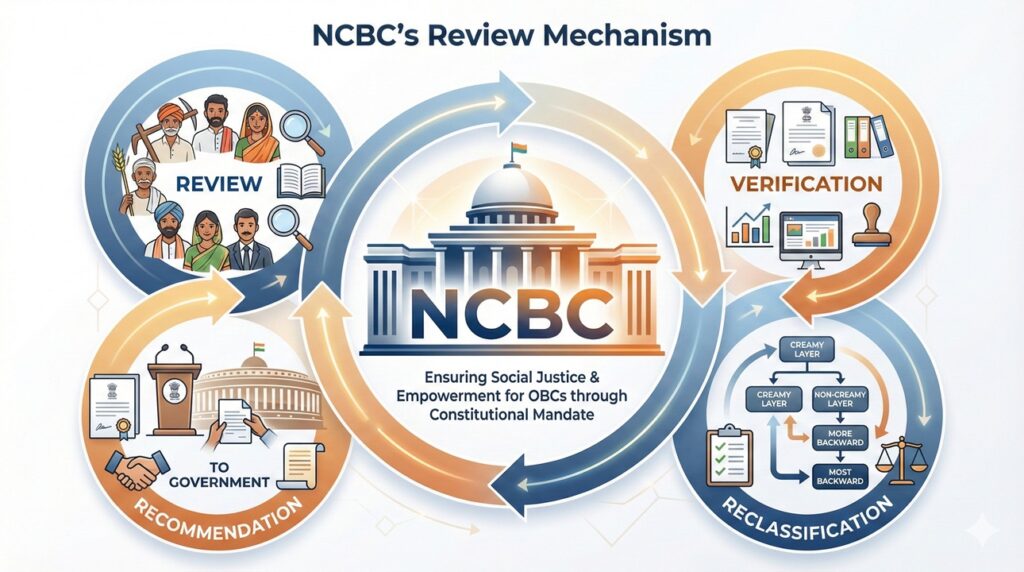
• Recommends inclusion or exclusion in the Central OBC List
• Final decision must be approved by Parliament under Article 342A
Conclusion
The NCBC is central to India’s affirmative action and social justice framework, ensuring reservation benefits reach genuinely backward communities. The West Bengal case highlights the importance of transparent data, constitutional checks, and balanced federal mechanisms in OBC classification.
Source : The Hindu