
Nutrient Based Subsidy (NBS) Scheme
Context
The Government of India has approved the NBS rates for Rabi 2025–26, effective from 1 October 2025 to 31 March 2026, for Phosphatic and Potassic (P&K) fertilizers, including DAP and NPKS grades, to ensure affordability and timely availability for farmers.
Background and Launch
Introduction of the Scheme
· Launched on 1 April 2010 as a major reform in fertilizer subsidy policy
· Shifted from product-based subsidy to nutrient-based subsidy
Policy Significance
· Marked a structural change in the fertilizer sector
· Linked subsidy with nutrient content rather than fertilizer type
Objectives of the Scheme
Balanced Fertilization
· Promotes judicious and balanced use of fertilizers
· Prevents overuse of any single nutrient
Sustainable Agriculture
· Improves soil health
· Ensures long-term agricultural sustainability
Key Features of NBS
Nutrient-Based Subsidy Mechanism
· Subsidy determined on nutrient content
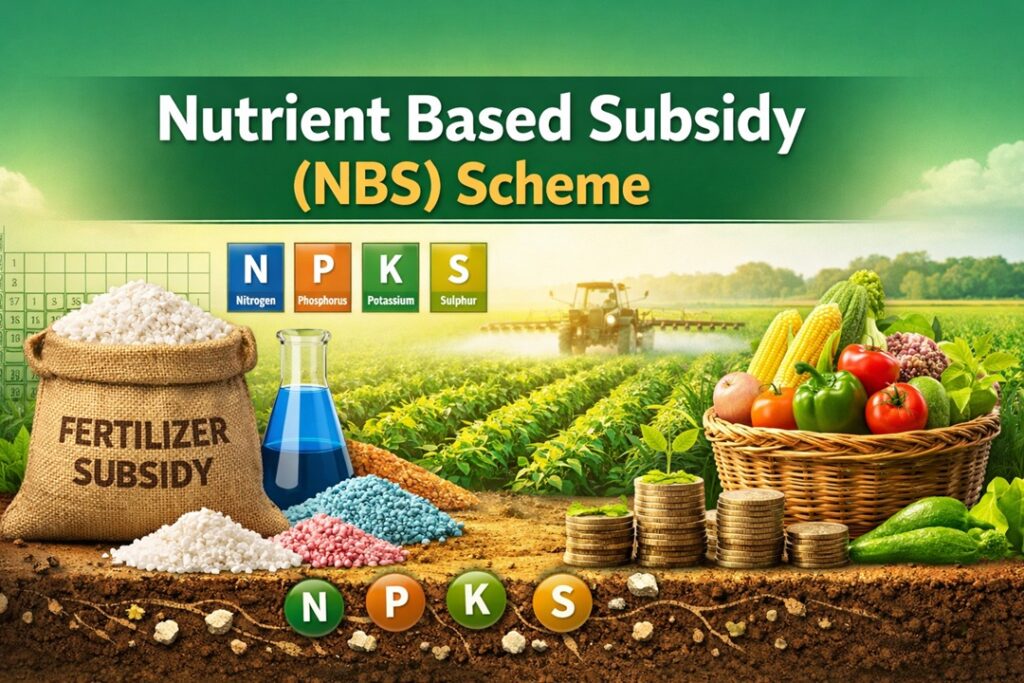
· Covers Nitrogen, Phosphorus, Potassium, and Sulphur
Farmer Empowerment
· Enables fertilizer choice based on soil and crop needs
· Encourages use of secondary and micronutrients
Subsidy Structure and Coverage
Fixed Subsidy Framework
· Provides fixed subsidy on P&K fertilizers, including DAP
· Subsidy revised periodically by the Government
Expansion of Fertilizer Grades
· Covered 25 P&K grades till Rabi 2023–24
· Expanded to 28 grades from Kharif 2024
· Includes nutrient-fortified fertilizer variants
Operational Management and Monitoring
Price and Profit Regulation
· Mandatory submission of audited cost data by companies
· Reasonable profit margins capped at 8 percent for importers, 10 percent for manufacturers, and 12 percent for integrated manufacturers
Transparency and Digital Monitoring
· Mandatory display of MRP and subsidy details on fertilizer bags
· Monitoring through Integrated Fertilizer Management System (iFMS)
· Overpricing punishable under the Essential Commodities Act, 1955
Major Achievements of NBS
Growth in Domestic Production
· DAP and NPKS output increased from 112.19 LMT in 2014 to 168.55 LMT in 2025
· Reduction in dependence on fertilizer imports
Improvement in Agricultural Productivity
· Foodgrain yields rose from 1,930 kg per hectare in 2010–11 to 2,578 kg per hectare in 2024–25
· Addressed multi-nutrient soil deficiencies
Fiscal Support
· Government provided over ₹2.04 lakh crore in subsidies during 2022–23 to 2024–25
Conclusion
The Nutrient Based Subsidy Scheme has promoted balanced nutrient use, strengthened soil health, enhanced crop productivity, and supported self-reliance in fertilizer production, making it a vital instrument for sustainable and farmer-centric agricultural development.
Source : PIB