
Santhali Language and Ol Chiki Script: Preserving Tribal Linguistic Heritage
Context
The President of India highlighted the role of language and literature in fostering unity and cultural cohesion during the centenary celebrations of the Ol Chiki script and Santali Language Day.
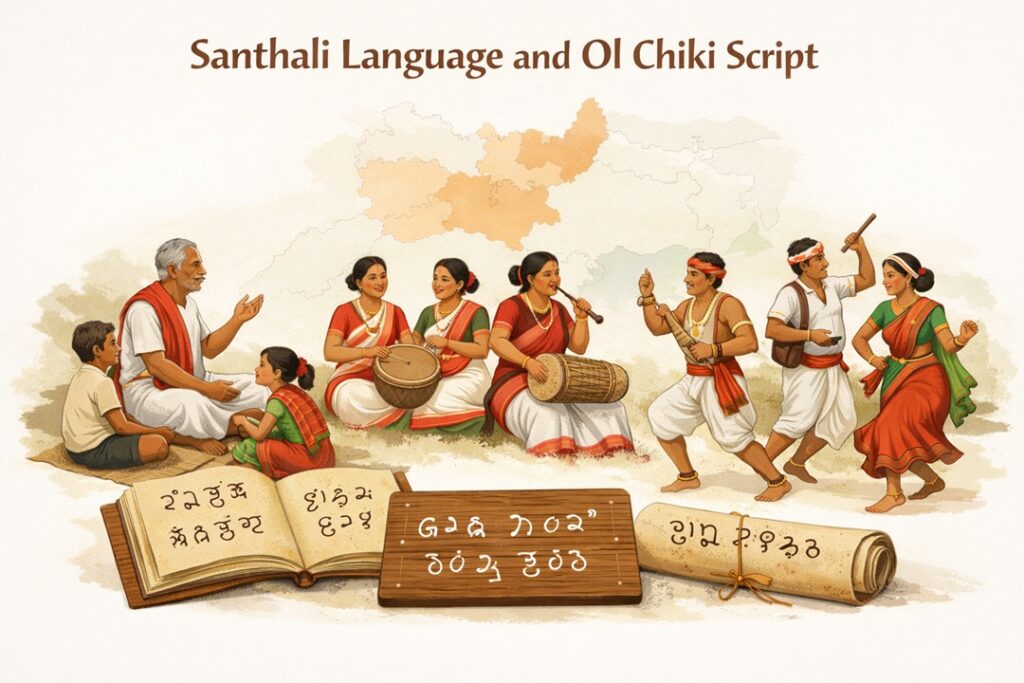
About Santhali Language
Santhali is one of India’s oldest living tribal languages, spoken primarily by the Santhal community and officially recognised under the Eighth Schedule of the Constitution of India.
Origin and Linguistic Family
Santhali belongs to the Munda branch of the Austroasiatic language family, making it distinct from Indo-European languages. It was traditionally preserved through oral traditions such as songs, folklore, myths and rituals.
Development of Ol Chiki Script
In 1925, Pandit Raghunath Murmu developed the Ol Chiki script, providing Santhali with a distinct written identity and reducing dependence on borrowed scripts.
Constitutional and Legal Status
Santhali was included in the Eighth Schedule through the 92nd Constitutional Amendment Act, 2003, ensuring constitutional recognition and promotion.
Geographical Spread and Speakers
The language is spoken by around 7 million people in India, mainly in Jharkhand, Odisha, West Bengal and Bihar, with additional speakers in Nepal and Bangladesh.
Key Linguistic and Cultural Features
Ol Chiki is a phonetic and scientific script designed to accurately represent Santhali sounds. The language shows agglutinative structure and tonal elements, similar to other Munda languages like Ho and Mundari. It has a rich oral literature preserving Santhal history, ecology and social values.
Cultural and Social Significance
Santhali language and Ol Chiki script act as symbols of tribal identity, self-respect and cultural continuity, strengthening community cohesion.
Conclusion
The recognition and promotion of Santhali and Ol Chiki reflect India’s commitment to linguistic diversity, cultural inclusion and preservation of indigenous heritage, aligning with constitutional values and inclusive governance.
Source : PIB