
Saranda Wildlife Sanctuary: Striking a Balance Between Nature and Community
Context:
- The Supreme Court of India has reserved its verdict on the Jharkhand government’s plea to reduce the proposed Saranda Wildlife Sanctuary area from 310 sq km to 250 sq km.
- The state government’s request emphasizes the protection of tribal habitation and safeguarding community rights, highlighting the delicate balance between ecological conservation and tribal livelihoods.
About Saranda Wildlife Sanctuary
1. What It Is:
- A proposed wildlife sanctuary located in West Singhbhum district, Jharkhand within the Saranda Forest Division.
- Recognized as one of Asia’s largest Sal (Shorea robusta) forests and a key biodiversity hotspot along the Jharkhand–Odisha border.
2. Location:
- Saranda means “land of seven hundred hills.”
- Covers approximately 856 sq km, of which 816 sq km is reserved forest.
- Lies within the Singhbhum Elephant Reserve, forming a crucial ecological corridor connecting Jharkhand, Odisha, and Chhattisgarh.
3. History:
- 1968: Declared a game reserve under the Bihar Forest Act.
- 2022: The National Green Tribunal (NGT) directed Jharkhand to notify it as a sanctuary under the Wildlife Protection Act, 1972.
4. Key Features:
Flora:
- Dense forest cover with Sal, Kusum, Mahua, and several rare orchid species.
Fauna:
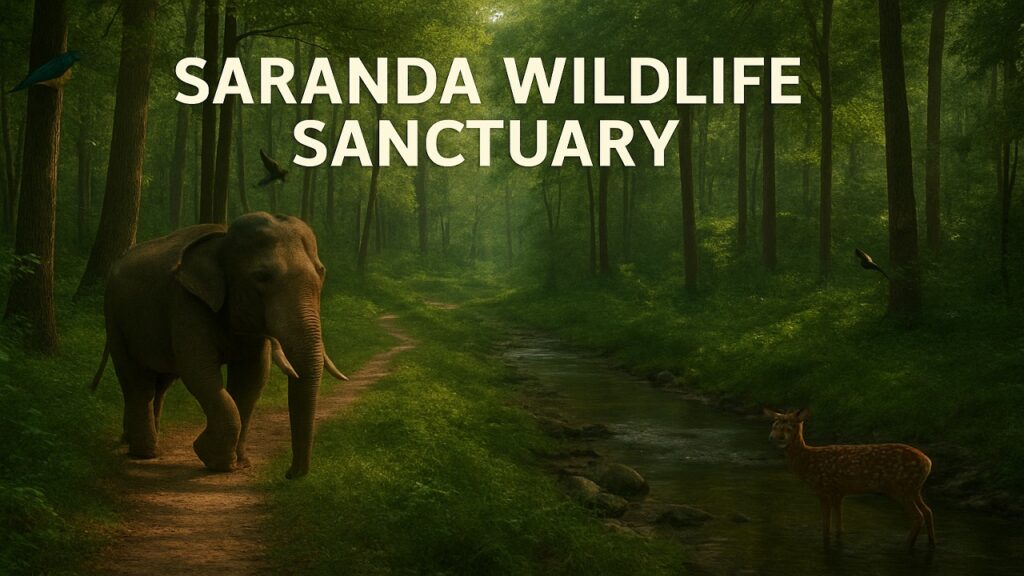
- Habitat for Asian elephants, four-horned antelope, sloth bears, flying lizards, and migratory birds.
Communities:
- Inhabited by Ho, Munda, Oraon, and Particularly Vulnerable Tribal Groups (PVTGs).
- Forest resources like mahua flowers and resin are vital for tribal livelihoods.
Mineral Wealth:
- Contains nearly 26% of India’s iron ore reserves, making it a major mining zone for SAIL and private operators.
Significance
Ecological Importance:
- Acts as a vital carbon sink and biodiversity reserve in eastern India.
Wildlife Corridors:
- Maintains connectivity between Saranda, Similipal, and Sundargarh forests, essential for elephant migration.
Tribal Rights & Livelihoods:
- Highlights the need to balance conservation with protection of tribal forest rights under the Forest Rights Act (FRA), 2006.
Conclusion
- The Supreme Court verdict will determine the final sanctuary area, balancing ecological conservation with tribal rights and livelihood needs.
- The decision will set a precedent for wildlife conservation in inhabited forest regions, ensuring that development, mining, and tribal welfare are harmonized with biodiversity protection.
Source : TOI