
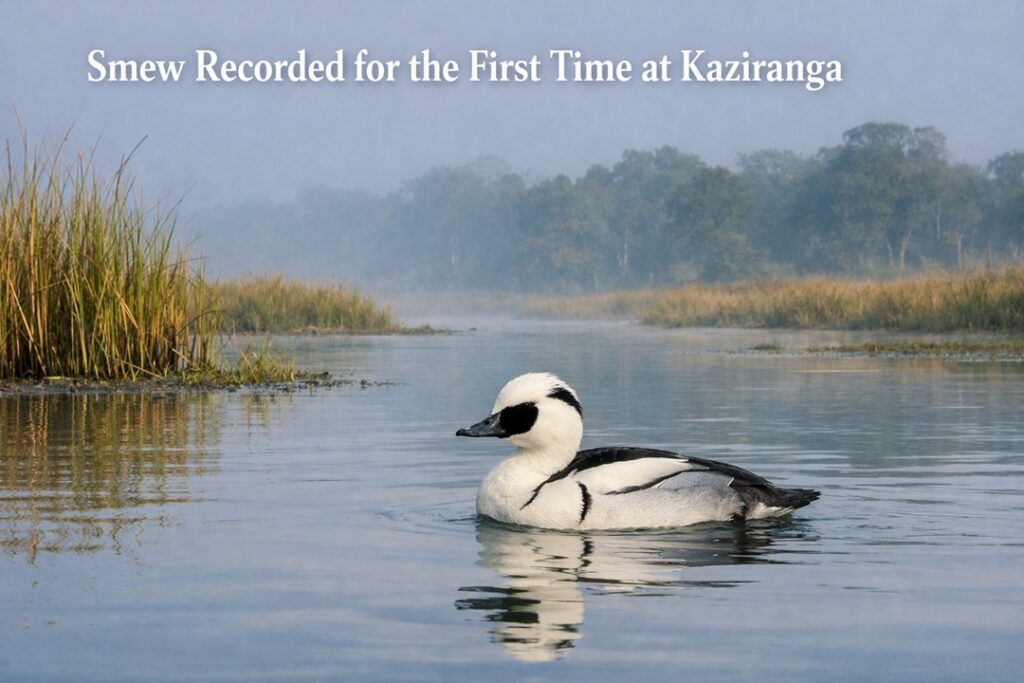
Smew Recorded for the First Time at Kaziranga
Context
The 7th waterbird census conducted at Kaziranga National Park and Tiger Reserve reported the first documented sighting of the Smew, a migratory diving duck. The observation points towards climate-induced alterations in migratory routes and wintering grounds of waterbirds.
Species Profile: Smew
Taxonomic Name: Mergellus albellus
Common Identity: Eurasian Diving Duck
Taxonomic Family: Anatidae
Preferred Ecosystem: Freshwater habitats such as lakes, marshes, floodplain beels, and slow-flowing rivers; shows a preference for calm, fish-rich waters during winter.
Geographical Range:
- Breeding Areas: Taiga forests of northern Europe and Siberia
- Wintering Zones: Parts of Europe and Asia
Status in India: An occasional winter migrant, with scattered records from north and central Indian wetlands, including western Uttar Pradesh and the Corbett landscape.
Distinctive Features:
- Male: White plumage with a prominent black facial mask
- Female: Grey-brown body with a chestnut head and pale throat
Feeding & Social Traits: Usually observed in small groups; feeds on small fish, aquatic insects, and invertebrates.
Reproductive Behaviour: Breeds in tree hollows within boreal forest regions.
Protection Status:
- IUCN Red List: Least Concern
Major Threats: Wetland loss and degradation, climate-related range shifts, hunting pressure, and oil pollution.
Key Findings of the 7th Kaziranga Waterbird Survey
Survey Coverage: 166 wetlands spread across 10 ranges of the reserve.
Numerically Dominant Species: Bar-headed Goose, Northern Pintail, Lesser Whistling Duck.
Ecological Importance: Highlights Kaziranga as a crucial wintering habitat along the Central Asian Flyway.
Ramsar Reference: Criterion 5 identifies wetlands of international importance if they consistently support 20,000 or more waterbirds.
Wetlands with Highest Waterbird Numbers
- Rowmari Beel (Laokhowa): 15,661
- Donduwa Beel: 14,469
- Katakhal: 4,979
- Sohola: 3,612
- Khalihamari: 3,463
Wetlands with Maximum Species Diversity
- Rowmari Beel: 77 species
- Donduwa Beel: 71 species
- Sohola: 69 species
- Kawoimari–Bhoisamari–Diffulo Complex: 57 species
- Ververy: 53 species
Source : The Hindu