
UNESCO ICH Tag for Deepavali: Significance for India
Context
Deepavali has been officially inscribed on UNESCO’s Representative List of the Intangible Cultural Heritage of Humanity during the 20th Session of the Intergovernmental Committee held in New Delhi.
About Deepavali on UNESCO’s ICH List
What it is
Deepavali is a multi-regional and multi-faith festival representing light over darkness, renewal, social harmony and collective wellbeing, celebrated across India and the global diaspora.
Historical Significance
Its roots lie in Itihasas, Puranas and diverse regional traditions. Associated legends include the return of Rama to Ayodhya, Krishna’s victory over Narakasura, Lakshmi worship and agrarian rituals, reflecting India’s cultural pluralism.
Key Features as Living Heritage
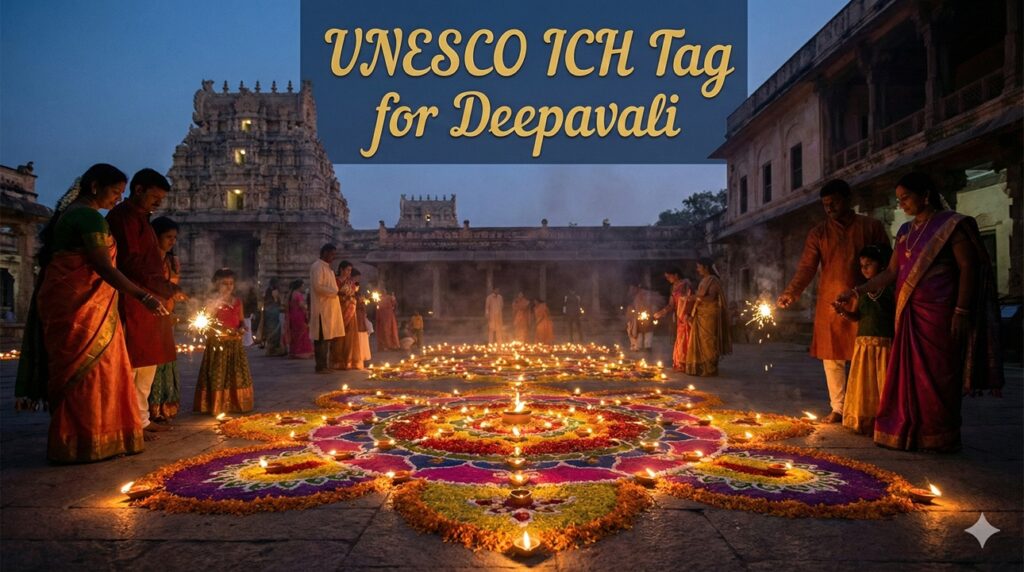
Deepavali includes lighting diyas, rangoli, community rituals, festive meals and transmission of customs across generations.
It supports a broad cultural-livelihood base involving potters, artisans, farmers, sweet-makers, florists and priests.
Its celebration across Southeast Asia, Africa, Europe, the Gulf and the Caribbean strengthens India’s cultural diplomacy.
It conveys values of inclusivity, unity, generosity, wellbeing and the ideal of Tamso Ma Jyotirgamaya.
About Intangible Cultural Heritage
What it is
Intangible Cultural Heritage comprises living traditions, expressions, rituals, performing arts, craftsmanship and knowledge systems recognised by communities as part of their cultural identity.
Origin
UNESCO adopted the Convention for the Safeguarding of the Intangible Cultural Heritage in 2003, operational from 2006. India ratified it in 2005.
Objectives
Safeguard living heritage, support practitioner communities, promote cultural diversity, ensure transmission of traditions and strengthen intercultural dialogue and community participation.
Features of the ICH Framework
It is community-recognised and rooted in practitioner traditions.
It is dynamic and evolving across generations.
It covers five domains: oral traditions, performing arts, social practices and rituals, knowledge concerning nature, and craftsmanship.
The Representative List highlights practices contributing to global cultural diversity.
States maintain inventories, undertake conservation measures, support practitioners and submit periodic reports.
Conclusion
Deepavali’s inclusion in UNESCO’s ICH list boosts India’s global cultural stature and reinforces the need to safeguard living traditions that uphold cultural diversity, social cohesion and civilisational continuity.
Source : UNESCO