
United Nations Secretary-General: Selection, Roles, and Global Impact
Context
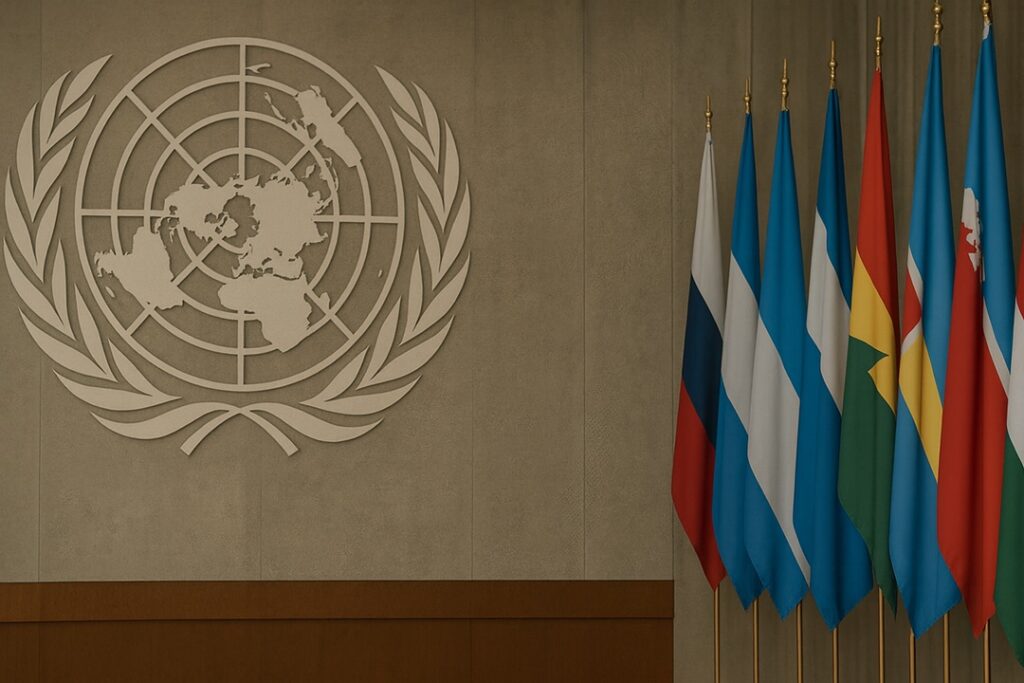
The United Nations has initiated the formal process to elect the next Secretary-General, who will assume office after Antonio Guterres completes his term on 31 December 2026. Member states have been invited to submit nominations, with growing global momentum for appointing the first woman Secretary-General in UN history.
About the United Nations Secretary-General
What is the UN Secretary-General
• The Secretary-General is the chief administrative officer of the United Nations, as outlined in Article 97 of the UN Charter.
• Often referred to as a diplomat, advocate, civil servant and global CEO, the Secretary-General represents the UN internationally and acts as its moral authority.
Legal Basis (Governed By)
• Article 97 of the UN Charter provides the legal foundation, stating that the Secretary-General is appointed by the General Assembly on the recommendation of the Security Council.
• Informal traditions such as regional rotation influence the selection process, though they are not legally binding.
How the Selection Procedure Works
Nominations Phase
• Member states propose candidates following a joint letter issued by the Presidents of the UNSC and UNGA.
• Increasing focus is placed on gender equality and regional representation in nominations.
Security Council Screening
• The 15-member Security Council conducts confidential straw polls.
• Each member marks candidates as encourage, discourage, or no opinion.
• Permanent members (P5 – US, UK, China, Russia, France) have veto power, and their ballots are colour-coded to indicate this.
Security Council Recommendation
• A candidate must secure at least 9 affirmative votes and face no veto.
• The UNSC then formally recommends one candidate to the General Assembly.
General Assembly Appointment
• The 193-member General Assembly appoints the Secretary-General, typically as a formality after the UNSC recommendation.
• The term is five years, usually renewable once.
Functions of the Secretary-General
Administrative and Executive Role
• Leads the UN Secretariat, overseeing more than 30,000 staff.
• Manages the core UN budget and supervises the peacekeeping budget.
Diplomatic and Mediation Role
• Uses the “good offices” of the Secretary-General to mediate disputes and prevent conflicts.
• Engages global leaders on humanitarian crises, climate challenges, peace and security issues.
Agenda-Setting Role
• Can bring matters threatening international peace to the Security Council under Article 99.
• Launches major international initiatives on sustainable development, climate action, human rights, gender equality, and humanitarian assistance.
Symbolic and Advocacy Role
• Serves as a global advocate for multilateralism, peacebuilding, human rights, and sustainable development.
Conclusion
The selection of the next UN Secretary-General carries significant global implications, as the role is central to guiding the organisation’s priorities and shaping responses to emerging geopolitical, humanitarian, and developmental challenges. With increasing calls for gender parity and equitable representation, the 2026 appointment presents an opportunity to strengthen global governance and enhance the UN’s legitimacy in a rapidly evolving world.
Source : NDTV