
Violence Against Women in India: Addressing Structural and Social Barriers
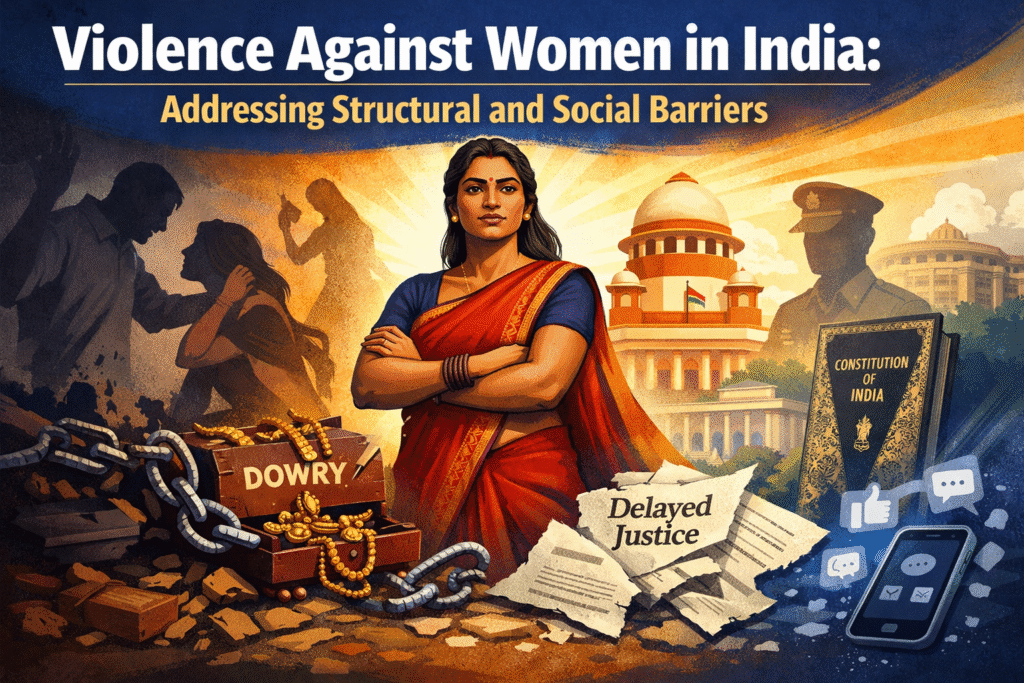
Context: The recent murder of a 27-year-old pregnant Delhi Police commando by her husband has reignited a national debate on domestic violence, trauma bonding, and the persistence of patriarchal control in relationships. The incident highlights that even women in positions of institutional authority are not immune to domestic abuse, financial coercion, and social pressures, underscoring the need for systemic interventions.
Introduction:
Violence against women continues to remain a major socio-economic and human rights challenge in India. Despite legal safeguards and increasing participation of women in the workforce, domestic abuse, dowry-related violence, and psychological coercion persist across social classes. Breaking this cycle requires addressing structural patriarchy, economic dependency, and psychological entrapment within abusive relationships.
Body
Concept of Breaking the Cycle of Violence: Breaking the cycle refers to disrupting the recurring stages of domestic abuse such as tension building, violent incident, and reconciliation (honeymoon phase). It involves tackling psychological trauma bonding, financial control, and social normalization of abuse so that women’s financial independence translates into actual autonomy, dignity, and safety.
Extent of Violence Against Women in India: Violence against women remains widespread according to national data. NFHS-5 reports that nearly one in three women in India has experienced physical or sexual violence. Over 30 percent of ever-married women aged 18 to 49 have faced spousal violence. However, less than 14 percent of victims seek help from police or institutional mechanisms. NCRB data further shows that India still records around 20 dowry deaths every day, while cyber harassment has increased with a 25 percent rise in stalking and online bullying cases during 2024–25.
Trauma Bonding and Psychological Entrapment: Victims often develop emotional attachment to their abuser as a coping mechanism. This psychological dependence makes it difficult for women to exit abusive relationships even when violence escalates.
Patriarchal Social Norms: Deep-rooted gender norms expect women to remain obedient and preserve family honor regardless of personal suffering. Even professionally empowered women often face pressure to prioritize marital stability over personal safety.
Financial Coercion and Economic Dependence: Abusers may control salaries, force women to take loans, or impose financial liabilities that restrict their ability to leave abusive households. Economic manipulation creates financial dependency despite employment.
Persistence of Dowry Practices: Although legally prohibited, dowry expectations continue to influence marital relations. Unmet financial demands often result in emotional abuse, harassment, and dowry-related violence.
Institutional Barriers to Reporting: Women working in uniformed or high-responsibility professions may hesitate to report abuse due to fear of professional stigma, reputational damage, or perceptions of weakness.
Government Initiatives for Women’s Safety: The government has launched several initiatives to address violence against women. One Stop Centres (Sakhi) provide integrated services including medical assistance, legal aid, counselling, and shelter. Fast Track Special Courts ensure quicker trial of cases related to rape and offences under the POCSO Act. Mission Shakti acts as an umbrella scheme aimed at strengthening women’s safety, security, and empowerment. The 181 Women Helpline offers round-the-clock emergency assistance to women facing violence or distress.
Challenges in Addressing Domestic Violence:
Normalization of Domestic Abuse: Domestic violence is often treated as a private family matter rather than a criminal offense, resulting in social pressure on women to maintain the marriage.
Difficulty in Proving Psychological Abuse: Legal and policing frameworks frequently prioritize visible physical injuries, while coercive control, manipulation, and emotional abuse remain difficult to prove.
Inadequate Pre-Marital Counselling: Marriage preparation largely focuses on ceremonies and social rituals rather than emotional compatibility, conflict resolution, and recognition of abusive behaviour.
Dual Burden on Working Women: Professional women often face the double burden of demanding careers and traditional domestic expectations, increasing stress and vulnerability within households.
Judicial Delays and Case Pendency: The slow pace of legal proceedings discourages victims from pursuing justice against abusive partners.
Way Forward
Sensitization of Law Enforcement: Police and social workers must be trained to recognize psychological manipulation, trauma bonding, and coercive control in addition to physical violence.
Strengthening Workplace Mental Health Support: High-stress sectors such as policing and armed services should incorporate institutional counselling and support systems to address domestic stress and emotional well-being.
Mandatory Pre-Marital Counselling: Community-based counselling programs should promote mutual respect, equality, conflict management, and early identification of abusive behaviour.
Safe Exit Mechanisms for Victims: Establish state-supported safe shelters and transitional housing where women can safely detach from abusive partners.
Financial Protection for Women: Awareness programs and legal safeguards should address financial coercion, forced loans, and economic exploitation within marriages.
Conclusion:
Violence against women is not merely a private tragedy but a systemic social failure rooted in patriarchal structures and institutional gaps. True empowerment requires ensuring that women’s economic independence translates into real autonomy, security, and dignity. Strengthening legal enforcement, institutional support, and societal attitudes is essential to break the cycle of violence and build a safer environment for women in India.
Source: The Hindu