
Decentralising Mental Health Care: Rethinking India’s Treatment Model
Context
With nearly 85% of mental health needs unmet in India, experts advocate moving beyond a medication-centric approach towards a community-driven, stepped-care framework.
Community-Based Mental Health Delivery
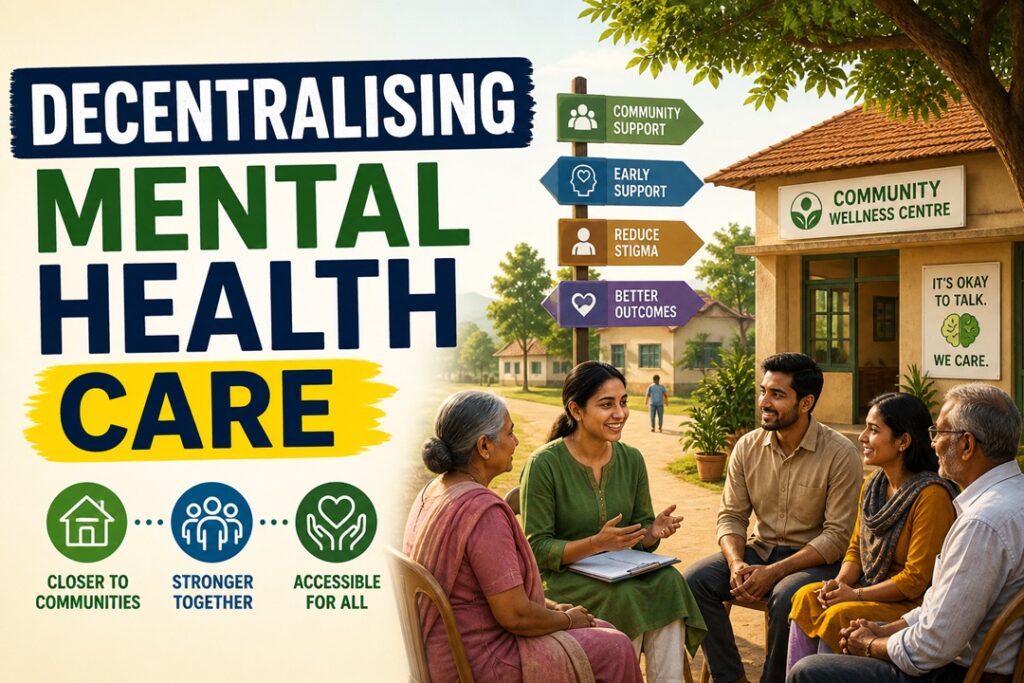
Mental health decentralisation involves shifting psychosocial care from specialist-led urban hospitals to primary health systems and community platforms, enabling wider and early access to support.
Evidence & Ground Reality
- Treatment Deficit: A vast majority of individuals with anxiety and depression remain untreated.
- Global Best Practice: Zimbabwe’s Friendship Bench initiative achieved significant reduction in depressive symptoms using trained lay counsellors.
- Rural Constraints: In many regions, medication remains the only option due to lack of trained therapists.
- Human Resource Gap: Limited clinical psychology training seats restrict availability of skilled professionals.
Rationale for a Decentralised Approach
- Beyond Pill-Centric Care:
Overburdened doctors often rely on antidepressants due to lack of counselling support. - Bridging Regional Inequality:
Urban concentration of specialists leaves rural populations underserved.
Example: Gujarat’s Atmiyata initiative uses community volunteers for emotional support. - Differentiating Distress vs Disorder:
Everyday stressors (exams, job pressure) require coping mechanisms rather than medication. - Preventing Drug Dependence:
Reduces long-term reliance on antidepressants and sedatives without structured follow-up. - Building Psychological Resilience:
Therapy equips individuals with life-long coping skills, unlike medication which mainly suppresses symptoms.
Key Challenges
- Competency Risks:
Non-specialists may mismanage severe conditions like bipolar disorder or schizophrenia. - Training & Supervision Deficit:
Insufficient institutional capacity to guide community-based workers. - Weak Referral Systems:
Lack of efficient pathways to escalate severe cases to specialists. - Cultural Preferences:
Continued reliance on traditional or faith-based healing practices. - Medication Withdrawal Issues:
Improper discontinuation without expert oversight can cause adverse effects.
Reform Pathways (Way Forward)
- Adopt Stepped-Care Strategy:
Mild cases → community interventions; severe cases → specialist care. - Expand Task-Sharing Models:
Train frontline workers in structured techniques like behavioural activation and active listening. - Community Integration:
Engage local leaders and traditional healers in early identification and referrals. - Digital Enablement:
Use telemedicine for supervision, follow-ups, and remote counselling. - Rational Prescription Practices:
Establish guidelines to prevent unnecessary or prolonged antidepressant use.
Conclusion
Decentralisation is not about reducing the role of psychiatrists but diversifying India’s mental health toolkit. By empowering communities and integrating psychosocial care with clinical expertise, India can move towards a more accessible, balanced, and sustainable mental health system, effectively narrowing the massive treatment gap.
Source : The Hindu