
Missing Fathers in India’s Reproductive Health Framework
Context
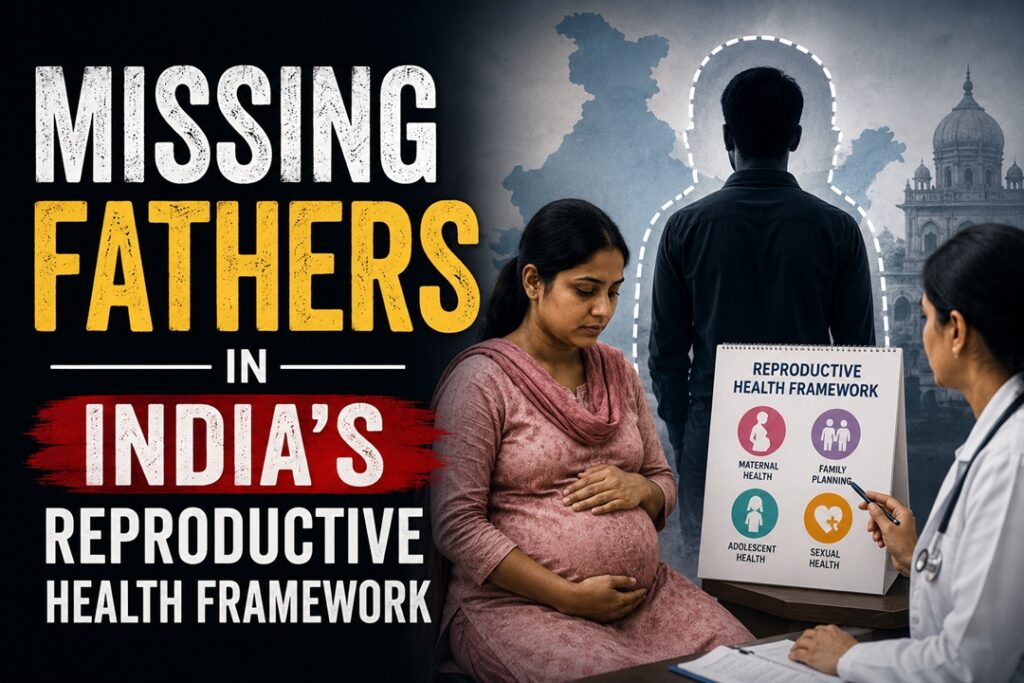
A recent scientific assessment underscored a major policy blind spot in India’s reproductive healthcare architecture — the limited inclusion of fathers in reproductive, maternal, and child health interventions despite growing evidence linking paternal health with child development outcomes.
Fatherhood and Reproductive Well-Being
AboutWhy is paternal health absent in reproductive care policies?
What does it mean?
Reproductive well-being refers to a condition of complete physical, emotional, and social wellness related to the reproductive system. It includes the ability to reproduce safely, make informed reproductive choices, and ensure healthy outcomes for future generations. Modern science increasingly recognizes that reproductive responsibility is shared by both parents, not mothers alone.
Major Trends in India’s Reproductive Health Landscape (2026)
Declining Male Fertility Indicators
Recent clinical observations reveal that only nearly one-fourth of Indian men exhibit optimal semen health standards. Average sperm concentration has sharply fallen over the past three decades due to sedentary lifestyles, pollution exposure, stress, and dietary changes.
Growth of Male-Linked Infertility
Male-related causes now contribute to around one-third of infertility cases in metropolitan regions such as Bengaluru, Hyderabad, and Chennai. Conditions such as obesity, diabetes, alcohol abuse, and hormonal imbalance are emerging as major contributors.
Why Father-Focused Interventions Remain Neglected
Outdated Biological Assumptions
Earlier scientific understanding treated sperm as merely a DNA delivery mechanism, ignoring the possibility that paternal lifestyle could shape fetal development.
Example: Classical biological theories long argued that environmental influences on the father could not affect future offspring.
Maternal-Dominated Healthcare Models
Public health systems traditionally prioritize maternal care because pregnancy occurs within the female body.
Example: Government reproductive programs largely revolve around antenatal services, institutional childbirth, and maternal nutrition, with minimal participation of fathers.
Absence of Male Preconception Care
Prospective fathers are rarely screened for smoking, alcohol use, stress disorders, or occupational toxin exposure before conception.
Example: Many men seek fertility consultation only after years of unsuccessful conception attempts.
Limited Translation of Epigenetic Science
Recent discoveries show that sperm carries molecular signals influenced by diet, stress, and physical activity, but these insights are yet to be integrated into mainstream healthcare protocols.
Example: New medical research demonstrates that paternal fitness levels can shape embryonic metabolic functioning.
Deep-Rooted Social Stigma
Infertility continues to be culturally viewed as a woman’s issue, discouraging men from testing or treatment.
Example: Fertility clinics witness disproportionately higher female patient visits despite rising male-factor infertility.
Measures and Innovations Introduced
Adolescent Health Components under RMNCH+A
Nutrition programs supplying Iron and Folic Acid (IFA) supplements to adolescent boys aim to improve long-term reproductive health outcomes.
Community Participation Campaigns
Local awareness drives increasingly encourage fathers to participate in childcare, nutrition planning, and maternal support.
Digital Fatherhood Outreach
Urban campaigns using social media and digital storytelling are promoting responsible fatherhood and early childhood engagement.
AI-Based Fertility Diagnostics
Advanced fertility centers are deploying Artificial Intelligence-assisted semen analysis tools to identify subtle abnormalities with greater precision.
Key Challenges
Invisible Male Infertility Burden
Public health messaging still underrepresents male reproductive disorders, resulting in low testing rates and delayed diagnosis.
Example: Many maternal health clinics unintentionally exclude men due to women-centric infrastructure and communication practices.
Delayed Benefits of Lifestyle Reform
Improving sperm quality requires sustained behavioral change over several months, making it less attractive than rapid pharmaceutical solutions.
Example: Temporary supplements are often preferred over long-term exercise and smoking cessation programs.
Environmental and Chemical Exposure
Rising exposure to plastics, pesticides, and endocrine-disrupting chemicals is adversely affecting reproductive capacity.
Weak Indian Research Base
India lacks comprehensive longitudinal studies linking paternal health with child outcomes, limiting evidence-based policymaking.
Example: Most existing evidence still originates from controlled laboratory or animal-based studies.
Unequal Household Responsibility
In many households, reproductive decision-making remains male-dominated, while health burdens continue to fall disproportionately on women.
Reform Measures Needed
Transition Towards a Shared-Parental Model
RMNCH+A should evolve into a bi-parental reproductive framework that formally incorporates paternal health screening and counseling.
Institutionalize Male Health Assessments
Introduce reproductive lifestyle screening for men during premarital counseling, fertility consultations, or primary healthcare visits.
Launch National Awareness Campaigns
Large-scale campaigns can normalize conversations around male infertility and explain emerging epigenetic science.
Expand Couple-Based Counseling
ASHAs and frontline workers should counsel both parents regarding smoking, stress, diet, and environmental risks.
Promote Accessible Male Diagnostics
Encourage affordable AI-assisted fertility testing and home-based screening kits to improve privacy and participation.
Conclusion
India’s reproductive health discourse has historically centered almost exclusively on mothers, while fathers remained biologically and socially sidelined. However, modern science now demonstrates that paternal nutrition, lifestyle, stress, and environmental exposure significantly influence the health of future generations. A shift toward inclusive, bi-parental reproductive healthcare is therefore essential not only for fertility outcomes but also for ensuring healthier demographic development in the long run.
Source : The Hindu