
Malviya Nagar Guest House Fire Tragedy: Spotlight on Urban Fire Safety in India
Context
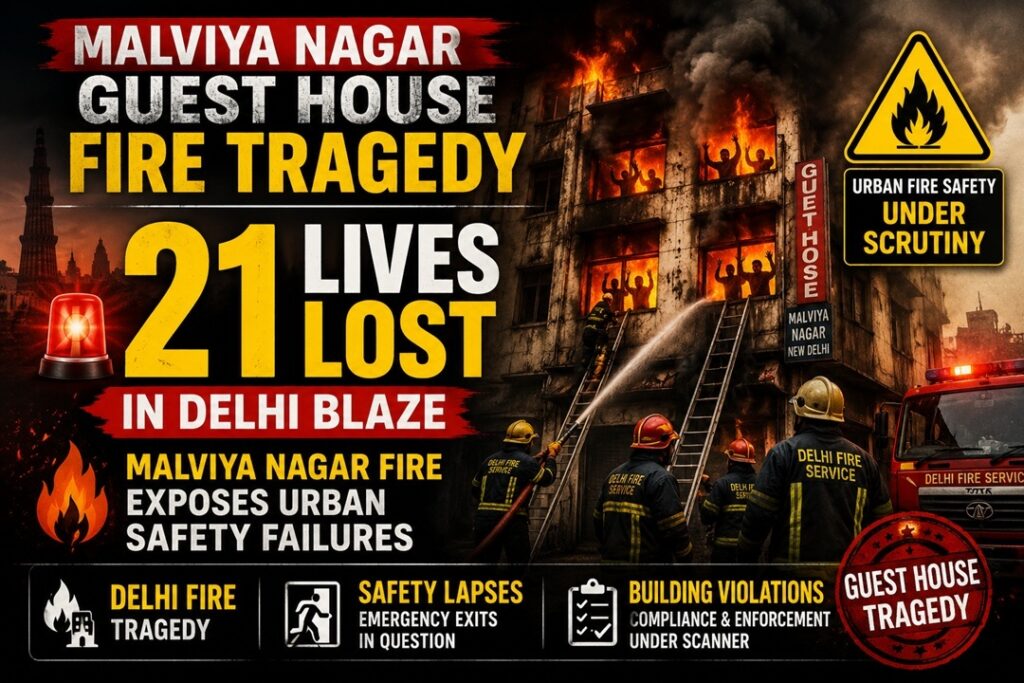
A devastating blaze at a guest house in Malviya Nagar, South Delhi, operating allegedly without mandatory fire-safety approval, resulted in the death of 21 individuals, including 12 foreign nationals, once again highlighting the growing challenge of urban fire disasters in India.
Urban Fire Disasters in India: Lessons from the Malviya Nagar Tragedy
Understanding Urban Fire Disasters
Urban fire disasters refer to large-scale fire incidents occurring in densely inhabited cities and towns, affecting residential complexes, hotels, commercial establishments, educational institutions, industrial units, and informal settlements. These incidents are often aggravated by unsafe construction practices, inadequate emergency preparedness, overcrowding, and violations of fire-safety regulations.
Key Facts About Fire Accidents in India
- Significant Loss of Life: Fire-related incidents account for approximately 35 deaths every day across the country.
- Commercial Establishments at Risk: Markets, factories, hotels, and business premises contribute to a substantial share of urban fire casualties.
- Electrical Failures as a Leading Trigger: Defective wiring, overloaded circuits, and poor electrical maintenance remain among the primary causes of urban fires.
- Poor Regulatory Compliance: A large number of commercial and hospitality establishments continue to function without valid fire-safety certifications or adequate emergency equipment.
- Rapid Urbanisation Concerns: Increasing population density and unplanned urban growth have intensified fire-related vulnerabilities.
Major Fire Tragedies in India
Bangalore Circus Fire (1981)
A fire engulfed the Venus Circus tent in Bangalore, resulting in 92 fatalities, including many children, after the canvas structure collapsed on spectators.
Dabwali School Function Fire (1995)
More than 500 people lost their lives in Haryana’s Dabwali town when a short circuit ignited a temporary tent during a school event, triggering a deadly stampede.
Uphaar Cinema Fire (1997)
Sixty people died in Delhi after smoke from a transformer fire spread through the cinema complex, trapping moviegoers due to inadequate evacuation arrangements.
Kumbakonam School Fire (2004)
Ninety-four schoolchildren perished in Tamil Nadu after a fire originating from a thatched kitchen spread rapidly to classrooms.
AMRI Hospital Fire (2011)
Eighty-nine patients and staff members died in Kolkata when a fire in a basement storage area filled the hospital building with toxic smoke.
Key Causes of Urban Fire Incidents
Electrical Infrastructure Failures
Aging electrical networks, unauthorized connections, and excessive power loads frequently lead to short circuits and fire outbreaks.
Unauthorized Building Modifications
Illegal floor additions, encroachments, and alterations often compromise ventilation, evacuation routes, and structural safety.
Improper Storage of Hazardous Materials
Flammable substances such as chemicals, fuel cylinders, plastics, and combustible waste are often stored in unsafe locations.
Use of Combustible Construction Materials
Low-cost materials like plastic panels, synthetic coverings, and temporary roofing accelerate fire spread.
Inadequate Safety Equipment
Many buildings lack functional smoke detectors, sprinkler systems, fire extinguishers, and emergency alarms.
Challenges in Urban Fire Safety
Limited Evacuation Infrastructure
Numerous buildings rely on a single staircase or exit route, creating bottlenecks during emergencies.
Weak Monitoring and Enforcement
Irregular inspections and lax implementation of safety norms allow non-compliant establishments to continue operations.
Low Public Preparedness
Lack of awareness regarding evacuation procedures and fire-response measures often worsens casualty figures.
Delays in Emergency Response
Traffic congestion, narrow roads, and unplanned urban layouts delay firefighting and rescue operations.
Inadequate Accountability for Violations
Lengthy legal processes and relatively mild penalties often fail to discourage repeated safety violations.
Measures to Improve Urban Fire Safety
Integrating Digital Compliance Systems
Municipal licensing systems should be linked with fire department databases to ensure real-time verification of safety clearances.
Ensuring Multiple Emergency Exits
Hotels, schools, hospitals, and commercial buildings should maintain at least two accessible emergency exits.
Strengthening Legal Accountability
Stringent penalties and criminal liability should be imposed on owners and operators who disregard fire-safety norms.
Conducting Regular Safety Audits
Periodic inspections must be conducted in vulnerable establishments such as coaching centres, hospitals, hotels, and marketplaces.
Modernising Emergency Response Systems
Investment in advanced firefighting technology, rapid-response units, and smart alert systems can improve rescue efficiency.
Conclusion
The Malviya Nagar fire tragedy underscores the urgent need for stronger fire-safety governance in India’s urban centres. Preventing future disasters requires a shift from reactive responses to proactive enforcement, robust compliance mechanisms, and widespread public awareness to safeguard lives and property.
Source : The Hindu