
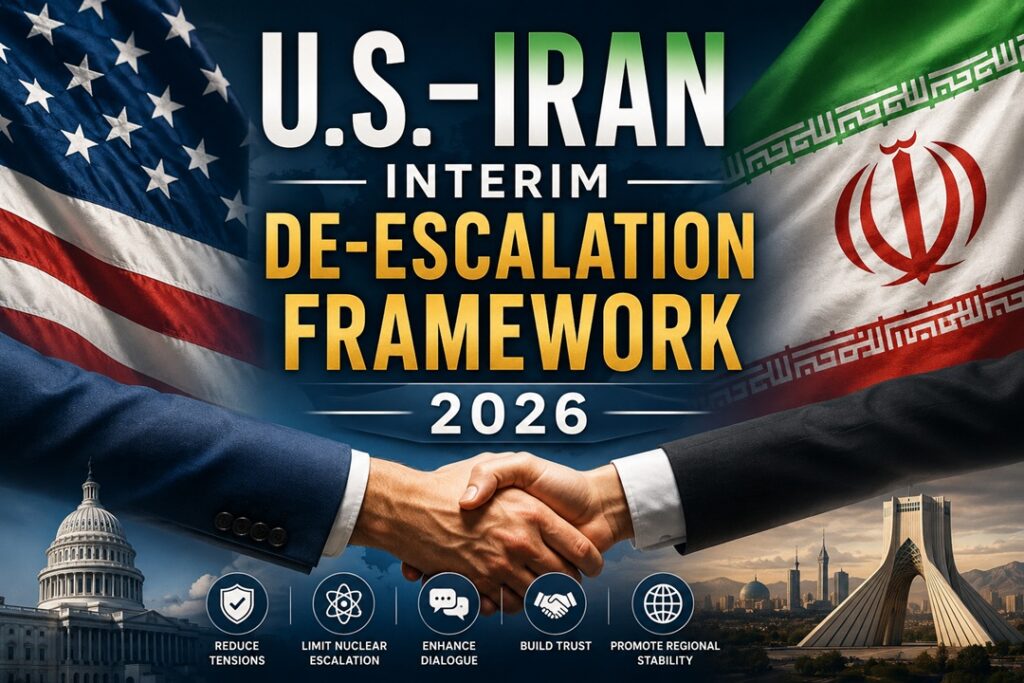
U.S.–Iran Interim De-escalation Framework, 2026
Context
The United States and Iran have jointly announced a preliminary de-escalation framework aimed at ending hostilities, reopening critical maritime routes in West Asia, and creating conditions for broader diplomatic negotiations on security and economic issues.
About the U.S.–Iran Interim De-escalation Framework, 2026
What is it?
The U.S.–Iran Interim De-escalation Framework (2026) is a temporary diplomatic arrangement intended to suspend ongoing military confrontations, restore maritime commerce, and prevent further disruptions to global energy markets. Instead of being a permanent peace treaty, it functions as a short-term confidence-building mechanism to facilitate future negotiations.
Origins of the 2026 U.S.–Iran Crisis
Collapse of Earlier Nuclear Understandings
The breakdown of previous nuclear-related agreements and the reimposition of sanctions deepened mistrust between Tehran and Washington, creating an environment of recurring tensions.
Escalation into Direct Confrontation
Long-standing regional rivalries, proxy engagements, and security disputes eventually evolved into direct military exchanges involving Iran and its adversaries.
Strategic Importance of Hormuz
The Strait of Hormuz, one of the world’s most important maritime chokepoints, became central to the crisis due to its role in transporting significant volumes of oil and natural gas.
Maritime Pressure Campaigns
Both sides adopted measures affecting commercial navigation and trade flows, increasing risks for shipping and energy exports.
Global Economic Disruptions
Supply uncertainties pushed energy prices higher, generated volatility in financial markets, and raised concerns regarding global economic growth.
Major Features of the Interim Arrangement
Comprehensive Cessation of Hostilities
The framework calls for the suspension of direct and indirect military actions across multiple conflict zones, including areas influenced by regional proxy groups.
Restoration of Commercial Navigation
Restrictions on maritime movement are eased, while international shipping is permitted to transit through key waterways under internationally accepted norms. Clearance operations for maritime hazards are also initiated.
Two-Month Negotiation Period
A structured 60-day diplomatic window has been established to allow negotiators to address unresolved issues such as nuclear activities, sanctions, and regional security concerns.
Gradual Release of Frozen Assets
The arrangement proposes a phased mechanism for unlocking portions of Iranian financial assets held abroad during the negotiation process.
Exploration of Compensation Mechanisms
Both parties have agreed to discuss frameworks for addressing economic losses and damages arising from recent hostilities.
Continuation of Legitimate Maritime Service Fees
While discriminatory transit charges are prohibited, internationally recognized fees related to navigation assistance, environmental management, and maritime services remain permissible.
Potential Impact of the Agreement
Implications for West Asia
Reduction in Regional Tensions
The pause in hostilities creates opportunities for stabilization efforts and humanitarian assistance in conflict-affected regions.
Emerging Strategic Realignments
The agreement may influence regional security calculations and reshape diplomatic engagements among major stakeholders.
Renewed Focus on Economic Development
Countries in the Gulf region can devote greater attention to diversification, infrastructure, and investment initiatives amid reduced security risks.
Implications for the Global Economy
Softening of Energy Prices
Improved confidence in energy supply chains could moderate crude oil and gas prices in international markets.
Revival of Trade Flows
The reopening of key maritime routes may reduce shipping delays and improve the movement of energy and commercial goods.
Changing Security Priorities
Major powers may reassess the costs and benefits of prolonged military involvement in the region.
Implementation Challenges
Differences Over Sequencing
Disagreements persist regarding the order in which sanctions relief, asset releases, and security commitments should be implemented.
Role of Armed Non-State Groups
Independent armed actors operating in the region could potentially undermine ceasefire arrangements.
Recovery of Energy Infrastructure
Damaged facilities and disrupted production systems may require substantial time and investment before returning to normal operations.
Domestic Political Resistance
Political opposition within participating countries may complicate the implementation and sustainability of the framework.
Trust Deficit Between Parties
Historical experiences and previous diplomatic breakdowns continue to create skepticism regarding long-term commitments.
Relevance for India
Lower Pressure on External Balances
Reduced crude oil prices can help contain inflation and improve India’s current account position.
Enhanced Energy Security
Safer maritime routes support uninterrupted imports of oil, LNG, and other critical commodities.
Possibility of Greater Supply Diversification
Improved regional stability may expand India’s options for sourcing energy supplies from multiple partners.
Support for Industrial Growth
Reliable energy availability contributes to stable manufacturing activity and economic expansion.
Way Forward
Strengthening Overseas Citizen Protection
India should continue enhancing mechanisms for safeguarding its large diaspora population in West Asia.
Expanding Constructive Diplomacy
New Delhi can utilize multilateral and regional platforms to encourage dialogue and confidence-building measures.
Augmenting Strategic Energy Reserves
Periods of relatively lower oil prices can be leveraged to strengthen petroleum stockpiles.
Promoting Alternative Connectivity Corridors
Initiatives such as the India–Middle East–Europe Economic Corridor (IMEC) can improve trade resilience and reduce dependence on vulnerable chokepoints.
Conclusion
The 2026 U.S.–Iran Interim De-escalation Framework offers an opportunity to reduce regional instability, restore confidence in global energy markets, and create space for sustained diplomacy. However, durable peace will depend on successful negotiations, effective implementation, and the willingness of all stakeholders to address long-standing security concerns.
Source : The Indian Express