
The Changing Face of Protest Politics in India
Context
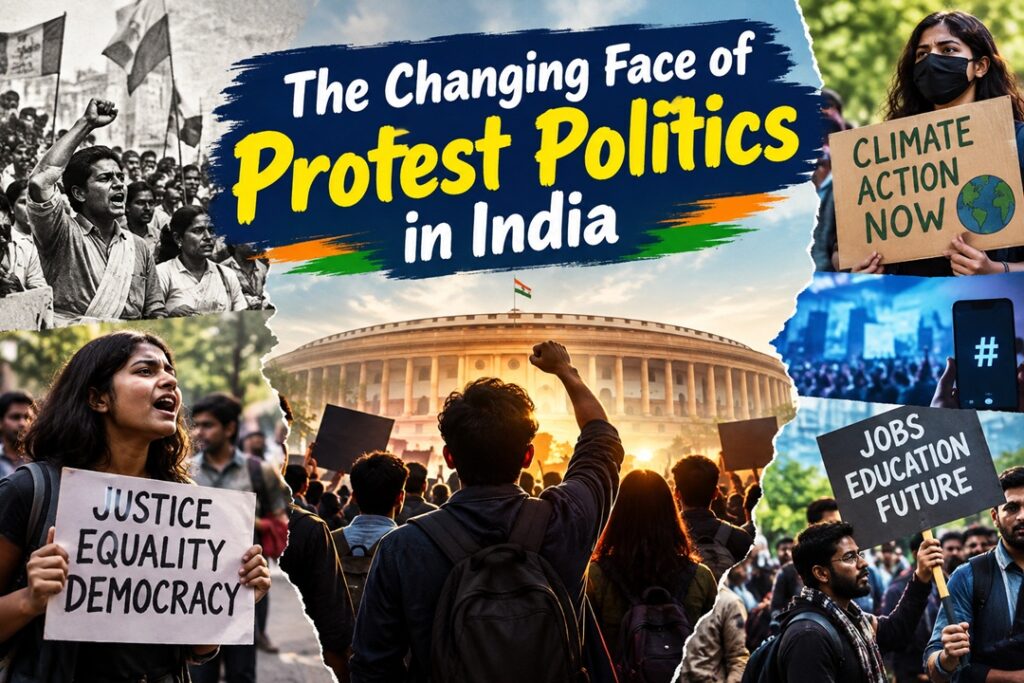
Recent youth-led mobilisations over NEET-UG, recruitment examinations and institutional accountability indicate a shift in India’s protest culture. Student movements are increasingly becoming digital, decentralized and focused on systemic governance failures rather than traditional party-led politics.
The emerging pattern of Gen Z protest politics differs significantly from conventional mass movements. Instead of depending on political parties, unions or established student organisations, young protesters often organise through social-media networks, informal groups and rapidly formed collectives.
Key Features of the Changing Protest Landscape
- Leaderless and network-based mobilisation: Digital platforms enable individuals and small groups to coordinate protests without a central hierarchy or permanent leadership structure.
- Rapid digital mobilisation: A local grievance, such as an examination cancellation, paper leak or police action, can quickly gain nationwide attention through social media.
- Focus on institutional credibility: Protesters increasingly question the functioning and neutrality of examination bodies, regulatory institutions and other public authorities.
- Use of symbolism and satire: Memes, satire, slogans and the reappropriation of derogatory labels have become important tools for expressing dissent and building collective identity.
Why is Youth Protest Changing?
1. Recurrent examination failures:
Paper leaks, examination cancellations, recruitment delays and irregularities affect students at a particularly critical stage of their careers. Repeated disruptions can generate frustration and distrust in public institutions.
2. Graduate employment concerns:
The gap between educational attainment and access to stable, formal employment has intensified anxieties among young people. Limited employment opportunities make failures in recruitment systems especially consequential.
3. Declining confidence in institutional safeguards:
When young citizens perceive regulatory and accountability mechanisms as ineffective or inaccessible, protest can become an alternative avenue for demanding institutional responsiveness.
4. Centralisation of decision-making:
Greater concentration of administrative authority can create distance between decision-makers and affected communities, making conventional grievance-redressal channels appear less responsive.
5. Adversarial handling of dissent:
Heavy-handed policing or dismissive political descriptions of protesters can deepen distrust and transform a specific grievance into a wider dispute over democratic accountability.
Democratic Significance
The changing character of youth mobilisation can also strengthen democratic participation.
- Greater accountability: Public protests can compel authorities to address examination irregularities, administrative failures and other governance deficiencies.
- Broader civic participation: Digital networks lower the organisational barriers to participation, enabling students from different regions and social backgrounds to join common causes.
- Issue-based mobilisation: Many contemporary protests centre on concrete concerns such as examination integrity, merit, employment and institutional transparency rather than traditional electoral alignments.
- Early warning mechanism: Sustained youth dissatisfaction can signal deeper problems in public administration before they develop into larger institutional crises.
Concerns and Challenges
At the same time, decentralized mobilisation creates several difficulties.
- Possibility of political or extremist co-option: Movements without defined leadership can be vulnerable to capture by partisan or disruptive interests.
- Criminalisation of peaceful dissent: Excessive use of preventive detention, coercive notices or disproportionate force can have serious consequences for students while weakening trust in law-enforcement institutions.
- Short-term governmental responses: Abrupt cancellation of examinations or other stop-gap measures may further disadvantage genuine candidates instead of addressing the underlying weaknesses.
- Growing distrust in democratic institutions: If legitimate grievances remain unresolved, anger over a specific examination or recruitment process can develop into broader scepticism about the responsiveness of the state.
Way Forward
- Create time-bound grievance mechanisms: Independent and statutory grievance-redressal institutions can provide students and young job aspirants with accessible mechanisms for resolving complaints quickly.
- Adopt proportionate policing: Clear SOPs should distinguish peaceful assemblies from violent disturbances and ensure that crowd-control measures remain necessary and proportionate.
- Strengthen examination security: Secure digital systems, transparent procedures, independent oversight and effective enforcement of the Public Examinations (Prevention of Unfair Means) framework can improve examination integrity.
- Institutionalise youth–government dialogue: Regular consultation with student representatives can allow grievances to be addressed before they develop into large-scale confrontations.
- Address employment insecurity: Examination reform should be accompanied by broader measures to expand productive employment and improve the transition from education to work.
Conclusion
The new wave of youth protests reflects deeper concerns about institutional credibility, examination integrity, employment and democratic responsiveness. Treating such mobilisation only as a law-and-order issue may leave its underlying causes unresolved. Responsive institutions, proportionate policing and credible grievance mechanisms are essential for converting youthful dissent into constructive democratic participation.
Source : The Hindu