
Kerala’s RTI Exemption for Vigilance Units: Balancing Confidentiality and Accountability
Context
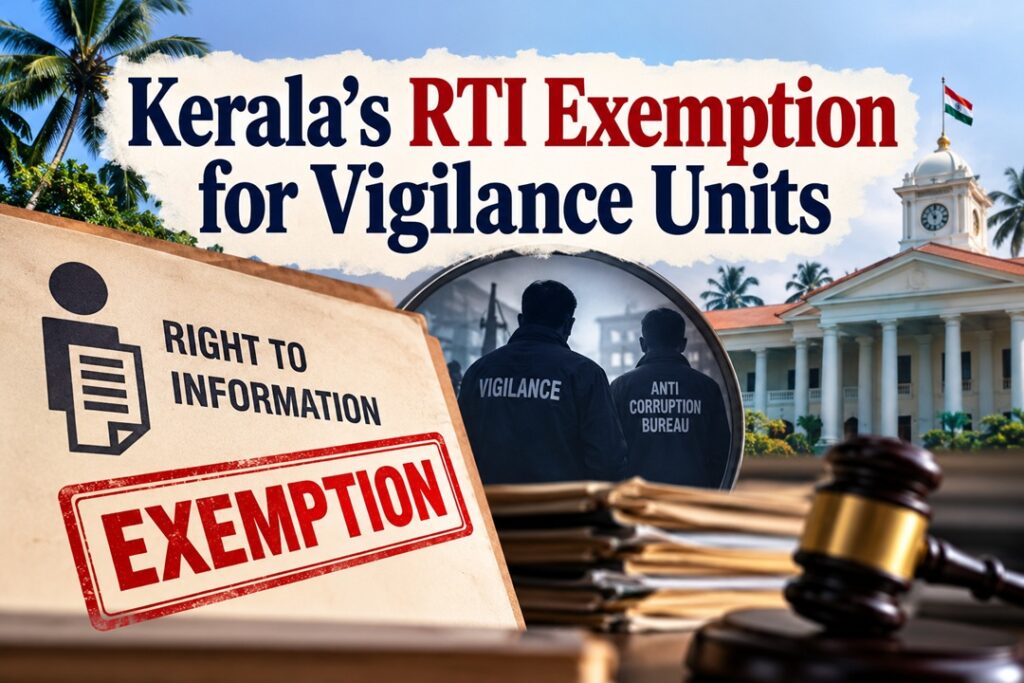
The Kerala government has issued a gazette notification re-exempting the T1 and T2 confidential sections of the Vigilance and Anti-Corruption Bureau (VACB) from the Right to Information (RTI) Act, 2005. The move reverses a transparency-related reform introduced in 2022. The state has invoked Section 24(4) of the Act, citing the sensitive nature of classified documents and high-security personnel records.
Understanding the RTI Act, 2005
The Right to Information Act, 2005 establishes a statutory framework that enables citizens to access information held by public authorities. It operationalises the freedom of speech and expression guaranteed under Article 19(1)(a) of the Constitution and promotes transparency in public administration.
Key provisions of the Act
- Section 3: Recognises the right of Indian citizens to obtain information from public authorities.
- Section 4: Requires public authorities to proactively disclose essential information about their organisation, functions, finances and decision-making processes.
- Section 7: Prescribes a general response period of 30 days, reduced to 48 hours where information concerns life or personal liberty.
- Section 8: Specifies categories of information exempt from disclosure, including certain security-sensitive, confidential and personal information.
- Section 24: Excludes specified intelligence and security organisations from the Act, subject to statutory safeguards and exceptions. Under Section 24(4), the relevant provisions apply to organisations notified by state governments.
The exemptions under Section 24 do not provide an unrestricted shield against scrutiny. The statutory proviso concerning allegations of corruption and human rights violations is particularly important, with distinct conditions governing disclosure in human rights cases.
Significance of the Kerala Government’s Decision
The exemption of the VACB’s T1 and T2 sections highlights the challenge of balancing investigative confidentiality with citizens’ right to know.
- Protection of sensitive information: Confidentiality may help protect intelligence inputs, investigative strategies, sensitive documents and personnel details from unauthorised disclosure.
- Impact on anti-corruption oversight: Restricting access to records may make it more difficult for citizens and journalists to examine the functioning of vigilance institutions.
- Concerns over public accountability: Broad exemptions can limit independent scrutiny of administrative decisions and the handling of corruption-related complaints.
- Reversal of transparency reforms: The reversal of the 2022 measure raises questions about the consistency of government commitments to open governance.
- Need for a clear legal boundary: Legitimate operational secrecy must be distinguished from information that can be disclosed without compromising an investigation or protected interests.
Importance of the RTI Act in Democratic Governance
1. Combating corruption
Access to government records enables citizens to identify irregularities in public procurement, expenditure and the implementation of welfare schemes.
2. Strengthening administrative accountability
RTI applications can help citizens understand delays, procedural lapses and decisions taken by public officials, thereby encouraging reasoned and responsible administration.
3. Improving welfare delivery
Information on beneficiary lists, ration distribution, pensions and public works allows citizens to verify whether public resources reach their intended recipients.
4. Promoting participatory governance
Government records provide evidence for social audits, public hearings and community monitoring of development programmes, including rural employment initiatives.
5. Deepening democratic participation
By reducing information asymmetry between the state and citizens, the Act enables informed public debate and strengthens trust in democratic institutions.
Major Challenges in Implementing the RTI Act
- Expanding institutional exemptions: Excessive reliance on Section 24 may reduce the scope of public scrutiny over institutions performing important public functions.
- Backlogs in information appeals: Vacancies and delays in Information Commissions can prevent applicants from obtaining timely remedies.
- Threats to RTI activists: Harassment and violence against whistleblowers and information seekers can discourage citizens from exposing wrongdoing.
- Poor proactive disclosure: Inadequate implementation of Section 4 forces citizens to file applications even for routine administrative information.
- Misuse of exemption provisions: Vague or mechanical refusals can undermine the principle that disclosure is the norm and secrecy requires legal justification.
- Confidentiality versus public interest: Investigative agencies must protect sensitive information without unnecessarily withholding records relevant to allegations of misconduct.
Way Forward
- Apply Section 24 safeguards rigorously: Ensure that the statutory exceptions concerning corruption and human rights violations are respected in accordance with the law.
- Adopt a narrow and proportionate approach to secrecy: Exempt only information whose disclosure could cause a demonstrable harm to legitimate security or investigative interests.
- Strengthen Information Commissions: Fill vacancies promptly and improve institutional capacity to reduce delays in appeals and complaints.
- Improve proactive disclosure: Publish non-sensitive information relating to budgets, procurement, organisational responsibilities and administrative procedures in accessible digital formats.
- Protect whistleblowers and RTI applicants: Strengthen mechanisms for reporting threats, protecting identities where legally appropriate, and preventing retaliation.
- Promote independent oversight: Establish suitable review mechanisms for exemptions so that confidentiality claims remain subject to legal scrutiny.
- Build awareness among officials: Train public authorities to distinguish genuinely sensitive records from information that should ordinarily be accessible.
Conclusion
The re-exemption of Kerala’s vigilance sections illustrates the continuing tension between protecting sensitive investigations and ensuring democratic accountability. While confidentiality is necessary for effective anti-corruption work, it should not become a blanket barrier to public scrutiny. A balanced approach combining narrowly defined exemptions, effective appellate institutions, proactive disclosure and protection for information seekers is essential to preserve the RTI Act as a meaningful instrument of transparent and accountable governance.
Source : TOI