
Marine Heatwaves: Emerging Threats to Ocean Ecosystems and Coastal Livelihoods
Context
The Indian National Centre for Ocean Information Services (INCOIS), Hyderabad, issued a marine heatwave alert covering the Arabian Sea, Bay of Bengal and Indian Ocean, where sea surface temperatures have risen up to 1°C above normal. The development highlights the growing vulnerability of India’s marine ecosystems and coastal communities to rising ocean temperatures.
What are Marine Heatwaves (MHWs)?
Marine Heatwaves are prolonged periods of unusually high sea surface temperatures that exceed the 90th percentile of the region’s historical temperature range for at least five consecutive days. They represent extreme oceanic warming events and can significantly disrupt marine ecosystems, fisheries and coastal weather patterns.
Key Data and Statistics
- Monitoring Network: INCOIS’s MAHAS system monitors marine heatwaves across six ocean basins and 14 Indian coastal sectors, covering regions such as the Red Sea, Persian Gulf and South China Sea.
- Temperature Anomalies: Current watch and alert conditions indicate sustained sea surface temperature deviations reaching around 1°C above normal.
- Indian Ocean Warming: Marine heatwave occurrences in the western Indian Ocean have increased nearly fourfold over recent decades.
- Coastal Wave Alerts: Swell waves exceeding one metre have been forecast across 11 coastal States and Union Territories, including Gujarat, Kerala, Odisha, Tamil Nadu and Andaman and Nicobar Islands.
Factors Responsible for the Formation of Marine Heatwaves
1. Intense Solar Radiation: Persistent high-pressure systems and clear skies increase incoming solar radiation, causing excessive heating of the ocean’s upper layers.
2. Weak Surface Winds: Reduced wind speeds limit ocean turbulence and vertical mixing, preventing warmer surface water from exchanging heat with cooler water below.
3. Shallow Ocean Mixed Layer: When the upper mixed layer becomes relatively shallow, heat gets concentrated near the surface, resulting in a rapid rise in sea temperatures.
4. Changes in Ocean Currents: Variations in ocean circulation transport warmer equatorial waters towards other regions, producing localised temperature increases.
5. Climate Variability and Global Warming: Rising baseline ocean temperatures due to climate change intensify marine heatwaves. Phenomena such as El Niño and a positive Indian Ocean Dipole (IOD) can further contribute by weakening upwelling and increasing ocean heat accumulation.
Major Implications of Marine Heatwaves
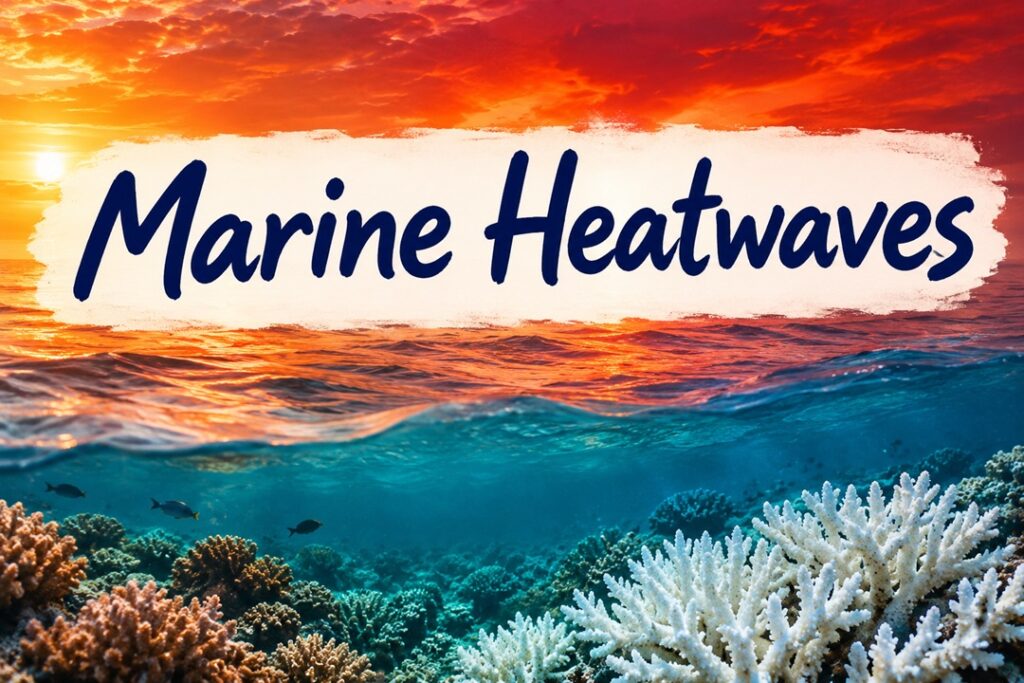
1. Coral Bleaching and Reef Degradation
- Excessive thermal stress disrupts the relationship between corals and their symbiotic zooxanthellae algae.
- Corals expel these algae, lose their characteristic colour and become vulnerable to mortality.
- Example: Coral ecosystems in the Gulf of Mannar, Palk Bay, Lakshadweep and Andaman Islands face increased risks of bleaching and degradation.
2. Disruption of Fisheries and Marine Biodiversity
- Rising temperatures force several fish species to migrate towards cooler waters or move into deeper ocean layers.
- Such changes affect fish availability, breeding patterns and the livelihoods of traditional fishing communities.
- Example: Declining sardine and mackerel catches along the Kerala and Karnataka coasts during prolonged warm-water conditions.
3. Increase in Harmful Algal Blooms
- Elevated temperatures and relatively stagnant waters create favourable conditions for the rapid multiplication of certain toxic phytoplankton and dinoflagellates.
- These blooms can release marine toxins and reduce dissolved oxygen, threatening aquatic organisms and aquaculture activities.
- Example: Red tides can cause fish mortality and damage coastal cage aquaculture and shellfish populations.
4. Degradation of Seagrass Ecosystems
- Prolonged thermal stress damages underwater vegetation, reducing its growth and survival.
- The decline of seagrass beds weakens marine carbon storage and destroys important feeding habitats.
- Example: Damage to Halophila and Enhalus meadows threatens the food availability of dugongs and green sea turtles.
5. Intensification of Tropical Cyclones
- Abnormally warm ocean waters increase the heat and moisture available to developing tropical weather systems.
- This can support faster cyclone intensification and increase the likelihood of intense rainfall and coastal hazards.
- Example: Warm waters in the Arabian Sea and Bay of Bengal can provide favourable conditions for the strengthening of tropical cyclones.
Way Forward
- Strengthen Ocean Monitoring: Expand satellite-based observations, ocean buoys and real-time temperature monitoring to identify marine heatwaves at an early stage.
- Improve Early Warning Systems: Integrate INCOIS forecasts with coastal disaster management mechanisms to provide timely alerts to fishing communities and maritime stakeholders.
- Protect Marine Ecosystems: Restore coral reefs, seagrass meadows and mangroves to improve ecosystem resilience against thermal stress.
- Promote Sustainable Fisheries: Introduce science-based fishing limits, seasonal restrictions and adaptive fisheries management to address shifting fish populations.
- Develop Climate-Resilient Coastal Livelihoods: Strengthen alternative livelihood opportunities, insurance coverage and institutional support for vulnerable fishing communities.
- Advance Ocean Climate Research: Improve understanding of the relationship between marine heatwaves, ENSO, the Indian Ocean Dipole and tropical cyclone development.
Conclusion
Marine heatwaves are emerging as a significant consequence of ocean warming, with far-reaching implications for marine biodiversity, fisheries, coastal economies and disaster preparedness. India’s response must move beyond conventional ocean monitoring towards an integrated approach combining scientific forecasting, ecosystem conservation and climate-resilient coastal development. Strengthening ocean governance and early warning capabilities will be essential to safeguard marine resources and protect coastal livelihoods.
Source : The Hindu