Anaemia in India: Moving Beyond Iron Deficiency Towards a Holistic Public Health Approach
Context
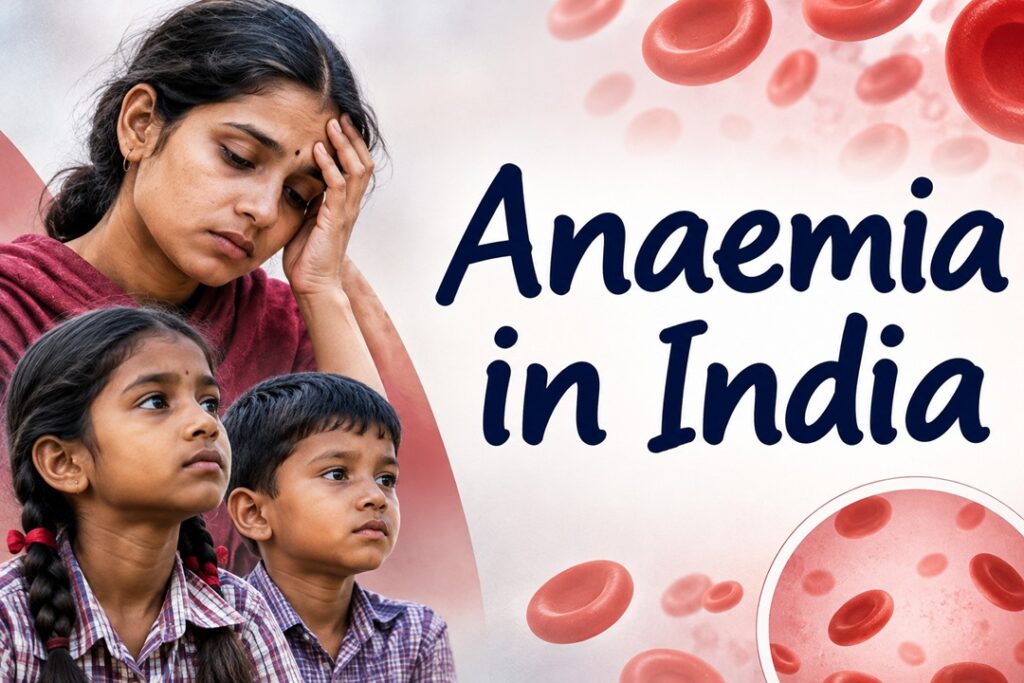
Anaemia continues to be a major public health concern in India, disproportionately affecting women, children and adolescent girls across rural and urban areas. Its persistence highlights the limitations of treating anaemia merely as an iron-deficiency problem and underscores the need for a comprehensive approach addressing nutritional, infectious, genetic and socio-economic determinants.
What is Anaemia?
- Definition: Anaemia is a medical condition characterised by reduced haemoglobin concentration or an insufficient number of healthy red blood cells, limiting the oxygen-carrying capacity of blood.
- Beyond Iron Deficiency: Although inadequate iron intake is a major contributor, anaemia can also result from deficiencies of Vitamin B12, folic acid and Vitamin A, chronic infections, inflammation and inherited blood disorders.
- Public Health Significance: It can cause fatigue, reduced cognitive and physical performance, impaired childhood development, pregnancy complications and lower workforce productivity.
What are the Multi-dimensional Causes of Anaemia?
1. Nutritional Deficiencies
- Insufficient intake of iron-rich foods is a major contributing factor.
- Vitamin B12 and folate are essential for the formation and maturation of red blood cells.
- Low consumption of animal-source foods can increase the risk of Vitamin B12 deficiency.
- Vitamin C deficiency can further aggravate iron deficiency by reducing the absorption of non-haem iron from plant-based foods.
2. Infections and Chronic Inflammation
- Intestinal worms, malaria and recurrent gastrointestinal infections can contribute to blood loss and reduced nutrient absorption.
- Chronic inflammation increases the production of hepcidin, a hormone that restricts intestinal iron absorption and prevents the effective utilisation of stored iron.
- Repeated infections can therefore sustain anaemia even when dietary iron intake is adequate.
3. Socio-economic and Environmental Factors
- Inadequate access to safe drinking water, sanitation and hygiene increases the incidence of diarrhoeal and parasitic infections.
- Poverty, food insecurity and limited dietary diversity restrict access to essential micronutrients.
- Early marriage, adolescent pregnancy, repeated pregnancies and gender-based nutritional inequalities increase women’s vulnerability.
4. Genetic and Inherited Disorders
- Conditions such as thalassemia and sickle cell disorders can cause chronic anaemia.
- These conditions are concentrated in certain population groups and geographical regions.
- Iron supplementation alone cannot correct genetically inherited causes of anaemia and may result in unnecessary iron accumulation in some patients.
Why is an Iron-Centric Approach Insufficient?
| Dimension | Conventional Iron-Centric Approach | Holistic Multi-sectoral Approach |
|---|---|---|
| Intervention | Iron-Folic Acid (IFA) supplementation and iron fortification | Dietary diversity and multiple micronutrient interventions |
| Diagnosis | Primarily haemoglobin measurement | Assessment of iron stores, B12, inflammation and genetic disorders |
| Infection control | Limited integration with sanitation programmes | Deworming, malaria prevention and improved WASH facilities |
| Treatment | Generalised iron supplementation | Cause-specific diagnosis and treatment |
| Sustainability | Dependence on periodic supplementation | Long-term nutritional security and behavioural change |
What are the Challenges Associated with Iron-Only Programmes?
- Risk of Unnecessary Supplementation: Providing iron to individuals without iron deficiency may cause gastrointestinal complications and, in certain circumstances, contribute to excessive iron accumulation.
- Inadequate Diagnostic Capacity: Haemoglobin testing identifies anaemia but cannot independently establish its underlying cause. Reliance on basic testing may overlook inflammatory conditions, Vitamin B12 deficiency and haemoglobin disorders.
- Poor Treatment Compliance: Nausea, constipation, abdominal discomfort and metallic taste associated with oral iron tablets discourage continued consumption, particularly among adolescent girls and pregnant women.
- Limited Attention to Root Causes: Supplementation alone cannot resolve persistent infections, poor sanitation, inadequate dietary diversity or inherited blood disorders.
- Implementation Gaps: Inconsistent availability of supplements, inadequate awareness, weak follow-up and gaps in healthcare delivery reduce programme effectiveness.
What are the Government Initiatives to Address Anaemia?
1. Anaemia Mukt Bharat (AMB)
- Introduced under the POSHAN Abhiyaan framework, it follows a 6×6×6 strategy involving six beneficiary groups, six interventions and six institutional mechanisms.
- Its interventions include iron-folic acid supplementation, periodic deworming, testing and treatment, behaviour change communication and management of non-nutritional causes.
2. POSHAN Abhiyaan
- Seeks to improve nutritional outcomes among children, adolescent girls, pregnant women and lactating mothers.
- Promotes nutrition awareness, dietary diversity, community participation and improved maternal and child healthcare.
3. National Deworming Day (NDD)
- Conducted biannually to administer Albendazole to eligible children and adolescents.
- Aims to reduce soil-transmitted helminth infections that can contribute to nutritional deficiencies and anaemia.
Way Forward
- Promote Dietary Diversification: Encourage the consumption of green leafy vegetables, millets, pulses, legumes, fruits, nuts and protein-rich foods. Combining plant-based iron sources with Vitamin C-rich foods can improve iron absorption.
- Strengthen Diagnostic Infrastructure: Equip Primary Health Centres with appropriate diagnostic facilities to assess iron status, Vitamin B12 deficiency, inflammation and inherited haemoglobin disorders.
- Integrate Nutrition with WASH: Coordinate anaemia-control programmes with safe drinking water, sanitation, hygiene promotion and infection-control initiatives.
- Improve Targeted Supplementation: Identify the underlying cause before initiating treatment and ensure that iron supplementation is provided according to clinical requirements.
- Strengthen Behavioural Change: Promote nutrition education among families, schools and communities to improve dietary practices and treatment adherence.
- Address Gender Inequalities: Improve access to healthcare for adolescent girls and women, prevent early marriage and pregnancy, and strengthen maternal nutrition services.
- Expand Genetic Screening: Strengthen screening and counselling for sickle cell disease and thalassemia in vulnerable populations.
Conclusion
Anaemia in India is not merely a nutritional deficiency but a complex public health challenge shaped by poverty, infections, gender inequalities, inadequate sanitation and genetic conditions. Therefore, achieving sustainable reductions requires a shift from an exclusively iron-supplementation-based model towards comprehensive diagnosis, diversified nutrition, infection control and stronger public health infrastructure. A multi-sectoral approach is essential to improve nutritional outcomes and strengthen India’s human development.
Source : The Hindu