
Adolescent Nutrition Crisis in India: Rising Obesity and Hidden Hunger
Context
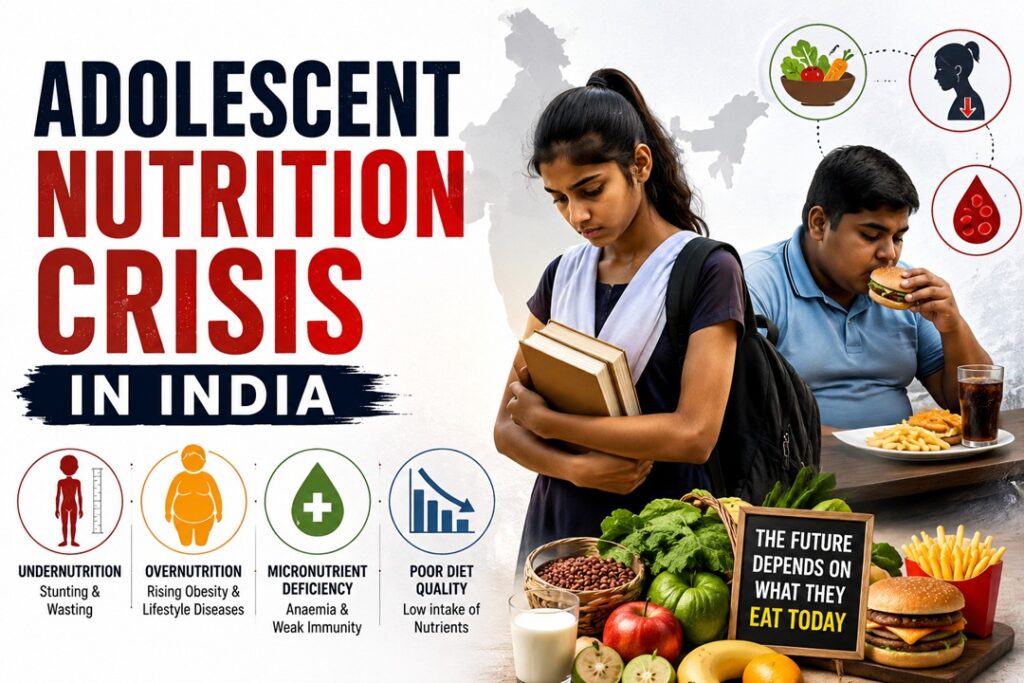
The latest National Family Health Survey (NFHS-6) (2023–24) highlights a concerning rise in obesity and elevated blood sugar levels among Indians, while undernutrition among children and adolescents continues to persist, creating a dual nutritional challenge.
About the National Family Health Survey (NFHS)
What is NFHS?
- The National Family Health Survey (NFHS) is a nationwide, periodic survey that provides comprehensive information on population health, nutrition, fertility, family welfare, and socio-economic indicators.
- It serves as an important evidence base for health and nutrition policy formulation.
Major Highlights of NFHS-6
Growing Burden of Obesity
Adults (15–49 years)
- Men: Increased from 22.9% to 27.3%
- Women: Increased from 24% to 30.7%
Increasing High Blood Sugar Levels
Population aged 15 years and above
- Men: Rose from 15.6% to 20.9%
- Women: Rose from 13.5% to 17.8%
Double Burden of Malnutrition
- India continues to face childhood undernutrition alongside increasing obesity among adolescents and adults.
- Schools have emerged as one of the most effective institutions for promoting healthy dietary habits and preventing lifestyle disorders.
Understanding Adolescent Malnutrition
Meaning
- Adolescent malnutrition refers to inadequate or excessive nutrient intake, resulting in conditions such as stunting, micronutrient deficiencies, overweight, or obesity.
Thin-Fat Phenotype
- Many Indian adolescents appear physically lean but possess excess body fat and metabolic abnormalities, increasing future risks of diabetes and cardiovascular diseases.
Why It Matters
- Nutritional deficiencies during adolescence significantly influence lifelong physical growth, cognitive development, and susceptibility to non-communicable diseases.
Current Scenario of Adolescent Nutrition in India
Persistent Stunting
- More than one-fourth of adolescents remain stunted, with higher prevalence among girls and older adolescents.
High Levels of Thinness
- Nearly one in four adolescents suffers from thinness, particularly boys, younger adolescents, and economically weaker sections.
Anaemia Remains Widespread
- Iron deficiency continues to affect adolescents, especially girls aged 15–19 years.
Emerging Obesity
- Urbanisation, processed foods, and sedentary lifestyles have contributed to increasing rates of overweight and obesity among adolescents.
Major Factors Behind Adolescent Malnutrition
Rapid Growth Requirements
- Adolescence is marked by accelerated growth, increasing nutritional needs substantially.
Poor Dietary Practices
- Low intake of balanced diets and iron-rich foods contributes to undernutrition and anaemia.
Economic Inequality
- Poverty limits access to nutritious food, disproportionately affecting disadvantaged communities.
Gender Inequality
- Unequal food allocation and social discrimination often leave adolescent girls nutritionally deprived.
Early Marriage and Pregnancy
- Teenage pregnancies increase health risks for both mothers and infants, perpetuating malnutrition across generations.
Lifestyle Changes
- Greater dependence on junk food, sugary beverages, and reduced physical activity has accelerated obesity.
Intergenerational Impact
- Poor maternal nutrition contributes to low birth weight and continued nutritional deficiencies in future generations.
Role of Schools in Improving Nutrition
Ensuring Daily Nutrition
- School meal programmes provide essential nutrients that support healthy physical growth.
Enhancing Learning Outcomes
- Better nutrition improves concentration, attendance, academic performance, and cognitive development.
Building Healthy Behaviour
- Schools can promote nutrition literacy, balanced eating habits, and informed food choices from an early age.
Creating Wider Social Awareness
- Students often transfer healthy practices to their families, encouraging community-wide behavioural change.
Strategies Schools Can Adopt
Nutritious School Environment
- Strengthen midday meals with protein-rich foods, healthy canteens, kitchen gardens, and seasonal fruits.
Reducing Ultra-Processed Foods
- Restrict sugary drinks and HFSS foods while encouraging awareness regarding healthier alternatives.
Promoting Physical Fitness
- Introduce compulsory daily physical activity, regular fitness assessments, sports clubs, and active transport initiatives.
Institutional Integration
- Embed nutrition education and health promotion into school policies and curricula for sustained impact.
Challenges in School-Based Nutrition Programmes
Resource Constraints
- Limited financial resources and inadequate kitchen infrastructure reduce programme effectiveness.
Administrative Limitations
- Teachers often shoulder additional responsibilities related to meal management and record keeping.
Quality Concerns
- Meals frequently lack dietary diversity, while hygiene and food safety remain inconsistent.
Social Barriers
- Poverty-driven absenteeism and children’s preference for processed foods reduce programme outcomes.
Government Measures Against Malnutrition
- POSHAN Abhiyaan – Integrated mission to reduce stunting, undernutrition, and anaemia.
- Anganwadi Services – Supplementary nutrition, health care, and preschool education for vulnerable groups.
- Pradhan Mantri Matru Vandana Yojana (PMMVY) – Financial assistance to pregnant and lactating mothers.
- PM POSHAN Scheme – Nutritious cooked meals for school children.
- Anaemia Mukt Bharat – Iron and folic acid supplementation to reduce anaemia.
Ethical Concerns
- Adolescent malnutrition raises issues of social justice, equity, and the right to adequate nutrition.
- Persistent disparities based on poverty, gender, caste, and geography undermine equal opportunities.
- Governments, schools, families, and communities share responsibility for protecting adolescent health and ensuring effective implementation of nutrition programmes.
- Addressing adolescent nutrition is essential to break the intergenerational cycle of malnutrition and promote inclusive development.
Way Forward
Strengthen Maternal and Early Childhood Nutrition
- Improve antenatal care, exclusive breastfeeding, and timely complementary feeding during the first 1,000 days.
Improve Multi-Sectoral Coordination
- Enhance collaboration among health, education, agriculture, and women & child development departments.
Address Hidden Hunger
- Expand food fortification and promote biofortified crops rich in essential micronutrients.
Strengthen Community-Based Care
- Expand Nutrition Rehabilitation Centres (NRCs) and decentralised treatment for severe malnutrition.
Promote Sustainable Food Systems
- Improve affordability and accessibility of diverse, nutritious foods while encouraging healthier dietary habits across all age groups.
Source : The Hindu