
Engineering-Led Transformation of Indian Agriculture
Context
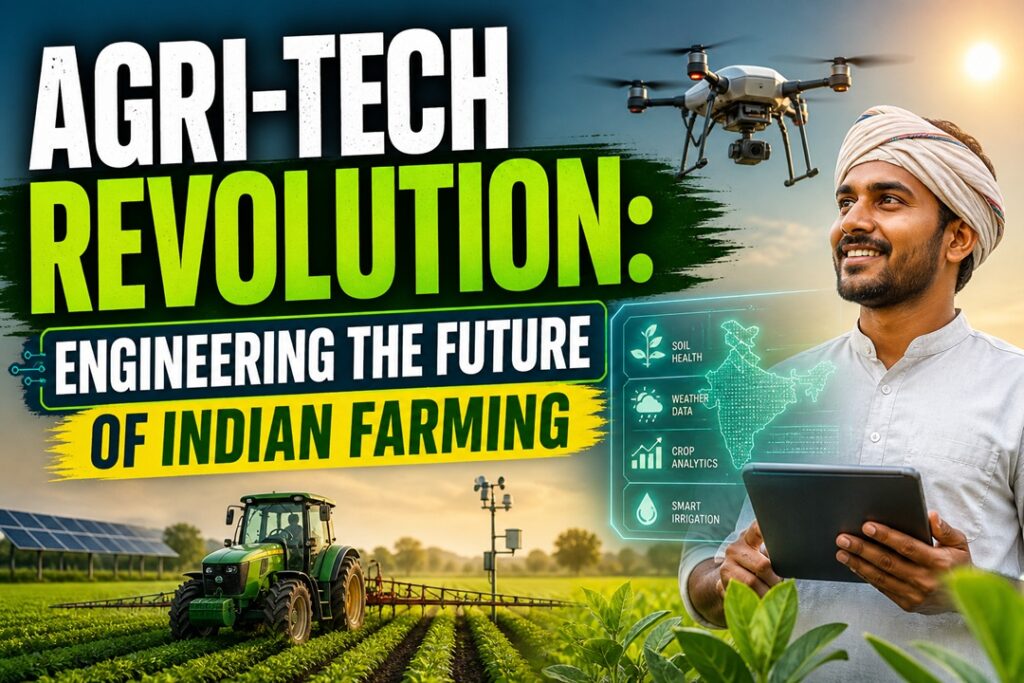
Farm mechanization and engineering innovations are increasingly shaping India’s shift toward climate-smart, efficient, and resilient agriculture systems.
Engineering-Led Transformation of Indian Agriculture
Concept Overview
Agricultural engineering refers to the integration of science, technology, and design systems to enhance farm productivity and sustainability. It covers the full value chain—from land preparation and irrigation to storage, processing, and logistics, ensuring a robust agri-economy.
Important Facts & Figures
- Minimizing Post-Harvest Losses: Scientific storage and cold-chain logistics can reduce wastage by nearly 75%, addressing current losses estimated between 5.8%–15.88% (CIPHET).
- Efficiency through Precision Tools: Adoption of technologies like variable rate application and smart pest control improves fertilizer use by 12–15% and reduces pesticide consumption by around 20%.
- Water-Energy Optimization: Micro-irrigation systems operate at 85–90% efficiency, compared to 30–50% in conventional methods, saving both water and electricity.
- Mechanization Impact: Current mechanization (~47%) enhances productivity by 12–15%, cuts costs by about 20%, and reduces labour dependency significantly.
Key Dimensions in Contemporary Agricultural Engineering
High-Accuracy Farm Machinery
Modern equipment enables precision operations, reducing manual inefficiencies.
Example: Laser land levellers ensure uniform fields; seed drills maintain correct sowing depth.
Efficient Irrigation Technologies
Engineering solutions focus on maximizing water-use efficiency, critical in water-scarce regions.
Example: Drip and sprinkler systems deliver targeted irrigation, minimizing losses.
Land and Soil Conservation Systems
Engineering practices help preserve soil fertility and prevent degradation.
Example: Terracing and bunding reduce erosion and retain topsoil.
Post-Production Handling Systems
Focus on quality preservation and shelf-life extension after harvest.
Example: Cold storage and automated grading improve market value realization.
Digital & Smart Farming Tools
Integration of data analytics, sensors, and drones supports informed decision-making.
Example: Drones detect pest outbreaks and nutrient deficiencies early.
Emerging Opportunities in Agricultural Engineering
Integrated Farm Ecosystems
Engineering connects different farm components into coordinated production systems.
Example: Linking harvesting machines with solar dryers for immediate processing.
Income Enhancement Potential
Higher efficiency and standardized output improve market competitiveness and farmer earnings.
Example: Precision farming enables export-quality produce.
Adaptation to Climate Variability
Protected cultivation structures enhance resilience against climate extremes.
Example: Polyhouses and greenhouses support year-round cultivation.
Circular Resource Utilization
Engineering innovations promote reuse of water and agricultural waste.
Example: Rainwater harvesting and greywater reuse systems.
Major Constraints
High Capital Requirements
Advanced technologies remain financially inaccessible for small farmers.
Fragmented Land Holdings
Small and scattered plots limit the viability of large-scale mechanization.
Skill and Awareness Deficit
Gap between innovation and adoption due to lack of technical know-how.
Weak Rural Infrastructure
Inadequate electricity and logistics reduce the effectiveness of modern systems.
Policy & Strategy Directions
- Promote Green Mechanization: Encourage solar-powered and automated farm equipment.
- Expand Rental Ecosystems: Strengthen Custom Hiring Centres for shared machinery access.
- Reform Agricultural Education: Blend engineering expertise with field-level training.
- Inclusive Subsidy Design: Target smallholders for precision farming support.
- Upgrade Value Chains: Develop decentralized storage, grading, and processing infrastructure.
Conclusion
Agricultural engineering is becoming the backbone of India’s transition toward efficient, technology-driven, and climate-resilient agriculture. By combining innovation with accessibility, it ensures inclusive growth, enabling even small farmers to participate in a modernized agricultural economy.
Source : The Hindu