
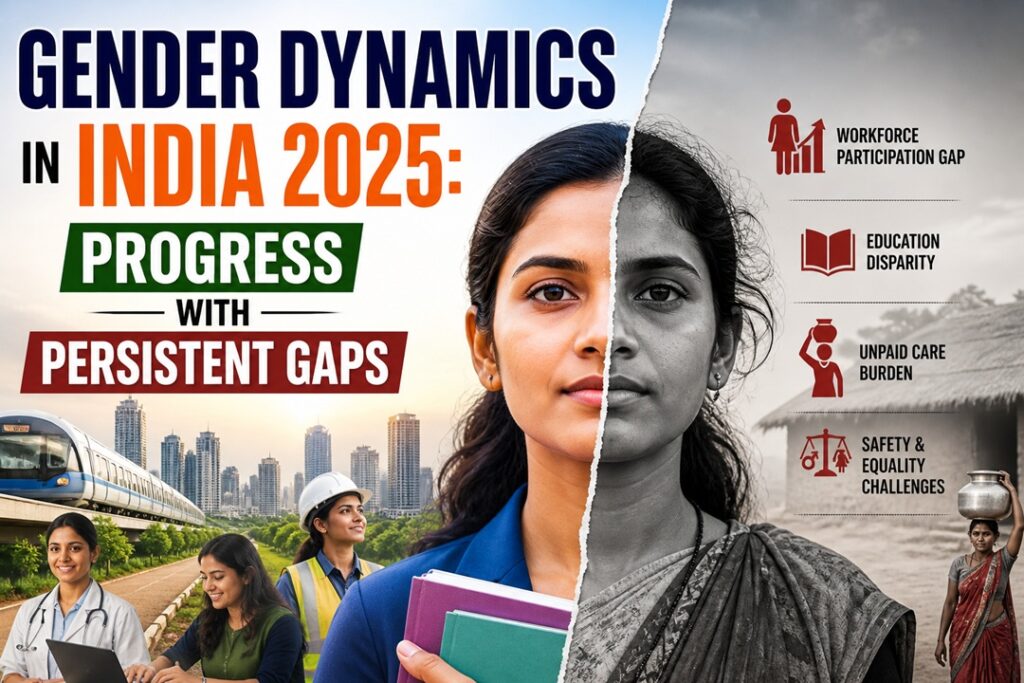
Gender Dynamics in India 2025: Progress with Persistent Gaps
Context
The Ministry of Statistics and Programme Implementation (MoSPI) has released the 27th edition of its flagship publication Women and Men in India 2025 in Bhubaneswar, presenting a detailed overview of gender-related socio-economic indicators.
Report Overview
Nature:
An annual statistical compendium (since 1995) that consolidates gender-disaggregated data from multiple ministries and official datasets.
Scope:
Encompasses key sectors such as population, health, education, employment, and gender-based issues.
Major Trends & Indicators
Improved Sex Ratio at Birth:
Increased from 904 (2017–19) to 917 (2021–23), indicating better outcomes for female births.
Declining Infant Mortality:
Steady fall in mortality rates for both genders over the period 2008–2023.
Educational Gender Balance:
Gender parity achieved across all levels of school education.
Higher Education Progress:
Female Gross Enrolment Ratio (GER) rose from 28.5 to 30.2 (2021–22 to 2022–23), now exceeding male GER.
Rising Labour Participation:
LFPR improved across genders, with stronger momentum among rural women.
Rural Women Workforce Growth:
Participation rose significantly from 37.5% to 45.9% (2022–2025).
Leadership Expansion:
Women in managerial roles increased by over 100% (2017–2025), surpassing male growth rates.
Fertility Decline:
Adolescent fertility rates (15–19 years) show a consistent downward trend since 2021.
Positive Signals of Gender Progress
Educational Equity:
Uniform gender parity ensures equal access to foundational education.
Workforce Transformation:
Greater female participation in jobs and leadership roles reflects changing socio-economic structures.
Health Improvements:
Reduction in Maternal Mortality Ratio (MMR) and infant mortality highlights better healthcare access.
Rising Age at Marriage:
Increase in mean marriage age supports extended education and career opportunities.
Economic Empowerment:
Higher LFPR indicates growing financial independence and decision-making capacity among women.
Persisting Concerns
Low Screening Rates:
Very limited participation in cervical and breast cancer screenings.
Literacy Gap:
A notable gender gap of 14.4 percentage points persists in literacy levels.
Unpaid Work Burden:
Women disproportionately engaged in unpaid domestic and caregiving activities.
Digital Risks:
Lower digital awareness increases vulnerability to cybercrime and reduces reporting.
Way Ahead
Strengthen Preventive Healthcare:
Enhance awareness and outreach for cancer screenings, especially in rural regions.
Boost Female Employment:
Promote skill development and targeted livelihood programs.
Reduce Literacy Disparities:
Focus on adult education initiatives for older women.
Data-Driven Policies:
Utilize report indicators for designing gender-responsive governance strategies.
Improve Safety Ecosystem:
Strengthen cybercrime reporting mechanisms and accessibility.
Conclusion
The report highlights significant strides in gender equality, particularly in education and workforce participation. However, enduring gaps in literacy, healthcare access, and unpaid work underline the need for sustained and inclusive policy interventions to achieve comprehensive gender parity.
Source : PIB