
Highly Toxic Agrochemicals and Himachal Pradesh’s Horticulture Challenge
Context
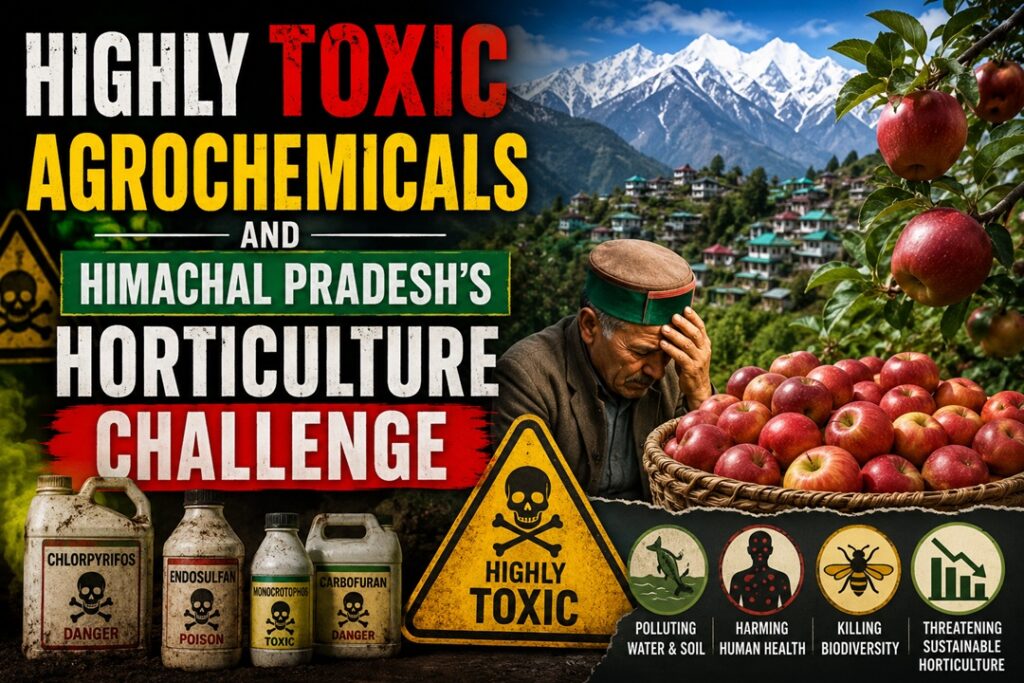
The rapid growth of commercial fruit cultivation and cash-crop farming in Himachal Pradesh has intensified the use of Highly Toxic Agrochemicals (HTAs), triggering growing concerns over environmental sustainability and public health.
Understanding Highly Toxic Agrochemicals (HTAs)
Meaning and Scope
Highly Toxic Agrochemicals (HTAs) are pesticide formulations that pose severe risks to humans, wildlife, and ecosystems due to their hazardous chemical properties.
Key Features
These substances are often associated with:
- High acute toxicity
- Long-lasting environmental persistence
- Bioaccumulation in food chains
- Contamination of soil and water resources
Why Are They Restricted Globally?
Several countries have prohibited or tightly regulated such chemicals because of their links with:
- Various forms of cancer
- Nervous system disorders
- Developmental abnormalities
- Occupational poisoning among farm workers
- Ecological degradation
Despite international restrictions, many of these compounds continue to be used in intensive farming systems across India.
Factors Increasing Himachal Pradesh’s Exposure
Horticulture-Centric Farming Pattern
Unlike grain-producing states, Himachal Pradesh largely depends on high-value horticultural crops such as apples, cherries, pears, plums, peas, tomatoes, and capsicum.
These crops are particularly vulnerable to pest infestations and fungal diseases, resulting in frequent pesticide dependence.
Frequent Chemical Applications
In major fruit-producing districts including Shimla, Kullu, and Kinnaur, multiple pesticide sprays are commonly undertaken during a single crop cycle.
Market-Driven Input Use
Vegetable-growing belts such as Solan rely heavily on chemical-based crop protection measures to maintain yield quality and market competitiveness.
The result is a production model increasingly dependent on chemical interventions, elevating ecological and health risks.
Major Public Health Concerns
Health Risks to Agricultural Workers
Farmers and orchard labourers face direct exposure while handling agrochemicals.
Common effects include:
- Eye irritation
- Skin allergies
- Breathing difficulties
- Nausea and headaches
- Dizziness
Prolonged exposure may further contribute to:
- Acute toxic reactions
- Chronic neurological disorders
For many farming communities, such symptoms have become a routine occupational hazard.
Escalating Cancer Incidence
Himachal Pradesh has witnessed a rising cancer burden, with incidence rates exceeding national trends.
Although cancer results from multiple factors, excessive exposure to pesticides and synthetic farm chemicals has increasingly emerged as a significant area of concern among researchers and policymakers.
The resulting healthcare burden affects households, public health systems, and rural livelihoods.
Pollution of Water Resources
During monsoon periods, pesticide residues are often washed into nearby streams and rivers.
This can contaminate:
- Surface water bodies
- Groundwater reserves
- Aquatic habitats
- Drinking water sources
The consequences extend beyond local communities, affecting populations downstream that depend on Himalayan river systems.
Declining Soil Vitality
Healthy soils depend on microorganisms that facilitate nutrient recycling and plant growth.
Excessive pesticide use can lead to:
- Reduction in beneficial microbes
- Declining soil fertility
- Nutrient imbalances
- Increased fertilizer dependency
This weakens natural soil functions and pushes farmers toward greater chemical usage.
Threats to Biodiversity
Pollinators play a vital role in Himachal’s fruit economy.
However, indiscriminate pesticide use has contributed to declining populations of:
- Bees
- Butterflies
- Beneficial insects
- Birds
- Aquatic organisms
Many orchard owners increasingly rely on rented bee colonies for pollination, adding economic costs and reflecting broader ecological disruption.
Paraquat: An Illustration of the Challenge
What is Paraquat?
Paraquat is a highly toxic herbicide widely recognized for its severe health and environmental risks.
Global Regulatory Response
More than seventy-five countries have restricted or banned paraquat owing to concerns relating to:
- Extreme human toxicity
- Occupational exposure risks
- Environmental pollution
- Absence of effective medical antidotes
Its continued presence in farming systems highlights regulatory gaps in pesticide governance.
Lessons from International Experience
Several countries have demonstrated that reducing reliance on highly toxic pesticides can significantly lower poisoning-related deaths without compromising agricultural productivity.
Policy Interventions Required
Modernizing Regulatory Frameworks
Authorities should:
- Identify the most hazardous chemicals for phased withdrawal
- Strengthen compliance and monitoring systems
- Tighten residue limits
- Improve pesticide approval and review mechanisms
These measures can reduce both environmental and human exposure.
Promoting Farmer Education
Awareness programmes should focus on:
- Safe pesticide handling
- Use of protective equipment
- Sustainable pest-control alternatives
- Health impacts of excessive chemical use
Extension services can play a critical role in encouraging safer agricultural practices.
Adoption of Ecological Pest Control
Integrated Pest Management (IPM) seeks to reduce chemical dependence through:
- Pest surveillance
- Biological control methods
- Crop rotation
- Resistant crop varieties
- Precision pesticide application
Such approaches maintain productivity while lowering environmental risks.
Sustainable Weed Management
Integrated Weed Management (IWM) combines:
- Mechanical removal
- Mulching techniques
- Crop diversification
- Biological weed suppression
This reduces herbicide dependence and improves long-term farm sustainability.
Expanding Natural Farming
The state has already promoted natural farming through the Prakritik Kheti Khushhal Kisan Yojana (PK3Y).
Potential benefits include:
- Reduced chemical usage
- Improved soil structure
- Enhanced biodiversity
- Lower cultivation costs
- Greater climate resilience
However, successful transition requires gradual restoration of ecological balance and reduced chemical contamination.
Ethical Issues Involved
Livelihood Security versus Public Health
Commercial horticulture generates substantial income, yet excessive agrochemical use may endanger the health of farmers, consumers, and rural populations.
Ethical Question: Can economic gains justify significant health risks?
Responsibility Towards Future Generations
Chemical contamination of soil and water can persist for decades, affecting ecological systems inherited by future generations.
State Accountability
Governments possess both constitutional and moral responsibilities to safeguard public health and environmental integrity.
Inadequate regulation raises concerns regarding governance and accountability.
Applying the Precautionary Principle
Growing scientific evidence associates hazardous pesticides with poisoning, cancer, and ecological harm.
Even in the absence of absolute certainty, preventive action becomes ethically justified.
Protecting Agricultural Workers
Farmers often face exposure due to insufficient training, awareness, or protective equipment.
Placing disproportionate health risks on food producers raises concerns of equity and justice.
Environmental Justice Concerns
Communities downstream may suffer the consequences of contaminated water despite receiving little economic benefit from pesticide-intensive agriculture.
Corporate Responsibility
Agrochemical companies continue marketing substances that face restrictions elsewhere.
This raises questions regarding transparency, risk disclosure, and responsible business practices.
Balancing Development and Sustainability
The issue reflects the broader challenge of reconciling agricultural growth with environmental protection.
Sustainable development demands a balance among economic prosperity, social welfare, and ecological security.
The Way Forward
The challenge posed by highly toxic agrochemicals in Himachal Pradesh extends far beyond agriculture. It encompasses public health, environmental conservation, and sustainable development.
Evidence emerging from farming communities, scientific studies, and healthcare institutions underscores the urgency of reducing hazardous chemical dependence. Strengthened regulation, ecological farming approaches, safer alternatives, and informed farmer participation can collectively help safeguard human health while preserving the fragile Himalayan ecosystem.
A transition toward sustainable and low-chemical agriculture can ensure that Himachal Pradesh remains both a thriving horticultural hub and an environmentally resilient region.
Source : Down To Earth