
Oil Spill off the UAE Coast: Threats to Marine Ecosystems and Coastal Infrastructure
Context
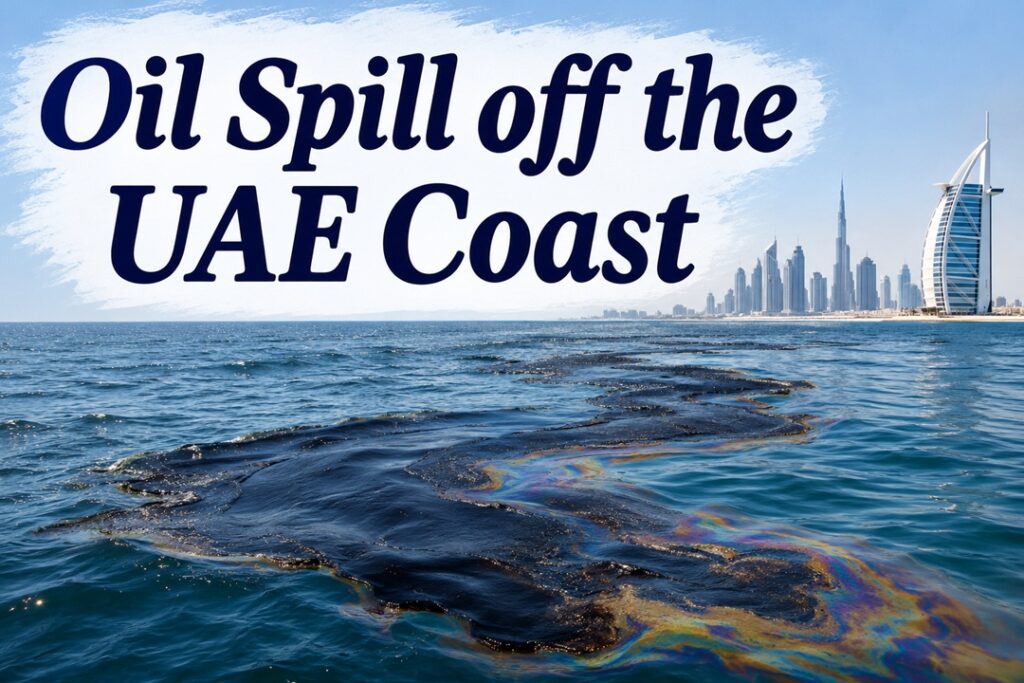
High-resolution satellite images from the European Union’s Copernicus Sentinel-2 programme have revealed the rapid expansion of a major oil spill in the Persian Gulf off the United Arab Emirates (UAE), with the slick approaching the northern coastline. The incident has raised concerns over marine biodiversity, coastal livelihoods and the safety of critical desalination infrastructure.
About the Oil Spill off the UAE
1. Nature of the Incident
- The incident represents a major marine pollution event involving the leakage of heavy crude or fuel oil from a damaged commercial tanker into the Persian Gulf.
- The spill poses risks to sensitive marine habitats, coastal communities and essential water infrastructure.
2. How Did the Incident Occur?
- Suspected Vessel: Maritime sources identified the commercial tanker Gem No. 2 as the possible source of the spill.
- Possible Trigger: The vessel was reportedly struck by an unidentified projectile near the Strait of Hormuz, resulting in a fire that was subsequently extinguished.
- Spread of Oil: Satellite observations detected extensive oil slicks moving through open waters towards the coastline of Umm Al Quwain.
- Government Response: UAE authorities initiated containment measures and temporarily closed affected beaches, including Al Hamriyah in Sharjah and coastal resorts in Ras Al Khaimah.
Major Oil Spill Incidents Across the World
- Manila Bay Oil Spill, Philippines: The tanker MT Terra Nova, carrying approximately 1.4 million litres of industrial fuel oil, sank near Bataan, contaminating coastal waters and affecting fisheries.
- Pasir Panjang Oil Spill, Singapore: A collision between the dredger Vox Maxima and the bunker vessel Marine Honour released around 400 tonnes of low-sulphur fuel oil, affecting beaches and coastal recreational areas.
- Tobago Coast Oil Spill: An abandoned capsized barge released large quantities of refined fuel oil along Tobago’s southern coastline, threatening coral reefs and coastal ecosystems.
- Twelvepole Creek Pipeline Spill, USA: Pipeline ruptures released crude oil into inland waterways, demonstrating the environmental risks associated with ageing oil transportation infrastructure.
Ecological Impacts of Marine Oil Spills
1. Damage to Marine Plants and Benthic Organisms
- Oil films restrict sunlight penetration and interfere with oxygen exchange between the atmosphere and water.
- This affects photosynthesis and can cause oxygen depletion in sensitive marine habitats.
- Example: Oil contamination can damage coral reefs and seagrass beds that provide feeding and breeding grounds for marine species.
2. Threats to Marine Animals
- Oil coats the feathers of seabirds and the fur of marine mammals, reducing their natural waterproofing and insulating properties.
- This exposes animals to hypothermia, impaired mobility and drowning.
- Example: Seabirds trapped in surface oil slicks may lose their ability to maintain body temperature and fly efficiently.
3. Toxicity and Food-Chain Contamination
- Oil contains toxic compounds such as Polycyclic Aromatic Hydrocarbons (PAHs), which can accumulate in aquatic organisms.
- Long-term exposure can cause reproductive abnormalities, developmental problems and increased mortality.
- Example: Filter-feeding shellfish and fish may absorb hydrocarbon residues, transferring contaminants to predators and humans through the food chain.
4. Degradation of Mangrove Ecosystems
- Heavy oil deposits can cover mangrove roots and block pneumatophores, which facilitate gaseous exchange.
- This can damage mangrove vegetation and disrupt habitats used by juvenile fish, crabs and shrimp.
- The destruction of these ecosystems also weakens natural coastal protection against erosion and storm surges.
5. Risks to Coastal Infrastructure and Human Livelihoods
- Oil contamination can threaten seawater desalination plants, which are essential sources of drinking water in arid Gulf countries.
- Contaminated seawater may force temporary shutdowns or additional treatment measures.
- Fishing, tourism, coastal recreation and other marine-dependent economic activities may also suffer losses.
Measures to Contain and Mitigate Oil Spills
1. Mechanical Containment and Recovery
- Floating containment booms can be deployed to prevent oil from spreading across larger marine areas.
- Skimmers and recovery vessels can collect floating oil for safe storage and disposal.
2. Chemical Dispersants
- Environmentally assessed dispersants can break large oil slicks into smaller droplets, facilitating microbial degradation.
- Their application must be carefully regulated because dispersed hydrocarbons can increase exposure to organisms in the water column.
3. Bioremediation
- Hydrocarbon-degrading microorganisms, such as Alcanivorax borkumensis, can help break down petroleum contaminants.
- Providing suitable nutrients can enhance microbial activity and accelerate the natural degradation process.
4. Sorbent Materials
- Hydrophobic materials, including polypropylene and certain natural fibres, can absorb oil while repelling water.
- Sorbent barriers are particularly useful for collecting thin oil films and protecting sensitive coastal locations.
5. Controlled In-situ Burning
- Under suitable environmental and safety conditions, floating oil can be burned within specially designed fire-resistant booms.
- This method can rapidly reduce surface oil but requires strict monitoring to minimise air pollution and ecological damage.
Way Forward
- Regional Cooperation: Gulf countries should establish joint mechanisms for marine pollution response, particularly around strategically important waterways such as the Strait of Hormuz.
- Satellite-Based Surveillance: Expand the use of Sentinel-2 imagery, synthetic aperture radar (SAR) and drone-based monitoring to identify oil slicks and track their movement.
- Desalination Plant Protection: Develop emergency intake shutdown protocols, alternative water supply arrangements and rapid water-quality testing systems.
- Stronger Maritime Regulations: Improve tanker inspections, vessel tracking, emergency preparedness and accountability for oil pollution.
- Ecosystem Restoration: Prioritise the restoration of affected mangroves, coral reefs and seagrass beds through scientifically monitored rehabilitation programmes.
- Regional Emergency Framework: Establish coordinated response teams, shared equipment and clear protocols for cross-border environmental emergencies.
Conclusion
The oil spill off the UAE highlights the vulnerability of marine ecosystems to maritime accidents, geopolitical tensions and weaknesses in shipping safety. Its consequences extend beyond marine biodiversity to food security, coastal livelihoods and critical desalination infrastructure. Strengthening regional cooperation, improving satellite-based surveillance and developing rapid oil recovery mechanisms are essential to protecting fragile marine environments and ensuring the long-term sustainability of international waterways.
Source : DD News