
U.S.–Iran Strategic Framework Agreement 2026
Context
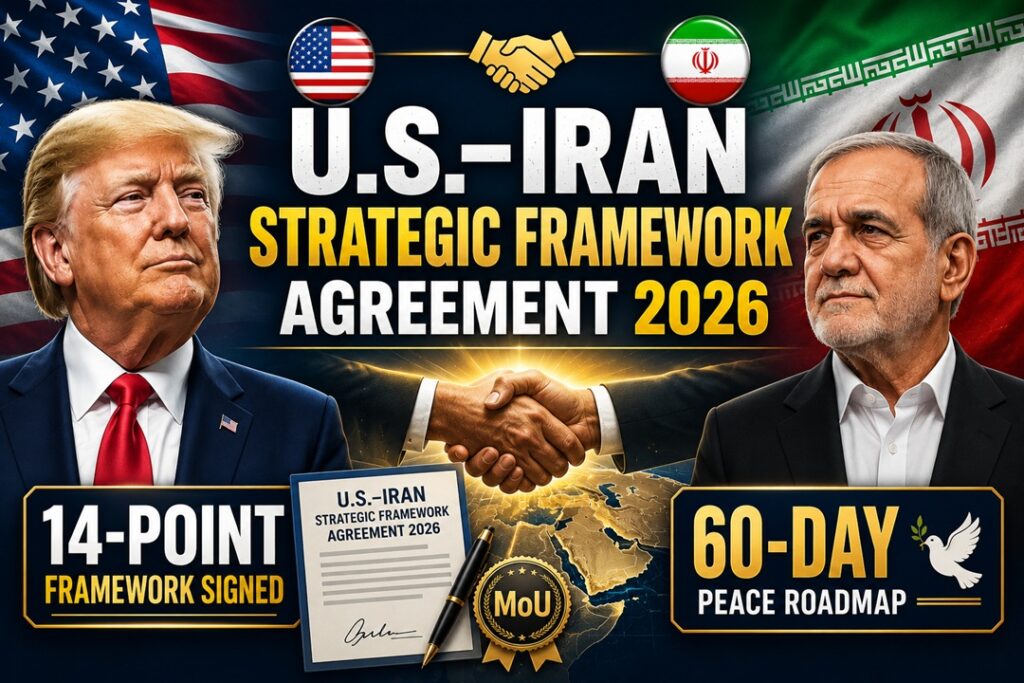
U.S. President Donald Trump and Iranian President Masoud Pezeshkian recently signed a comprehensive 14-point Strategic Framework Agreement, opening a 60-day diplomatic roadmap toward a permanent peace settlement and signaling a major shift in West Asian diplomacy.
U.S.–Iran Strategic Framework Agreement 2026
What is the Agreement?
- The 2026 Strategic Framework Agreement represents a broader diplomatic initiative than the 2015 Joint Comprehensive Plan of Action (JCPOA).
- Unlike the JCPOA, which primarily addressed nuclear concerns, the new framework seeks to redefine the overall political, economic, and security relationship between Washington and Tehran.
- The arrangement offers Iran economic recovery assistance, sanctions relief measures, and opportunities to strengthen its regional economic and defense capabilities.
Major Components of the 14-Point Framework
Provision 1: Region-Wide Military Standstill
- Requires the suspension of all military operations and extends ceasefire commitments to conflict zones involving Lebanon.
Provision 2: Recognition of Political Sovereignty
- Commits both parties to respect each other’s domestic governance systems and rejects external attempts to influence internal political affairs.
Provision 3: Flexible Negotiation Schedule
- Allows the 60-day dialogue period to be extended through mutual agreement if additional discussions are required.
Provision 4: Withdrawal of Maritime Pressure Measures
- Calls for the removal of U.S. naval deployment patterns associated with maritime containment operations in the Gulf region.
Provision 5: Guaranteed Freedom of Navigation
- Ensures uninterrupted movement of international commercial vessels through the Strait of Hormuz while permitting future discussions on navigation-management mechanisms involving Oman.
Provision 6: International Economic Recovery Initiative
- Creates a $300-billion reconstruction and development mechanism aimed at revitalizing Iran’s infrastructure, industry, and investment climate.
Provision 7: Roadmap for Economic Normalization
- Establishes phased removal of restrictions affecting Iran’s banking, shipping, and energy sectors.
Provision 8: Nuclear Restraint Commitment
- Reaffirms Iran’s pledge against pursuing nuclear weapons while allowing continued possession of existing enriched uranium reserves under agreed conditions.
Provision 9: Temporary Military Freeze
- Prohibits significant military modernization or force expansion activities during the negotiation period.
Provision 10: Immediate Humanitarian Exemptions
- Introduces temporary financial and trade waivers to support humanitarian imports and essential banking transactions.
Provision 11: Restoration of Overseas Financial Holdings
- Facilitates the gradual release of frozen Iranian assets held abroad, enabling urgent domestic fiscal expenditures.
Provision 12: Bilateral Compliance Oversight Body
- Establishes a joint supervisory panel responsible for implementation review and dispute resolution.
Provision 13: Structured Negotiation Agenda
- Sets a prioritized sequence for addressing political, economic, and technical matters during the talks.
Provision 14: International Legal Backing
- Seeks endorsement through a future United Nations Security Council resolution to strengthen the agreement’s legal standing.
Potential Benefits of the Framework
Stabilization of Global Energy Routes
- Reduced tensions in the Strait of Hormuz can lower shipping risks and protect one of the world’s most important energy corridors.
Economic Revival and Public Welfare
- The release of overseas assets and easing of sanctions can improve liquidity, support government spending, and stimulate economic growth.
Reduction in Regional Tensions
- The inclusion of Lebanon and broader ceasefire commitments may contribute to improved regional security conditions.
Key Concerns and Remaining Gaps
Absence of Missile Program Constraints
- The agreement does not address limitations on Iran’s ballistic missile capabilities.
Limited Focus on Regional Security Networks
- No provisions regulate Tehran’s interactions with allied non-state actors operating across the region.
Weak Nuclear Verification Provisions
- The framework does not immediately restore full monitoring arrangements with the International Atomic Energy Agency.
Future Policy Reversal Risks
- Despite proposed UN backing, concerns remain that future political changes could undermine implementation.
The Road Ahead
Strengthening Verification and Accountability
- Effective implementation requires transparent monitoring of both sanctions relief and security commitments.
Restoring International Inspection Mechanisms
- Re-establishing comprehensive IAEA oversight will be essential for building global confidence.
Expanding Economic Interdependence
- Broad international participation in reconstruction projects can create incentives for long-term stability.
Addressing Conventional Security Challenges
- Future negotiations should incorporate missile controls, maritime security, and regional confidence-building measures.
Conclusion
The Strategic Framework Agreement marks a significant attempt to move beyond a narrowly nuclear-focused approach and establish a broader foundation for U.S.–Iran engagement. While it offers opportunities for economic recovery and regional de-escalation, unresolved issues related to missile programs, verification mechanisms, and long-term political commitments will determine whether the 60-day diplomatic window evolves into a durable peace arrangement.
Source : CNN