
Viral Satire, Digital Politics and the Rise of Gen Z Activism
Context
The Central Government recently invoked provisions under the Information Technology Act to restrict access to the website and social media accounts of the newly created Cockroach Janta Party (CJP), a satirical online movement. Emerging from a courtroom-related public discussion, the campaign rapidly attracted millions of followers by channeling youth concerns over examination irregularities, unemployment, and governance issues, sparking a wider debate on the relationship between digital activism and democratic institutions.
Digital Youth Participation in Democracy
What Does It Signify?
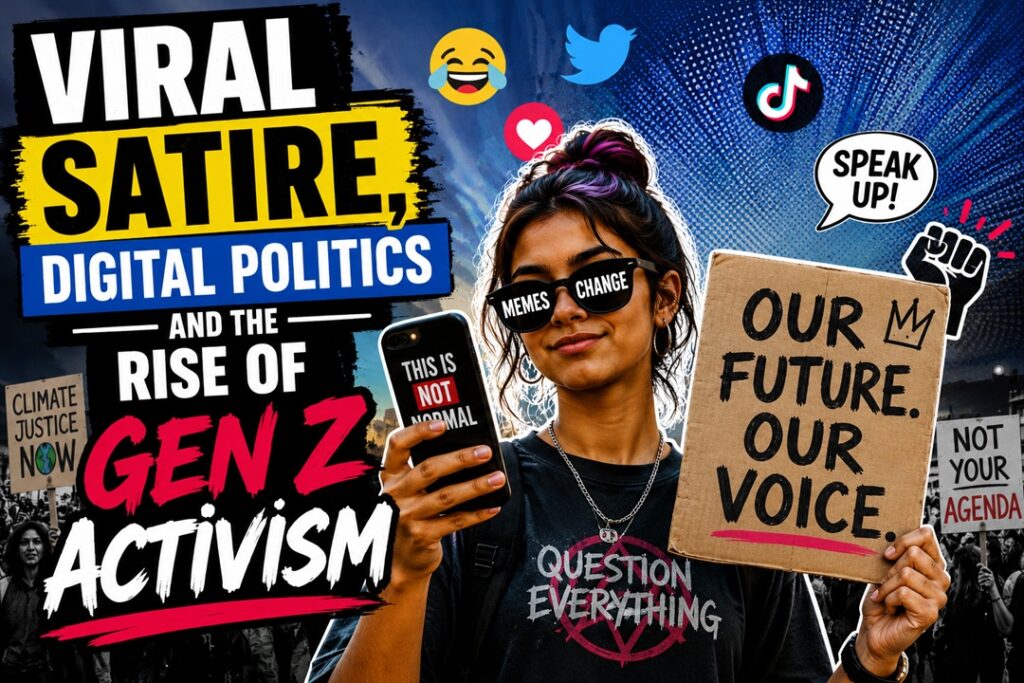
Digital youth participation refers to the growing involvement of young citizens, particularly Generation Z (born between the late 1990s and early 2010s), in political discourse through online platforms. Unlike earlier generations that relied on conventional political organizations and street mobilization, Gen Z engages with governance, accountability, and public policy largely through digital networks, social media campaigns, and online communities.
How Digital Platforms Strengthen Democratic Participation
Expanding Access to Public Expression
Social media enables young citizens and marginalized groups to communicate grievances directly to a broad audience without dependence on traditional media institutions.
Lowering Barriers to Civic Mobilization
Online platforms reduce financial and organizational costs, allowing grassroots campaigns and public-interest movements to gain visibility quickly.
Enhancing Public Accountability
Digital networks facilitate rapid dissemination of information regarding policy shortcomings, governance failures, and public concerns, encouraging institutional responsiveness.
Encouraging Global Civic Connections
Youth movements increasingly draw inspiration from international democratic practices, social justice campaigns, and rights-based initiatives across borders.
Making Political Communication More Accessible
Memes, short videos, satire, and creative storytelling simplify complex policy discussions and increase civic engagement among younger audiences.
Why Democratic Systems Must Engage Gen Z
Reducing Political Disengagement
Meaningful inclusion of youth voices can prevent frustration with formal democratic processes and sustain electoral participation.
Converting Online Energy into Policy Outcomes
Institutional mechanisms can transform temporary online campaigns into constructive policy dialogue and long-term reforms.
Strengthening Democratic Legitimacy
Providing recognized avenues for youth participation reduces the likelihood of mistrust between governments and digitally active citizens.
Leveraging Digital Skills for Governance
Young citizens possess expertise in data analysis, digital communication, and emerging technologies that can improve public administration.
Safeguarding Future Democratic Culture
As younger generations become the dominant voting bloc, democratic institutions must adapt to remain relevant and representative.
Risks Posed by Social Media-Driven Politics
Digital Popularity May Not Reflect Ground Support
Large online followings can create an impression of widespread political strength without corresponding organizational structures or grassroots presence.
Example: The CJP accumulated millions of followers within a short period despite lacking conventional party infrastructure.
Increased Vulnerability to Misinformation
Algorithms often reward emotionally charged content, enabling inaccurate information to spread faster than verified facts.
Example: Unverified narratives regarding examination controversies can rapidly intensify public anxiety before official investigations are completed.
Potential Exploitation by External Actors
Domestic grievances can be amplified or manipulated by foreign influence networks seeking to deepen social divisions.
Example: Authorities have expressed concerns that rapid viral movements may occasionally resemble patterns associated with coordinated influence operations.
Risk of Excessive Regulatory Responses
Governments may respond to rapidly expanding online campaigns with restrictive measures that raise concerns about freedom of expression and transparency.
Example: Emergency blocking powers under digital governance frameworks can be invoked without extensive public scrutiny.
Growing Polarization in Public Debate
Anonymous online interactions and meme-based communication may oversimplify complex socio-economic issues, encouraging adversarial narratives.
Example: Symbolic or satirical labels can sometimes replace substantive discussions on employment, education, and governance challenges.
The Way Forward
Recognize Satire as Democratic Expression
Political humor, satire, and digital creativity should be viewed as legitimate forms of civic engagement within constitutional limits.
Improve Transparency in Content-Blocking Procedures
Strengthening procedural safeguards and public accountability can enhance trust in digital governance decisions.
Create Formal Youth Consultation Mechanisms
Youth advisory bodies and participatory forums can provide direct channels for discussing education, employment, and governance concerns.
Strengthen Fact-Checking Ecosystems
Collaboration among governments, technology companies, and civil society can help combat misinformation while protecting free expression.
Reform Political Participation Pathways
Political institutions should create opportunities for young innovators, content creators, and first-generation leaders to enter public life.
Conclusion
The emergence and subsequent restriction of the Cockroach Janta Party illustrate the growing influence of digital platforms in shaping political engagement among Gen Z. As social media increasingly serves as a space for civic participation, democratic institutions must adapt by combining transparency, inclusiveness, and accountability to bridge the gap between digitally connected youth and traditional governance structures.
Source : The Indian Express