
Wildlife Conservation in India: Achievements, Gaps and the Road Ahead
Context
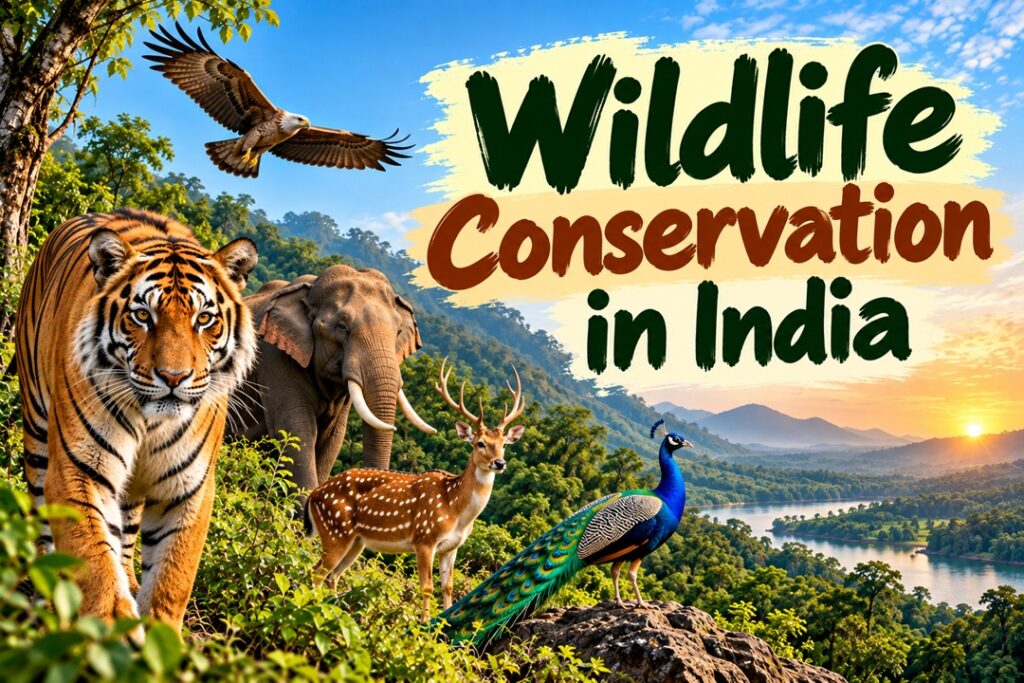
During India’s annual Wildlife Week, attention has turned to the country’s conservation achievements, the recovery of threatened species and the persistent challenges in protecting biodiversity.
India’s Biodiversity: Conservation Status and Legal Framework
India accounts for just 2.4% of the world’s land area but supports nearly 8% of global flora and 7.5% of fauna. As one of the 17 megadiverse countries, it encompasses parts of four global biodiversity hotspots and hosts a significant number of endemic species.
However, biodiversity protection continues to face considerable challenges. Of the 7,516 animal species assessed under the IUCN Red List, 1,012 are classified as threatened. Moreover, only a small proportion of India’s documented animal diversity has been assessed, leaving major gaps in understanding extinction risks.
The Integrated Development of Wildlife Habitats (IDWH) scheme supports species-specific recovery programmes and habitat protection for 24 identified species, including the Great Indian Bustard, Sangai, Dugong and Hangul. India has also introduced a National Red List Roadmap, with the objective of preparing comprehensive Red Data Books for flora and fauna by 2030.
Major Success Stories in Wildlife Recovery
India’s conservation experience demonstrates that sustained protection, scientific monitoring and community participation can support the recovery of threatened wildlife.
- Nilgiri Tahr: Tamil Nadu’s conservation programme combines population estimation, radio-collaring and habitat mapping across Tamil Nadu and Kerala. The recorded population increased from 1,303 in 2025 to 1,364 in 2026.
- Vulture Conservation: The prohibition of veterinary diclofenac, alongside captive breeding and habitat protection, has supported recovery efforts. Madhya Pradesh recorded 12,981 vultures in 2025, compared with 8,397 in 2019.
- Asiatic Lion: Long-term protection, scientific monitoring and grassland management helped increase the lion population in Gujarat from 674 in 2020 to 891 in 2025.
- Greater One-Horned Rhinoceros: Assam has strengthened rhino conservation through anti-poaching operations, research, translocation and community engagement.
- Dugong: Tamil Nadu established India’s first Dugong Conservation Reserve in Palk Bay. A 2026 assessment mapped 270 dugongs in Palk Bay and the Gulf of Mannar.
- Snow Leopard: India’s 2024 scientific assessment estimated a population of 718 snow leopards. Community-led monitoring and patrolling illustrate the value of local stewardship.
- Clouded Leopard: Meghalaya’s conservation planning has identified 14 priority connectivity corridors across the Northeast to address habitat fragmentation.
Persistent Challenges in Species Conservation
1. Incomplete biodiversity assessment: More than 92% of India’s animal species remain unassessed under global Red List criteria, according to the figures provided.
2. Neglect of less-publicised species: Species such as mahseer, the striped hyena and the Madras hedgehog often receive limited public attention and conservation funding.
3. Inadequate and inconsistent financing: Irregular funding can interrupt long-term breeding, wildlife monitoring and habitat restoration programmes.
4. Conflict between development and ecological protection: Roads, railways, mining and agricultural expansion can fragment habitats and obstruct wildlife movement.
5. Human–wildlife conflict: Crop damage, livestock losses and delayed compensation can weaken community support for conservation.
Way Forward
- Establish dedicated conservation funds: Combine government allocations, corporate social responsibility contributions, philanthropy and scientific partnerships to ensure sustained financing.
- Strengthen community participation: Involve local and Indigenous communities in wildlife monitoring, habitat restoration and regulated ecotourism. Ensure timely compensation for wildlife-related losses.
- Expand scientific capacity: Train forest personnel in camera trapping, genetic sampling, disease surveillance and habitat management.
- Integrate conservation into development planning: Incorporate wildlife corridors and ecological considerations into infrastructure decisions.
- Improve biodiversity assessment: Expand field surveys, taxonomic research and Red List assessments to cover neglected species.
- Secure long-term conservation finance: Explore suitable international partnerships and funding initiatives to support multi-year recovery programmes.
- Monitor conservation outcomes: Use periodic population surveys, independent evaluations and publicly accessible data to assess progress.
Conclusion
India’s wildlife recovery efforts demonstrate the value of sustained protection, scientific research and community involvement. Lasting biodiversity security requires predictable funding, comprehensive species assessments and the integration of ecological priorities into development planning. Conservation success must extend beyond flagship animals to include lesser-known species and entire ecosystems.
Source : The Hindu