
Atmanirbhar Philanthropy Ecosystem
Context
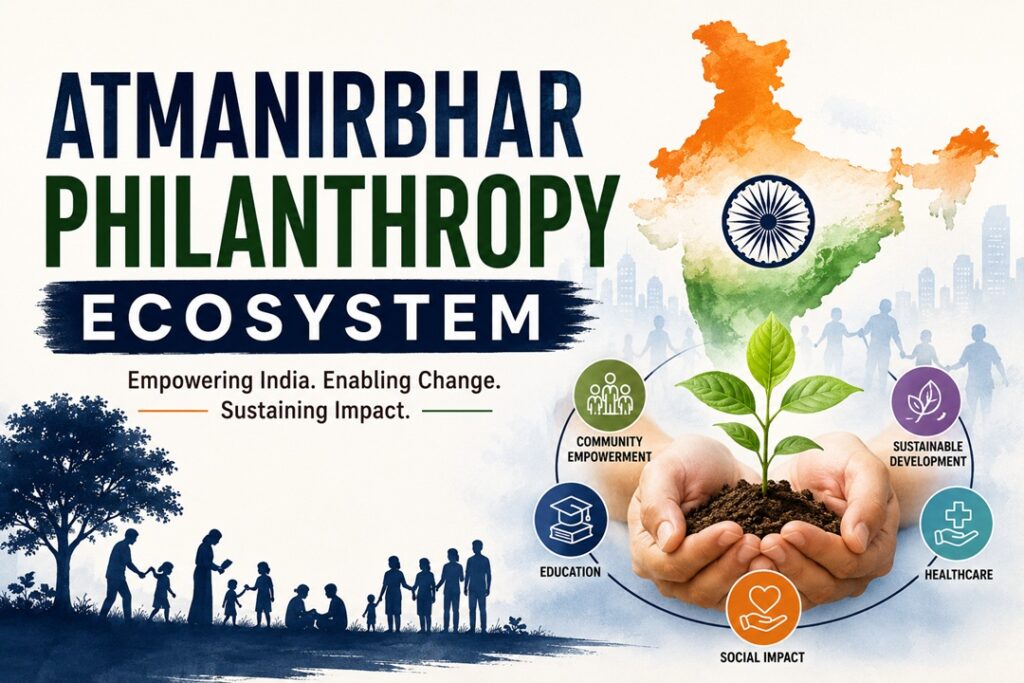
At a recent policy dialogue, social sector leaders emphasized the importance of creating an Atmanirbhar (self-reliant) Philanthropy Ecosystem, highlighting that domestic philanthropy has overtaken foreign funding as the primary source of financing for India’s social development initiatives. The discussion focused on strengthening indigenous giving, simplifying regulations, and encouraging wider citizen participation to build a sustainable and resilient non-profit sector.
Atmanirbhar Philanthropy Ecosystem
What is an Atmanirbhar Philanthropy Ecosystem?
Philanthropy refers to the voluntary contribution of financial resources, time, knowledge, skills, and leadership to promote public welfare and solve social challenges.
An Atmanirbhar Philanthropy Ecosystem aims to build a development model where Indian citizens, entrepreneurs, companies, family foundations, and communities become the principal supporters of social causes, reducing excessive dependence on international funding while ensuring long-term sustainability.
Key Principles of Philanthropy
Stewardship of Wealth
- Wealth is viewed not merely as private property but as a resource for societal development.
- Encourages responsible and ethical deployment of private capital for public welfare.
Local Ownership
- Social challenges should increasingly be addressed through domestic financial support and community participation.
- Strengthens accountability and ensures solutions reflect local priorities.
Transparency and Good Governance
- Non-profit organizations should maintain strong financial management, legal compliance, and institutional credibility.
- Builds trust among donors, beneficiaries, and regulators.
Inclusive Culture of Giving
- Philanthropy should extend beyond wealthy individuals.
- Digital payment systems enable ordinary citizens to contribute regularly through small donations.
Long-Term Development Financing
- Provides patient capital for research, innovation, institution-building, education, healthcare, and social entrepreneurship.
- Supports sustainable development rather than only emergency relief.
Emerging Trends in Indian Philanthropy
Domestic Giving Becoming the Largest Source
- Domestic private philanthropy now contributes over ₹1.18 lakh crore annually.
- It has become significantly larger than foreign philanthropic funding.
Growth of Family Philanthropy
- New-generation entrepreneurs are increasingly establishing charitable foundations.
- Philanthropy is becoming part of long-term business leadership and succession planning.
CSR Strengthening Development
- Corporate Social Responsibility (CSR) contributes over ₹40,000 crore every year.
- Major sectors include:
- Education
- Healthcare
- Rural development
- Livelihood generation
- Environment
Digital Infrastructure Expanding Donations
India’s digital financial ecosystem has made charitable giving easier through:
- Unified Payments Interface (UPI)
- Digital banking
- Systematic Investment Plans (SIPs)
- More than 220 million Demat accounts
Foreign Contributions Continue
- Around 14,500 organizations possess active FCRA registration.
- Foreign philanthropic contributions have increased from nearly ₹10,000 crore to ₹22,000 crore over the last decade.
- However, domestic funding now forms the larger share of social financing.
Major Challenges
Regulatory Compliance Issues
- Delays in FCRA approvals and renewals affect genuine NGOs.
- Compliance procedures remain time-consuming and complex.
Weak Institutional Capacity
- Many organizations lack:
- Professional accounting systems
- Digital documentation
- Governance standards
- Compliance expertise
Limited Philanthropic Giving by HNWIs
- India’s High-Net-Worth Individuals (HNWIs) have accumulated wealth rapidly.
- However, charitable giving has not increased proportionately.
Limited Tax Incentives
- Section 80G generally provides only 50% deduction on eligible donations.
- Deduction is also subject to prescribed limits, reducing incentives for large donations.
Difficulty in Donating Financial Assets
- Entrepreneurs often hold wealth in company shares rather than cash.
- Existing legal mechanisms for donating appreciated listed shares remain inadequate.
Importance for India
- Reduces dependence on foreign aid.
- Strengthens financial sustainability of NGOs.
- Encourages citizen participation in nation-building.
- Improves accountability through local oversight.
- Supports innovation in education, healthcare, climate action, and livelihoods.
- Complements government welfare programmes.
Way Forward
Reform Regulatory Framework
- Adopt risk-based supervision.
- Simplify FCRA procedures.
- Introduce transparent appeal mechanisms.
- Distinguish procedural lapses from deliberate violations.
Improve Tax Incentives
- Expand deductions under Section 80G.
- Encourage larger charitable contributions through stronger fiscal incentives.
Facilitate Share-Based Donations
- Create a clear legal framework allowing founders and investors to donate listed shares to charitable institutions.
Strengthen the Social Stock Exchange (SSE)
- Develop SSE into a trusted platform connecting verified NGOs with institutional and retail donors.
- Promote standardized impact reporting.
Promote Digital Micro-Donations
- Encourage recurring monthly donations through UPI and digital payment platforms.
- Even small contributions from millions of citizens can generate substantial social capital.
Build Institutional Capacity
- Improve governance standards.
- Invest in technology, financial management, and compliance training for NGOs.
- Enhance public confidence in the non-profit sector.
Conclusion
India’s philanthropic ecosystem is undergoing a significant transformation as domestic giving increasingly becomes the cornerstone of social development. While international philanthropy will continue to support research and innovation, a self-reliant model anchored in Indian citizens, businesses, and institutions will ensure sustainable and locally accountable development. By simplifying regulations, strengthening governance, expanding tax incentives, and promoting a nationwide culture of giving, India can build a resilient philanthropy ecosystem that accelerates inclusive growth and strengthens the social contract.
Source : The Hindu