
Antarctica at a Crossroads: Rising Tourism and the Need for Sustainable Conservation
Context
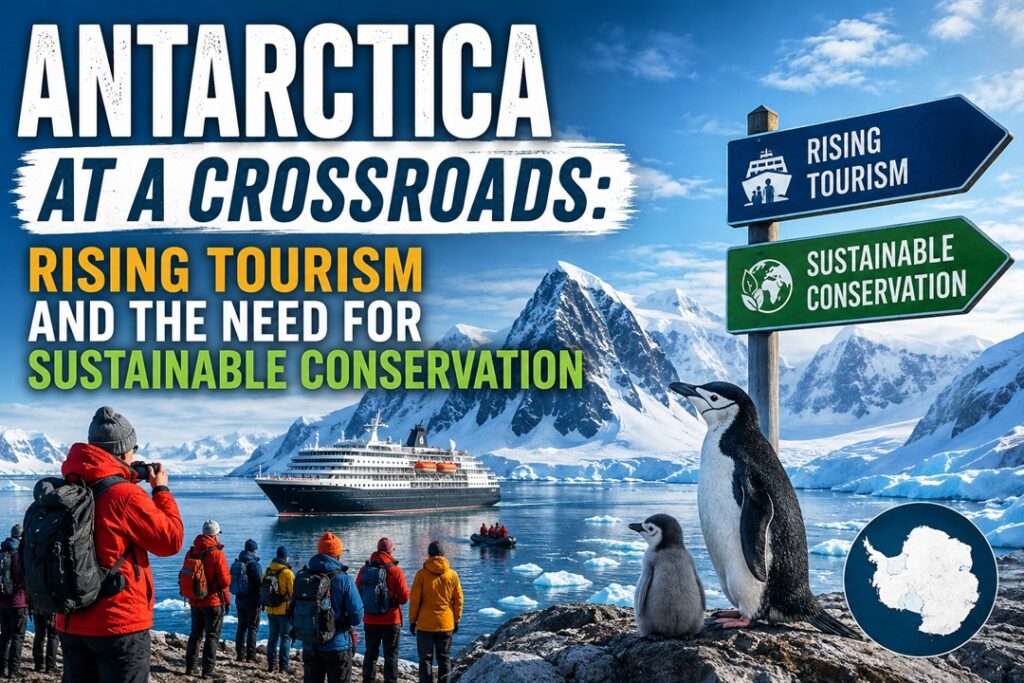
Antarctica is witnessing a rapid increase in tourist arrivals, raising concerns among scientists and conservationists about the long-term impact on its delicate environment. The growing popularity of polar tourism has intensified calls for stronger sustainability measures to safeguard the continent’s unique ecosystems.
What Makes Antarctica Unique?
Extreme Environment:
Antarctica is the coldest, driest, and windiest continent on Earth, characterized by some of the harshest climatic conditions known.
Geographical Significance:
It is the southernmost continent and contains the geographic South Pole, making it a crucial component of Earth’s climate system.
Continental Scale:
Antarctica is the fifth-largest continent, covering approximately 14 million square kilometres.
Ice-Dominated Landscape:
Nearly 98% of the continent is covered by a massive ice sheet averaging about 1.6 km in thickness.
Global Freshwater Reservoir:
Around 70% of the world’s freshwater and nearly 90% of its ice are locked within Antarctica’s glaciers and ice sheets.
Harsh Climatic Conditions:
The continent experiences extremely low temperatures, low humidity, and strong winds throughout the year.
Limited Precipitation:
Although covered in ice, Antarctica is technically a polar desert, receiving very little precipitation, mostly in the form of snow.
Temperature Extremes:
It recorded the lowest natural temperature ever measured on Earth at –89.2°C.
Coastal Climate Variation:
Summer temperatures along coastal regions may occasionally rise above 10°C, while winters can drop below –40°C.
Interior Conditions:
The elevated interior plateau remains much colder, with temperatures frequently falling below –80°C during winter.
Distinctive Wildlife:
The continent supports iconic species such as penguins, seals, albatrosses, and whales.
Sparse Vegetation:
The severe climate prevents the growth of trees and shrubs; plant life is limited to mosses, lichens, algae, and liverworts.
Native Flowering Species:
Only two flowering plants naturally occur in Antarctica—Antarctic hair grass and Antarctic pearlwort.
Human Presence:
There is no permanent indigenous population. Seasonal populations consist mainly of scientists and support staff residing in research stations operated by various countries.
How is Antarctic Tourism Expanding?
International Governance:
Antarctica is administered under the 1959 Antarctic Treaty System rather than by any individual nation.
Peaceful Scientific Zone:
The treaty designates the continent exclusively for peaceful purposes, scientific research, and international cooperation.
Tourism Oversight Mechanism:
The International Association of Antarctica Tour Operators (IAATO) was established in 1991 to encourage responsible and environmentally conscious tourism practices.
Operational Safeguards:
Tour operators follow guidelines covering vessel capacity, visitor limits at landing sites, biosecurity protocols, and wildlife interaction standards.
Early Tourism Development:
Organized tourism began in the 1960s with small expedition cruises carrying limited numbers of visitors.
Rapid Growth in Visitors:
Annual tourist arrivals have increased dramatically from fewer than 8,000 at the beginning of the 21st century to over 1,25,000 in recent seasons.
Future Growth Concerns:
Projections suggest visitor numbers could rise several-fold over the next decade if current trends continue.
Drivers Behind the Boom:
Growing interest in adventure travel, post-pandemic tourism demand, and extensive social media exposure have boosted Antarctica’s appeal.
“Last-Chance Tourism” Phenomenon:
Many travellers are motivated by the belief that climate change may permanently alter Antarctica’s landscapes and wildlife in the future.
Unique Visitor Experience:
The continent’s remoteness, pristine scenery, and extraordinary biodiversity make it one of the world’s most sought-after expedition destinations.
Why Does Antarctica Matter to the Planet?
Global Climate Stabiliser:
Antarctica’s ice cover reflects solar radiation and helps regulate Earth’s temperature.
Influence on Ocean Circulation:
The continent plays a key role in driving global ocean currents that influence weather and climate patterns.
Sea-Level Protection:
The Antarctic ice sheet stores enough frozen water that its complete melting would cause catastrophic sea-level rise worldwide.
Scientific Research Hub:
It serves as a natural laboratory for studying climate change, glaciology, atmospheric science, and ecosystem dynamics.
Marine Ecosystem Support:
The surrounding Southern Ocean sustains a highly productive food chain centred on krill, supporting penguins, seals, seabirds, and whales.
Model of International Cooperation:
The Antarctic Treaty System represents one of the most successful examples of peaceful global governance and environmental stewardship.
What Environmental Risks Does Tourism Create?
Disruption of Wildlife:
Frequent human activity can affect breeding patterns, feeding behaviour, and stress levels among wildlife populations.
Damage to Sensitive Habitats:
Repeated foot traffic may degrade fragile soils, moss beds, and other slow-growing biological communities.
Threat of Invasive Species:
Tourists and equipment can unintentionally introduce foreign organisms, pathogens, or seeds into Antarctic ecosystems.
Pollution Hazards:
Shipping activities increase the risk of fuel leaks, waste disposal issues, and marine contamination.
High Carbon Emissions:
Long-distance travel and expedition vessels contribute significantly to greenhouse gas emissions.
Expanding Human Footprint:
Climate-driven reductions in sea ice are opening previously inaccessible regions to tourism, increasing ecological pressure.
The Way Forward
Strengthen International Cooperation:
Countries must continue collaborating through treaty mechanisms to ensure strict environmental safeguards.
Promote Responsible Tourism:
Visitor activities should prioritize conservation objectives and minimize ecological disturbance.
Support Low-Impact Expeditions:
Smaller vessels, limited passenger numbers, and expert-led educational programmes can reduce environmental pressures.
Enhance Biosecurity Measures:
Stronger screening and monitoring systems are needed to prevent the introduction of invasive species.
Encourage Scientific Partnerships:
Tourism operators should actively support research initiatives and environmental monitoring efforts.
Expand Environmental Awareness:
Educational programmes can transform visitors into advocates for Antarctic conservation and global climate action.
Balance Access with Protection:
The long-term preservation of Antarctica requires carefully managing tourism growth while maintaining the continent’s ecological integrity and scientific value.
Source : The Hindu