
Mangroves: Nature’s First Line of Defence Against Coastal Disasters
Context
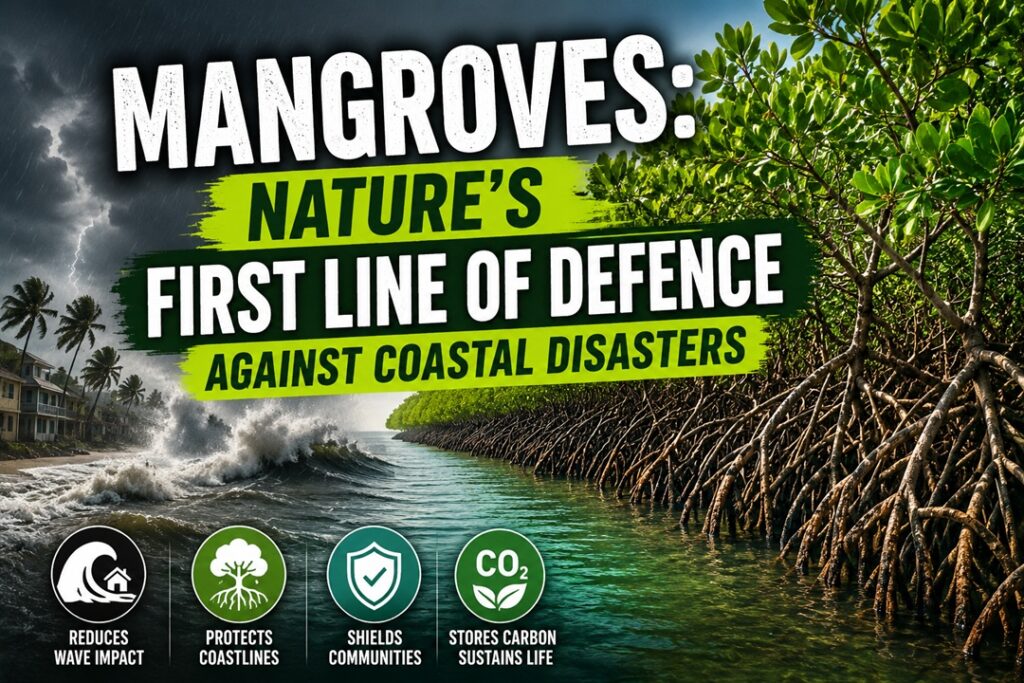
The recent impact of Cyclone Dana along Odisha’s coast has once again demonstrated how mangrove ecosystems can significantly reduce cyclone damage, highlighting the need to prioritize nature-based coastal protection over costly engineered structures.
Understanding Ecosystem-Based Adaptation (EbA)
Ecosystem-Based Adaptation (EbA) refers to the use of healthy ecosystems and biodiversity to help communities cope with the impacts of climate change. Rather than relying solely on artificial infrastructure, EbA utilizes natural systems such as mangroves, coral reefs, wetlands, and seagrass beds to provide sustainable protection against climate-related risks.
Status of Coastal Adaptation in India
Extensive Coastal Exposure: India possesses a coastline of nearly 11,000 km, supporting around 250 million people who remain highly vulnerable to cyclones, flooding, and sea-level rise.
Preference for Hard Infrastructure: During the past decade, coastal states allocated around ₹2,641 crore towards structures such as seawalls, embankments, and groynes.
Reduced Funding for Ecological Measures: Budgetary support for the National Coastal Mission declined substantially from ₹195 crore in 2022–23 to ₹50 crore in 2024–25.
Community-Based Restoration Success: In the Sundarbans, more than 18,000 women restored nearly 4,600 hectares of mangroves, helping reduce cyclone-related damage during extreme events such as Amphan and Yaas.
Why Mangroves Are Effective Coastal Protectors
Natural Wave Energy Reduction: Dense root systems dissipate wave energy and lessen the intensity of storm surges before they reach inland settlements.
Support Against Sea-Level Rise: Mangroves capture sediments and gradually elevate coastal land, helping shorelines adapt naturally to rising seas.
Large-Scale Human Protection: Studies identify India as one of the countries where coastal ecosystems safeguard a particularly high number of people per unit area.
Powerful Blue Carbon Reservoirs: Mangroves store significant amounts of carbon, making them highly effective in climate change mitigation.
Self-Sustaining and Economical: Unlike concrete barriers that deteriorate over time, mangrove ecosystems regenerate naturally and provide long-term benefits with lower maintenance costs.
Key Concerns in India’s Coastal Protection Framework
Unintended Effects of Seawalls: Hard infrastructure can redirect wave forces, increasing erosion and vulnerability in neighbouring coastal stretches.
Lack of Policy Clarity: Multiple concepts such as Nature-based Solutions (NbS), Ecosystem-based Disaster Risk Reduction (Eco-DRR), and EbA often overlap, creating implementation challenges.
Limited Visibility of Adaptation Efforts: Ecological adaptation measures are frequently embedded within broader environmental schemes, making their climate benefits difficult to track.
Institutional Coordination Gaps: Coastal governance involves multiple agencies, leading to fragmented planning and weak monitoring mechanisms.
Conservation–Adaptation Disconnect: Initiatives such as MISHTI are often viewed primarily as conservation projects rather than critical climate adaptation interventions.
The Road Ahead
Develop a Dedicated Coastal EbA Framework: Establish clear definitions, standards, and monitoring mechanisms for ecosystem-based adaptation projects.
Mainstream Nature-Based Solutions in Coastal Governance: Integrate mangrove restoration and ecosystem protection into disaster management and coastal zone planning policies.
Increase Investments in Natural Infrastructure: Rebalance public spending by allocating greater resources toward ecosystem restoration and conservation.
Strengthen Community Participation: Expand successful community-led restoration initiatives through support for local self-help groups and coastal communities.
Improve Climate Adaptation Monitoring: Develop scientific assessment systems to measure ecosystem performance and attract global climate finance.
Conclusion
The experience of recent cyclones underscores that healthy mangrove ecosystems offer durable, cost-effective, and sustainable coastal protection. Strengthening ecosystem-based adaptation can enhance climate resilience, safeguard livelihoods, and reduce dependence on expensive engineered structures along India’s vulnerable coastline.
Source : The Hindu