
Antiviral Drug Ensitrelvir and Its Role in Reducing COVID-19 Transmission
Context
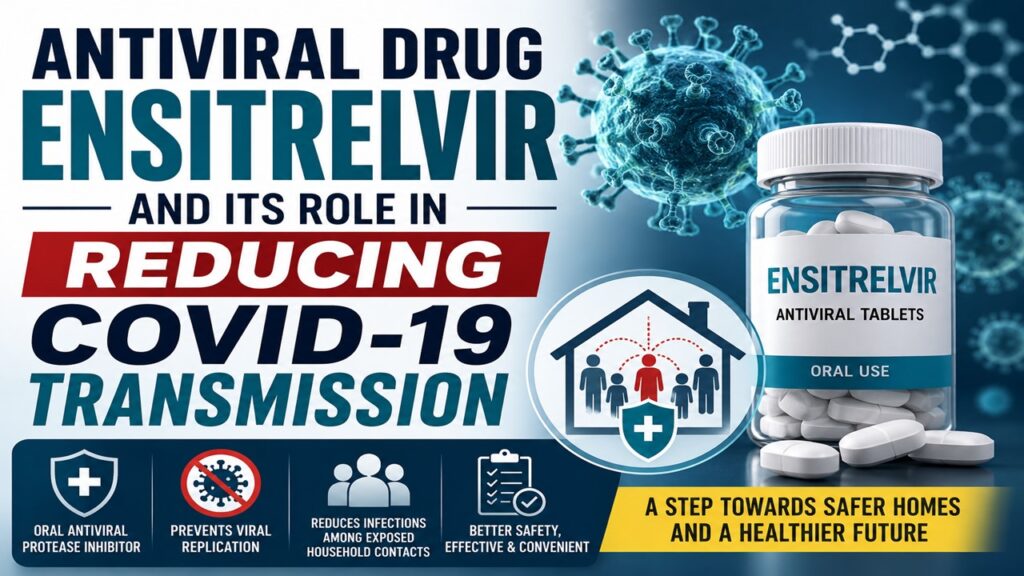
A recent study published in The New England Journal of Medicine highlighted that the antiviral drug Ensitrelvir significantly reduced symptomatic COVID-19 infections among household contacts exposed to infected individuals. The findings underline the growing importance of oral antiviral therapies in controlling viral transmission and managing future pandemic preparedness.
Antiviral Drug Ensitrelvir
Introduction
The COVID-19 pandemic accelerated global research into antiviral therapies aimed at reducing disease severity and preventing transmission. Among the latest developments, Ensitrelvir has emerged as a promising oral antiviral drug due to its effectiveness against multiple SARS-CoV-2 variants and its potential role in post-exposure prevention. Its improved safety profile and ease of administration make it an important advancement in infectious disease management.
What is Ensitrelvir
Definition: Ensitrelvir is an oral antiviral medicine designed to inhibit the SARS-CoV-2 main protease, also known as 3C-like protease or Mpro, which is essential for viral replication.
Mode of Action: By blocking the viral protease enzyme, the drug prevents the coronavirus from processing proteins required for multiplication inside human cells.
Objectives of the Drug
Treatment Purpose: It is intended for the treatment of mild-to-moderate COVID-19 infections.
Post-Exposure Prevention: The drug aims to reduce viral transmission among individuals exposed to infected patients, particularly within households.
Improved Oral Therapy: It seeks to provide a longer-lasting antiviral option without the need for booster drugs such as ritonavir.
Key Features of Ensitrelvir
Protease Inhibitor Mechanism: Targets the SARS-CoV-2 main protease enzyme responsible for viral replication.
Oral Administration: Can be taken orally, making it suitable for outpatient treatment and household-level use.
Broad Variant Effectiveness: Demonstrated efficacy against multiple COVID-19 variants, including the Omicron strain.
Better Safety Profile: Remains active in the bloodstream for a longer duration and avoids adverse effects such as the bitter aftertaste linked to some antiviral medicines.
Reduced Dependence on Booster Drugs: Does not require ritonavir for enhancing effectiveness, thereby reducing complications related to drug interactions.
Findings of the SCORPIO-PEP Trial
Reduction in Symptomatic Cases: The trial showed that Ensitrelvir reduced symptomatic COVID-19 infections among exposed household contacts from 9 percent to 2.9 percent.
Enhanced Household Protection: The findings indicate strong potential for controlling transmission in close-contact settings.
Support for Preventive Use: The study supports the use of antiviral drugs not only for treatment but also for post-exposure prophylaxis.
Significance of Ensitrelvir
Advancement in COVID-19 Management: Represents an important development in reducing disease spread and managing mild infections effectively.
Support for High-Risk Groups: Particularly beneficial for elderly individuals and vulnerable household contacts exposed to infection.
Pandemic Preparedness: Strengthens the global healthcare system’s ability to respond to future viral outbreaks.
Potential Against Other Coronaviruses: May provide a foundation for future antiviral therapies targeting related betacoronaviruses such as SARS and MERS.
Challenges and Concerns
Need for Long-Term Evaluation: Further studies are required to assess long-term safety and effectiveness.
Accessibility and Affordability: Ensuring equitable access to antiviral medicines remains a major global health challenge.
Risk of Viral Resistance: Continuous monitoring is necessary to prevent the emergence of antiviral-resistant variants.
Conclusion
Ensitrelvir marks a significant advancement in antiviral drug development by offering an effective oral treatment and preventive option against COVID-19. Its ability to reduce symptomatic infections among exposed individuals highlights the evolving role of antiviral therapies in public health management. Strengthening research, accessibility, and global preparedness will be crucial for maximizing the benefits of such innovations in future pandemic responses.