
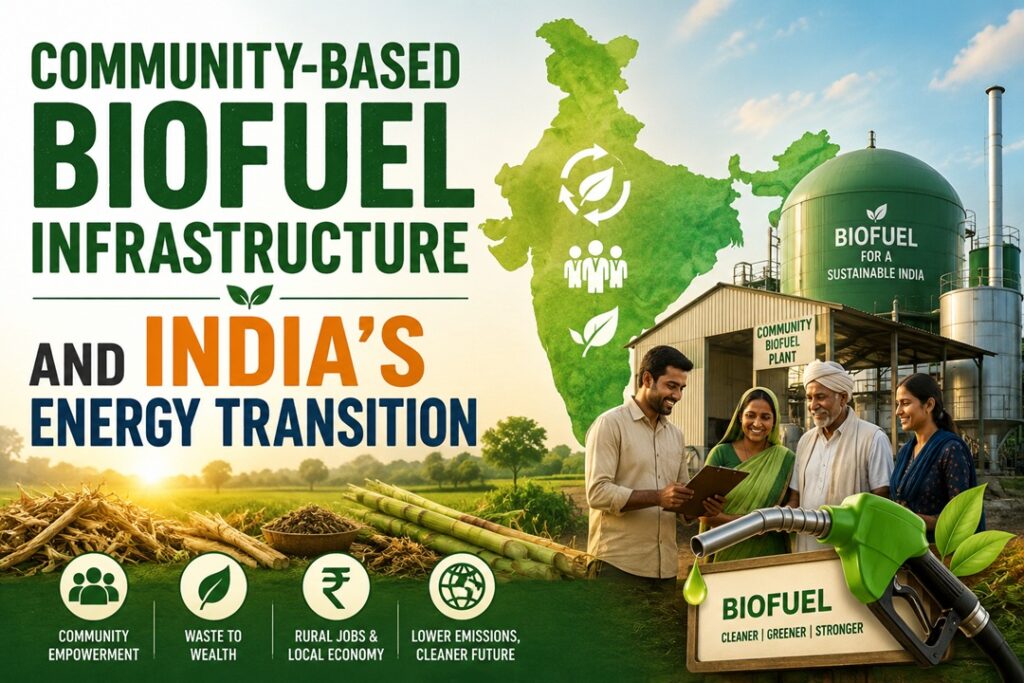
Community-Based Biofuel Infrastructure and India’s Energy Transition
Context
In response to recurring volatility in international fuel supply chains, India’s Ministry of New and Renewable Energy (MNRE) intensified efforts to expand localized biofuel ecosystems for decentralized energy generation.
Distributed Biofuel Ecosystems
About Distributed Biofuel Ecosystems
What is Biofuel Energy?
Biofuel energy refers to renewable power generated from biodegradable organic materials collectively called biomass. These include crop leftovers, livestock waste, municipal organic garbage, sewage sludge, food-processing residue, and forest biomass. Using biological, thermal, and chemical technologies, this biomass is transformed into usable energy products such as biogas, bio-CNG, bioethanol, syngas, and biomass pellets.
Major Biofuel Conversion Technologies
Thermochemical Gasification (Dry Biomass Route)
Feedstock: Primarily suitable for dry agricultural residue such as sugarcane trash, bamboo waste, rice husk, sawdust, and woody material.
Mechanism: Biomass is heated inside a gasifier chamber at very high temperatures under controlled oxygen-deficient conditions. The material passes through stages like drying, pyrolysis, oxidation, and reduction.
End Products: Produces syngas — a combustible blend of hydrogen and carbon monoxide — along with biochar, which can improve soil productivity and carbon sequestration.
Biomethanation (Wet Biomass Route)
Feedstock: Best suited for wet organic waste such as kitchen refuse, cattle dung, sewage waste, dairy sludge, and food-processing effluents.
Mechanism: Organic material decomposes inside airtight digesters through microbial activity in oxygen-free conditions.
End Products: Generates methane-rich biogas that can be upgraded into Compressed Biogas (CBG), while the residual slurry serves as an organic manure.
Importance of Localized Biofuel Networks
Enhancing Domestic Energy Resilience
Localized energy generation reduces dependence on imported fossil fuels and shields rural economies from international fuel price shocks.
Example: Rural industries using biomass briquettes can reduce diesel dependence and lower production costs.
Tackling Crop Residue Burning
Providing commercial value to agricultural waste discourages open-field burning practices.
Example: Converting stubble into biomass fuel in Punjab and Haryana can reduce seasonal air pollution over North India.
Promoting Circular Agriculture
Bioenergy byproducts help restore soil nutrients and reduce chemical fertilizer dependency.
Example: Organic digestate from biodigesters can substitute synthetic fertilizers in local farming systems.
Improving Urban Waste Processing
Decentralized waste-to-energy plants reduce pressure on landfills and lower methane emissions.
Example: Vegetable markets and institutional kitchens can process wet waste on-site through biodigesters.
Creating Green Carbon Revenue Streams
Biochar and renewable methane projects can participate in international carbon-credit markets.
Example: Farmer cooperatives operating bioenergy plants can earn additional income through carbon offset trading.
Challenges in Decentralized Biofuel Deployment
Seasonal Variability in Biomass Supply
Agricultural residue availability fluctuates across cropping seasons, affecting plant operations.
Example: Biomass shortages during monsoon months often interrupt gasifier functioning.
Non-Uniform Biomass Quality
Differences in moisture levels, ash content, and silica concentration reduce machine efficiency.
Example: High-silica biomass can damage gasification equipment and increase maintenance expenditure.
Weak Waste Segregation Systems
Improper separation of municipal waste reduces biodigester efficiency.
Example: Plastic contamination in wet waste disrupts microbial decomposition inside digesters.
Expensive Transportation Logistics
Loose biomass has low energy density, making long-distance transport financially inefficient.
Example: Transporting untreated crop residue beyond short distances raises overall fuel generation costs.
Financing and Credit Constraints
Banks remain cautious about funding decentralized bioenergy projects due to supply and technology uncertainties.
Example: Small rural bioenergy startups often struggle to secure affordable long-term loans.
Policy Measures Required
Strengthening Scientific Waste Segregation
Urban local bodies should enforce strict source-segregation mechanisms supported by digital monitoring systems.
Developing Biomass Storage Infrastructure
Establish climate-controlled biomass depots for drying, pelletization, and year-round feedstock availability.
Expanding Assured Biofuel Procurement
Introduce long-term purchase agreements for CBG and other biofuels through public energy companies.
Enhancing Rural Credit Support
NABARD-backed guarantee schemes can reduce financing risks for decentralized bioenergy entrepreneurs.
Advancing Green Hydrogen Integration
Promote technologies capable of converting syngas into green hydrogen for industrial and transport applications.
Conclusion
India’s long-term energy security will depend not only on large-scale renewable installations but also on efficiently utilizing its enormous agricultural and municipal waste resources. Decentralized biofuel systems can simultaneously address energy shortages, rural income challenges, waste management pressures, and environmental degradation while strengthening the country’s transition toward a sustainable circular economy.
Source : The Hindu