
India’s Pharma Industry: Advancing Towards a Global Innovation and Manufacturing Hub
Context
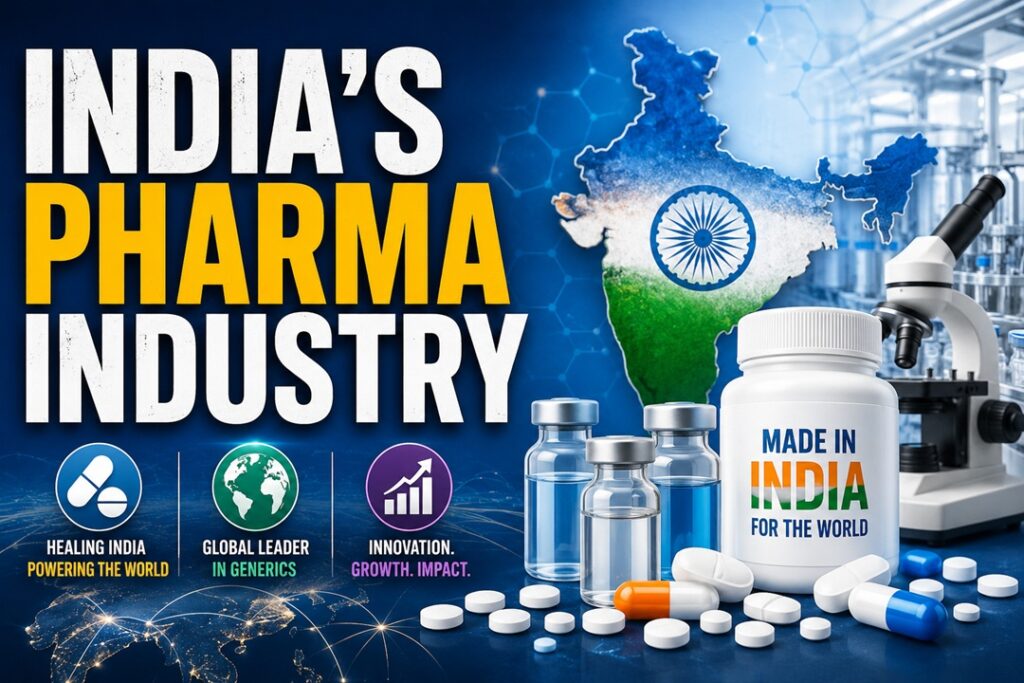
The Union Minister for Commerce & Industry recently encouraged leading international pharmaceutical companies to expand their presence in India, highlighting the potential for the country’s pharmaceutical industry to grow from its present valuation of nearly $60 billion to over $120 billion within the next five years.
Indian Pharmaceutical Industry
About the Indian Pharmaceutical Ecosystem
What is it?
India’s pharmaceutical industry is widely regarded as the “Pharmacy of the Global South” due to its significant contribution to affordable healthcare solutions worldwide. The sector plays a vital role in producing generic medicines, vaccines, active pharmaceutical ingredients (APIs), biosimilars, and specialty therapeutics while supporting both domestic healthcare needs and international supply chains.
Key Trends and Industry Indicators
Rapid Market Expansion
The Indian pharmaceutical market has emerged as one of the fastest-growing healthcare industries globally, with strong prospects for sustained expansion driven by domestic demand and export growth.
Leadership in Vaccine Manufacturing
India remains a major supplier of vaccines across the world, fulfilling a substantial share of global immunization requirements and contributing significantly to international health programs.
Extensive Manufacturing Capacity
The country possesses a vast pharmaceutical manufacturing network, including numerous globally accredited production facilities and several leading generic drug manufacturers with international footprints.
Strong Export Performance
Pharmaceutical exports have witnessed consistent growth over the past decade, supported by increasing demand for affordable medicines and expanding market access across developed and developing economies.
Structure of the Pharmaceutical Market
Dominance of Generic Formulations
Conventional generic medicines continue to account for the largest share of pharmaceutical revenues due to their affordability and widespread use.
Growth of Biopharmaceuticals
Biologics, biosimilars, and advanced therapeutic products are emerging as high-growth segments, driven by increasing demand for specialized treatments in areas such as cancer care and autoimmune disorders.
Shift Towards Chronic Disease Therapies
Therapeutic segments catering to lifestyle and chronic diseases—including cardiovascular disorders, diabetes, and respiratory ailments—are witnessing faster growth than acute-care categories.
Expansion of Digital Medicine Distribution
While traditional pharmacy outlets remain the primary distribution channel, online medicine delivery platforms are steadily increasing their market presence through digital healthcare adoption.
Regional Manufacturing Clusters
Western and southern states continue to serve as major pharmaceutical production centers, supported by established industrial infrastructure and skilled human resources.
Major Challenges Facing the Sector
Dependence on Imported Inputs
A significant portion of key pharmaceutical raw materials and intermediates continues to be sourced from overseas markets, creating vulnerabilities in supply chains.
Limited Investment in Novel Drug Discovery
Although manufacturing capabilities are strong, spending on breakthrough research and innovative drug development remains comparatively modest.
Increasing Regulatory Compliance Costs
Companies face rising expenditures related to quality assurance, facility modernization, and adherence to evolving international regulatory requirements.
Margin Pressures in Domestic and Export Markets
Price-control mechanisms, competitive global markets, and procurement-driven pricing continue to impact profitability across several product categories.
Diverse International Regulatory Requirements
Export-oriented firms must navigate varying standards and approval processes across different jurisdictions, increasing operational complexity.
The Road Ahead
Promoting Next-Generation Therapeutics
Greater emphasis should be placed on advanced biologics, precision medicine, gene-based therapies, and high-value specialty pharmaceuticals to enhance global competitiveness.
Strengthening Domestic API Manufacturing
Expanding incentive-driven programs for bulk drug production can improve self-reliance and reduce exposure to external supply disruptions.
Enhancing Innovation Financing
Dedicated funding mechanisms for pharmaceutical research, biotechnology, and drug discovery can help bridge the innovation gap and encourage indigenous breakthroughs.
Upgrading Quality Standards
Accelerating adoption of globally recognized manufacturing and quality-control practices will improve export acceptance and strengthen international credibility.
Leveraging Digital and AI Technologies
Artificial intelligence, advanced analytics, and digital manufacturing systems can improve productivity, optimize quality management, and accelerate research processes.
Conclusion
India’s pharmaceutical industry has evolved into a globally significant healthcare manufacturing powerhouse, combining affordability with large-scale production capabilities. By reducing import dependence, strengthening innovation ecosystems, and moving towards high-value therapies, the sector can further consolidate its position as a leading contributor to global healthcare and economic growth.
Source : PIB