
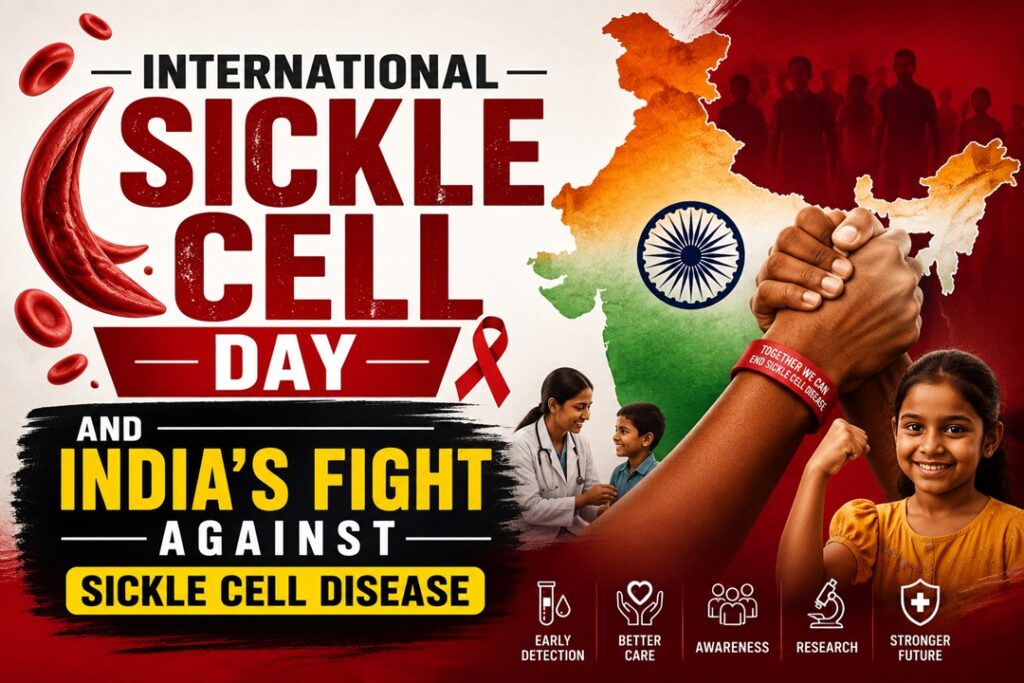
International Sickle Cell Day and India’s Fight Against Sickle Cell Disease
Context
The President of India attended the International Sickle Cell Day commemoration at Omkareshwar, Madhya Pradesh, marking significant progress in India’s efforts to combat Sickle Cell Disease through awareness, screening, early diagnosis, and treatment initiatives, particularly among tribal communities.
Sickle Cell Disorder
About Sickle Cell Disorder
What is Sickle Cell Disorder?
Sickle Cell Disorder (SCD) is a hereditary blood disorder that affects hemoglobin, the protein responsible for transporting oxygen in red blood cells. Due to an abnormal form of hemoglobin, red blood cells become rigid and crescent-shaped instead of maintaining their normal flexible, round structure, leading to impaired blood flow and reduced oxygen supply.
Causes of the Disease
Genetic Mutation:
The condition arises from a mutation in the HBB gene, which encodes beta-globin, a key component of hemoglobin.
Inheritance Pattern:
SCD follows an autosomal recessive inheritance pattern. An individual develops the disease only when two defective genes are inherited, one from each parent.
Carrier Status:
People inheriting only one abnormal gene are carriers (Sickle Cell Trait). They usually remain healthy but can pass the gene to their offspring.
Health Implications
Blood Vessel Blockage:
Sickle-shaped cells can obstruct small blood vessels, causing severe pain episodes and tissue damage.
Chronic Anaemia:
Rapid breakdown of abnormal red blood cells results in persistent anaemia, fatigue, and weakness.
Weakened Immune Function:
Repeated damage to the spleen reduces immunity and increases susceptibility to infections.
Organ Damage:
Prolonged oxygen deprivation may affect vital organs such as the brain, lungs, kidneys, and heart.
Epidemiological Features
Concentration in Tribal Areas:
The disease is highly prevalent among several tribal and marginalized communities in India.
Large Carrier Population:
The number of asymptomatic carriers significantly exceeds the number of patients, making genetic screening crucial.
Early Onset:
Symptoms generally emerge during infancy, around 5–6 months of age, as fetal hemoglobin levels decline.
Treatment and Management
Pain Relief and Supportive Care:
Medications, hydration, and supportive therapies help manage painful crises.
Hydroxyurea Treatment:
Hydroxyurea promotes fetal hemoglobin production, reducing the frequency and severity of complications.
Vaccination and Antibiotics:
Preventive healthcare measures lower the risk of severe infections, especially in children.
Blood Transfusions:
Transfusions are used to manage severe anaemia and prevent complications such as stroke.
Conclusion
Sickle Cell Disease remains a significant public health challenge, particularly among India’s tribal populations. Strengthening early screening, genetic counseling, timely treatment, and community awareness is essential to reducing its burden. India’s ongoing efforts under the National Sickle Cell Anaemia Elimination Mission reflect a commitment to achieving a healthier and more inclusive future, with the goal of eliminating Sickle Cell Disease as a major public health concern by 2047.